
The Louisiana legislature’s 2025 regular session is scheduled to last from April 14 through June 12. One of the bills to keep a close eye on is House Bill 76 (HB76)—originally authored by Representative Pat Moore (Democrat, Monroe)—which “creates the crimes of felony and misdemeanor intentional exposure to a sexually transmitted disease.” HB76 is similar to a law already on the books in Louisiana that criminalizes HIV exposure. According to The Center for HIV Law and Policy (CHLP), 32 states across the U.S. have laws criminalizing people living with HIV. These laws ignore the science and undermine current public health and medical guidance, disproportionately harming people who are already disenfranchised. This is even more of an issue in Louisiana, which has some of the highest HIV and STI (sexually transmitted infection) rates in the U.S., at a time when the Trump administration is rapidly defunding and dismantling public health services. Advocacy groups such as the Louisiana Coalition on Criminalization and Health (LCCH) have been working tirelessly to stop legislation such as HB76 and to advocate for people affected by these laws. On the first day of the legislative session, LCCH advocates Dietz (LCCH Statewide Coordinator), DeKeitra Griffin (LCCH Mobilization Specialist), and Sonya Milliman (LCCH Steering Committee member) joined me on a Zoom call to discuss HB76, the work that LCCH is doing to oppose this legislation, and why everyone should care about HIV and STI criminalization laws.
Before we get into the discussion of the bill itself I wanted to talk about these HIV and STI exposure laws in general. What do you want the public to know about these laws?
Dietz: Two things that I feel like the general public should know that are really wrong with our current HIV laws are that they’re about disclosure of HIV status and exposure to HIV. So, when it’s exposure and not transmission, it means that really no harm happened to that person… [But] for our law in this state, it’s an aggravated felony with mandatory prison time and 15 years on the sexual offender registry, just for exposing someone, even if they did not transmit the virus. The way that the law is written goes back to disclosure, whether or not you told somebody your HIV status. But we know there are current medical interventions that make it impossible for someone who’s living with HIV to transmit HIV to somebody else if they have an undetectable viral load, if they’re on effective medications. And then, even when it’s scientifically impossible, if they don’t disclose their status, someone could still say that they exposed them to HIV, even if they didn’t have sex… So it leaves people in this really kind of catch-22 situation where you’re screwed either way. And it doesn’t encourage anybody to get tested throughout the whole spectrum.
And, as we know with these laws, they don’t affect everyone equally. How do these laws exacerbate inequity?
D: Race is inherently tied to this. There are 23,000 people living with HIV in the state of Louisiana, [and approximately] 44% of those folks are Black men. Though, of the folks who have received charges, 91% of them are Black men. I feel it’s always important to say that there are inevitably going to be Black trans women who are being miscounted within that number. But, at 91% versus 44%, we can’t pretend that this isn’t racially motivated, just like so much of the violence of our carceral system is.
Sonya Milliman: [When] I was actually diagnosed [with HIV], I was told about U=U [Undetectable = Untransmittable] and that, as long as I got my viral load suppressed, I could not transmit the virus to anyone. The man I acquired [HIV] from was afraid to test because of criminalization laws. I actually have recently had somebody [start] talking to me again after testing negative twice since being with me… I was scared for the last, like, three years that this dude was gonna come after me. And then I get a phone call from him and he’s actually apologizing because he understands that since I was virally suppressed that I can’t harm him… It’s taken him six, seven years for him to actually understand it. If it’s taken [him] that long, how long is it going to take our representatives? It affects me on a daily basis, whether I’m trying to start a personal life, or just going about my business.
DeKeitra Griffin: If you throw in [the] stigma associated with this and the [low] level of education tied to it, it creates an environment almost of toxicity for living with these conditions. So you turn around and say, from the medical side, “Oh you can live a healthy life.” Then you look at the criminal justice side and it’s just like, “You are a criminal for living with any type of condition.” You don’t do this with other types of conditions, like when COVID came around. There are people that are still not vaccinated to this day. But [we] don’t try to turn around and penalize them or criminalize them. So [it’s] just the structure and the systemic inequities or barriers that continue to challenge [us]… Knowing that it impacts people of color, knowing that it impacts the LGBTQI+ community, women in general, all these “not able bodies,” just like, “Oh well, they don’t matter.” And I’m still breathing. I’m still human. I still have things that I’m going to accomplish.
D: I think it’s very human to struggle with medication adherence… And the people who struggle to maintain viral suppression are the people who are already being hit the hardest by all of the other social conditions that make it hard for anyone to prioritize their health care: homelessness, substance dependency, severe and persistent mental illness… the threat of criminalization is probably not going to make them feel more confident about trying to engage with a medical system that could turn around and criminalize them if they’re not being “a good person who’s living with HIV,” who’s taking their medications every day… this goes beyond houseless folks, too… The good news is that 68% of all people who are living with HIV in the state—that we’re aware of—are virally suppressed! And the folks who are going to their doctors, it’s something like [88%]—it’s the vast majority of people [who] are able to maintain viral suppression. But we don’t want to throw the folks who are struggling, who are often experiencing other things that mean that they’re going to be disproportionately policed, we don’t want to throw those people under the bus while we’re trying to address the public health issue.
SM: The other problem we have is doctors that aren’t willing to work with those who are still using substances and not wanting to treat them, all they’re doing is increasing all of the stigma… If we don’t have doctors that are in line with us, it’s all going to continue to perpetuate.
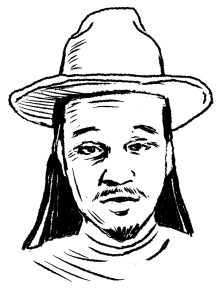
DeKeitra Griffin, LCCH Mobilization Specialist
It’s an example of how these laws undermine public health and medical efforts. So, to segue into that, let’s talk about House Bill 76 and the further implications that it would have for people in Louisiana.
DG: If we focus on public health, nowhere in public health is there punitive [treatment] or criminalization. What outcome are you trying to achieve? Are you trying to decrease the behavior? If so, research has already shown that it does not occur [with criminalization]. So what are you really getting at?
D: Yeah, I think one of the things we know [is] that this bill is being motivated from constituent feedback. We have a sense that those constituents had no idea what the consequences of this kind of criminalization can look like, but those of us who work in HIV decriminalization are really aware of all of the violences that can happen with the way that this particular law is written. So when we know that the vast majority of [people] who have had sex, have been at least exposed to an [STI], that leaves pretty much the entire population of people who are having sex at risk to have very serious charges levied against them if anybody else knows their status. It’s going to discourage people to get tested for things that could be less likely to be transmitted if they were in effective treatment.
An instance that [Rep. Moore] references pretty publicly [is] that someone she knows contracted herpes from her husband, and that this bill’s goal is to try and offer some kind of punitive tool to get back when people do contract STIs in that way. What she’s not understanding is that the very wording of this bill would lead that person who contracted herpes to be at risk for anybody to ruin their life. People can use this law coercively against someone if they don’t have adequate proof that they told someone their status. Though, even if they have adequate proof—because for the incurable ones, this is a felony status—you’re going to jail because it’s an aggravated felony status. Your bail is going to be set at a rate that is probably higher than most bail support organizations can help you at. And, because it’s a felony, the [district attorney] has up to 60 days to determine whether or not they’re going to even hear your case. So that’s 60 days if you can’t make bail, you can’t pay your rent, you can’t go to your job, you can’t do any of the things that you would normally have to do in your life. And I don’t know many people who could spend two months in carceral vacation because someone said that they exposed them to an STI when they didn’t even contract it. I think people who are looking for justice are pointing to a tool that’s not going to do what they think it’s going to do. It’s going to actually cause a lot of harm.
SM: [That] would totally devastate my whole entire life, 60 days of not having any income. I mean… 60 days would put me almost out on the streets with [the] shelter that I work with… And if it can affect me like this? What about anybody else that doesn’t really know?
D: I have a friend who was literally in that exact same situation. She had contracted an STI from her husband. She had been faithful, but when she approached him to be like, “Hey, what happened?” He was like, “You can’t prove that you weren’t sleeping around and you didn’t give it to me.” So you can’t actually prove directionality of transmission, it’s not something that scientifically is possible. We actually have some of the first case law about that for HIV in Louisiana…1Correction: The specific case in question is an example of how showing genetic “relatedness” of HIV viruses, along with other evidence, might be used to infer transmission from the defendant to another person, but the case itself does not “prove” that there is no way to determine directionality of transmission. However, according to the science, since the virus has a high mutation rate and may mutate during transmission, direct transmission cannot be determined, and any genetic similarities between HIV sequences can only be used to determine any potential “relatedness.” If we’re trying to limit the amount of STIs that are transmitted in our state, we need initiatives that encourage people to know their status and to get treatment.

Dietz, LCCH Statewide Coordinator
These laws, as you all pointed out, ignore the science. They’re not based on the actual public health science.
D: And it’s unfortunate because—and this is true for our existing HIV criminal laws—we have stronger medical interventions than we’ve ever had before to help prevent the spread of [STIs], including PrEP [pre-exposure prophylaxis]… You’ve gotta get tested for HIV in order to take those preventative medications. So let’s imagine a sex worker, who we know is probably going to be disproportionately policed. Maybe that person wants to protect themselves. Maybe that person wants to take PrEP. If they know that they get pulled over by a cop for something that’s a misdemeanor—sex work is a misdemeanor in our state right now—if they knew they were living with HIV all of a sudden they’re a felon.
Our coalition started in 2016 because we saw all of the many ways that criminalization around HIV in particular created all of these harms in people’s lives. We know it will do the same thing if we apply this to everybody, and we’re hoping that we’re going to kill this, that everyone’s gonna make the right decision and this bill’s going to go away. We’re hoping that everyone who might be like, “Oh my God, this could impact me” won’t forget people who are living with HIV and will come back and fight with us to try and make this right for people who are living with HIV.
That’s a perfect segue, because I wanted to hear more about what LCCH has done, historically, as well as what you are doing right now in terms of this bill.
D: The CliffsNotes is that in 2023, we went to all nine public health regions in the state to talk with folks who are living with HIV about how these laws had negatively impacted them. We created a report called [The Impact of HIV Criminalization in Louisiana] that we then used during a legislative study that we did called HR 130, that was specifically exploring the ways that HIV criminalization negatively impacts individuals. We published a report with recommendations of how to modernize the law so that it is only addressing people who intentionally, successfully transmit HIV, so that everyone else can’t get caught in the collateral damages of this. But the District Attorneys Association pushed back really hard, citing primarily crime first responders—so EMTs and nurses and law enforcement agents—although we have not seen one occupational exposure in all of the United States in all first responder roles since 1999 because we have effective post-exposure prophylaxis [PEP]. No law enforcement agent or medical physician should ever be in a position [in an occupational setting] where they are truly at risk for transmission, because HIV transmission truly only happens with sex with someone without protection who has a detectable viral load or through sharing a syringe. We did put a bill forward in 2024, HB436, but the conversation amongst the legislators made it clear that they didn’t understand HIV transmission prevention or treatment well enough to have an adequately educated conversation about it. So we decided to pull it and we want to bring a bill back next year. We’ll see how the conversation looks around [it] before we make any of those moves. We didn’t know [HB76] was coming when we made that kind of two-year plan.
One concern I’m sure that we all share is that, as our rights are being stripped away, as public health is being dismantled, as education is being dismantled, the effects of laws like this will be even more detrimental. So how do we get people involved? How do we get people who maybe don’t have a public health background or who aren’t directly affected by HIV or STIs to see that this is an intersectional issue?
DG: First of all, [sex education] lacks in Louisiana. But [we need] sex education for people to understand what is healthy sex. What, specifically, is HIV? What are different factors that make people more vulnerable? How can you prevent it? How can you also treat it? Treatment is prevention. Let’s ensure people are at a point where they can have these healthy conversations with sex… You’re entitled to a healthy level of sex because, look, sex is wonderful. Sex is joyful, sex is pleasure, and sex needs to be for damn near everybody. By educating, we can involve different communities… Because it might not impact you directly, but indirectly it does. Think about your friends, think about family members, anybody in your community. In this day and age, I’m pretty sure it’s safe to say within a 50-mile radius, good luck finding somebody that is not living with HIV.
SM: If they’re coming after us for this, they’re not gonna stop there. They’re gonna start going after other things like COVID and things that would affect [other people]. That’s what I’ve been telling people. Y’all don’t think it affects you, but if they’re coming after us because of this right now, they’re not going to stop there. If you have anything wrong with you, you’re not the people they want around anymore. So that’s what their goal is, is trying to eliminate. So how about if you join us in our fight?
D: Much of what people were the most scared about in Project 2025 already passed in Louisiana within the last three to five years… HIV criminalization is often thought of as something that only happens to a certain kind of person who lives “over there.” [HB76] is a law that would hold almost every adult in the state of Louisiana potentially criminally liable for something that nobody asks for. Just because you don’t use protection every single time you have sex doesn’t mean that you don’t care what happens to your body. People don’t want to receive care even when they find out about it because we shame STIs so extremely. This law feels like a really clear example of that inappropriate mixing of morality and human behavior.
I think it’s important that we also mention that there are heightened penalties for young people who have sex with another young person within two years of each other. But if we’re punishing those kids by more than double what we’re punishing the adults, we are also really strengthening the school-to-prison pipeline. I know they suggested an amendment to take it off, but the original version of this bill would require lifelong ankle monitoring. So if we’re talking about doing that to young people, what does that tell us about what we’re promising the future of young people in Louisiana when we already are not offering adequate age-appropriate sex education? And, with the recent complete defunding of the CDC’s branch that addresses STI treatment, prevention, and testing, we’re going to remove the resources, not teach kids about what they need to know about their bodies, and then severely criminalize and felonize them? That’s not the Louisiana I want to live in. That’s not the Louisiana I want the young people who I know to grow up in. That’s not the future I want any of us to have to be fearful of.
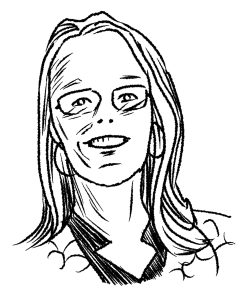
Sonya Milliman, LCCH Steering Committee Member
Are there any LCCH events coming up soon that you would encourage people to learn more about?
D: Our lobby day is on May 7! It’s going to be an all-day event. We’re going to be teaching people about the other bad bills and the good—there’s a couple of good ones. We’ll be teaching people about the bills and offering people an opportunity to actually have some support and going and participating in committee hearings. I think it’s important that we are physically there. Even if they pass these laws, they need to see us, and even if we disagree, they need to see us.
Is there anything else that you would like people to know about the work that you do?
DG: The work we do is truly public health and social justice… Some of these laws create additional social inequities… You think about testing [and PrEP]… Some people [are] just like, “Oh, I don’t engage in that type of sex.” Just know, if we go by the recommendations, anyone that’s having sex needs to be tested. Anyone engaging in sexual activity, PrEP is for you… These laws do not reflect the recommendations that science is pushing.
D: Laws like this really enable very many people, specifically women, to become entrapped in violent situations. When their partners are aware of their STI status… they could say you can’t leave because otherwise I’ll tell the cops you never told me… I’ve worked with at least three women who were entrapped in domestic violence situations as a result of their HIV status being used coercively against them by partners who were not living with HIV, who were fully aware of their partner’s status and fully aware of how intensely they could criminalize them. We use the phrase “you care about HIV criminalization, you just don’t know it yet” pretty regularly… Most people agree that, when they understand all of the negative public health implications and all of the social implications and violence implications that these laws enable, that they need to change. Most people need to be considering how this could impact them in their lives right now. So again, we’re hoping that people will join us in fighting back against [HB76] and then stick around to make sure that we end HIV criminalization as it currently exists in Louisiana, so that none of us have to be afraid to live our lives just because we know something about our health.
LCCH’s Lobby Day will be held on May 7 in Baton Rouge, at the River Center Branch Library. More information about this event, as well as LCCH’s work and how to get involved, can be accessed via linktr.ee/stigmaisntjusticela.
Illustrations by Kate Lacour
