
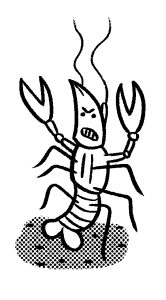
Howdy! It’s April, and down here in N’awlins (please don’t pronounce it that way) we are currently enjoying beautiful weather, a plethora of food and music festivals, and, my personal favorite, dat sweet, sweet crawfish! While there are 339 species of crawdadios—39 of which are found in Louisiana—the two types of these lil decapod cuties that are targeted for commercial consumption here in the Pelican State are the Red Swamp Crawfish (Procambarus clarkii) and the Southern White River Crawfish (Procambarus zonangulus). These yummy crustaceans thrive in warm, wet conditions, so their abundance or scarcity is dependent on these things. Crawfish are opportunistic omnivores that eat mostly the vegetation found in mud (hence the term mudbugs) but eat pretty much anything available. Got a fish head? They’re into it. Dog biscuit? Throw it their way. Each other? Don’t mind if they do. Their own feces? Yep. Crawfish have been chilling on Earth for a long-ass time, with fossilized burrows found in Australia from 115 million years ago. Burrows from the Early Permian Era have been found in North America. The Indigenous people of North America were the first people to bask in the glory of crawfish, luring them for dinner using deer meat. This protein-packed, omega-3, sweet and savory food source was usually steamed in its shell using hot stones. The Choctaw tribe appreciated crawfish so much, a drawing of the rapscallion Chakchiuma with its claws raised became their symbol! After Le Grand Dérangement in 1755, when Acadians were kicked to the curb of Nova Scotia, many Acadians settled down da bayou and became known as Cajuns. Aieeee, Cher! But these couyons didn’t know what the hell they were doing, and, as always happens, they turned to Indigenous people to teach them how not to die. Crawfish were so easily and cheaply procured, they were considered “poor man’s food.” After realizing that they had versatile food gold in their hands, the bayou bugs quickly became a celebrated and sought-after delicacy. In 1983, Louisiana named the crawfish its official crustacean! Yes, Louisiana has an official crustacean. One of our favorite ways to eat these delicious beasties is boiled. Crawfish boils are a glorious ritual, during which, surrounded by friends and family at a picnic table covered in newspaper, we devour crawfish that have been soaked in a roiling bath of crab boil, as our blood pressure rises and we become swollen from the gazillion milligrams of salt we are consuming. But it’s not just crawfish in that berl juice, we include accouterments such as garlic, red potatoes, corn on the cob, sausage, mushrooms, and sometimes newfangled additions such as pineapple and even chicken wings (ew). So this April let’s honor the spirit of the brave little crawfish and face challenges with our pinchers raised to the sky. Now move your eyeballs down and read about cleaning.
What’s the best way to clean up after a crawfish boil?
Delicious. To make clean-up easier after a berl, it’s a good idea to set things up with the aftermath in mind. Cover the crawfish-enjoyment table with garbage bags or a waterproof tablecloth first, then cover the plastic with old newspaper to help soak up boil juice. The Theriots always used the advertisement insert or the Sunday funnies part of the Times-Picayune. Place a few seafood trays on top of the table for spent crawfish shells. In between the trays, place a few rolls of paper towels on paper towel holders. The holders enable you to remove towels without touching the whole roll with your crawfishy-hands. To make shell disposal easier, place large, double-bagged garbage cans at both ends of the table. Do not fill the bags to the brim! Over-filled bags are hard to close and heavy. For crawfishy-smelling hands, place a bowl of lemons on the table. Squeezing the lemons between your hands aids in removing seafood smell. Another trick for stank removal is rubbing a stainless steel spoon or other stainless steel utensil between your hands. Garlic (which is a boil must) has a sulfuric compound in it, and stainless steel contains chromium. When these two elements come into contact, the chromium absorbs the sulfur, and the stank transfers from your hands to the spoon. Maaagiiic. After the boil is over, roll the newspaper and trash bag table covers into the center of the table and place this juicy mess into one or both of your crawfish-shell-cans. If you have a chest freezer, place the crawfish-shell-filled-bags inside of it until garbage day. This tactic will aid in preventing infiltration of maggots, a.k.a. the most disgusting creatures on the planet. If freezing isn’t an option, quadruple-bag the shells, say a prayer, then place them in your outside garbage can. Now it’s time to clean the crawfish buffet table. First, grab a hose and super-soak it. Squirt some Dawn dish soap onto the table, grab a sponge, and scrub it. Dawn is great for cutting the boil grease, so I recommend it. Hose the table one more time. Let it sit in the sun until it’s dry. If the table was on concrete, you’ll want to hose the ground off too. Spray the concrete, add some Dawn, spray again to make suds, then spray once more to remove the suds. If the table was on grass, give the area a quick spray for good measure. Now it’s time to clean da pot. Pour any remaining boil water down a house drain or in a grassy area. Do not pour it into a storm drain or other body of water. Always remember the (fake) old saying: “Don’t pollute, you stinky coot.” Spray the pot, then dump it a few times to get rid of the boil residue. Squirt a few drops of Dawn into the pot, grab a sponge, and scrub. Rinse the pot until all the suds are gone. Place the pot upside down in the sun until dry. I hope that you have a fun and successful boil!
Got cleaning questions? Email isabel@antigravitymagazine.com
illustrations by Ben Claassen III | @dirtfarm
