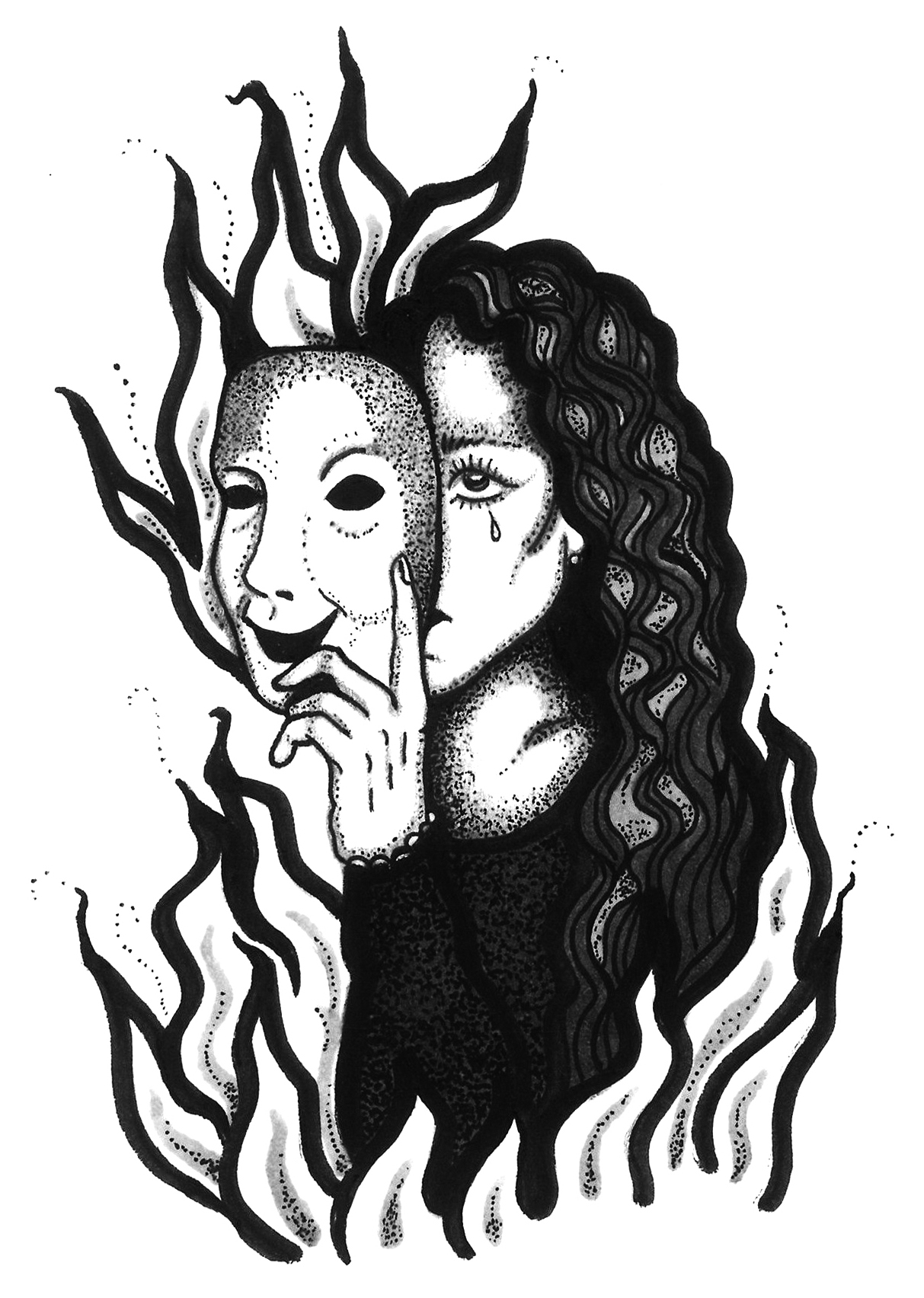
Famed prison abolitionist Mariame Kaba says that “hope is a discipline.” This, of course, does not negate sadness or grief, but rather asserts that hope is something we must work at. It will not always come on its own, and the world will be constantly trying to pry it from us. Hope is not blind optimism—it roots us in the world around us by reminding us we build our own community, and the maintenance of that community is our greatest responsibility and joy. In the endless parade of frustration and heartache and fear that 2020 wrought, I calcified this mantra, letting it become the skeleton that propped me up and carried me through the world.
When my boyfriend was a public defender, I spent a lot of time white-knuckling the discipline of hope. Every day, he would come home with one horror story after another of the state’s violence, and its wanton cruelty, always seemingly at his breaking point. It was a low that scared me, a pit of sadness that really did feel bottomless. In response, I made myself into a lighthouse, ushering him back into the land of possibility and hope—another world is possible, if we build it, I’d say. After all, when both of you are circling the drain it’s harder to climb back out when you’re ready.
He is no longer at that job, and I’m still working on the come-down.
On September 24, the state of Missouri executed Marcellus Williams, despite widespread pleas that the execution not move forward, including from a prosecuting attorney and the victim’s family. The campaign to stop the execution lasted weeks, with people sharing petitions, calling and emailing politicians and offices outside of their state to save a man from death. But it was futile. The state of Missouri, after the denial of a stay of execution by the Missouri Supreme Court and governor Mike Parson, killed Marcellus Williams—who deserved to live not because he was “innocent,” but because the state should not have ultimate authority over life and death.
It’s difficult to parse why certain events make it through your armor more than others. For me, I think it was simply a “straw that broke the camel’s back” situation—the state-sanctioned killing of Marcellus Williams was the straw that broke mine. I spent the days following his death despondent and angry, crying on and off over every piece of violence that flashed across my phone screen. Trying to remember the last time I’d felt that way, I realized it had been a while—too long. The time I’d spent supporting someone interacting with daily state-sanctioned violence had me always looking for something hopeful to tether us both, and a backlog of grief came pouring out.
Watching this past year of annihilation in Palestine, there are days when I wonder if anything we do is worth anything. No matter how loud we scream, protest, cry, rage, the outcome is the same—our government will continue to kill people. I don’t know how many more videos of people being blown up it takes for something to give. Is that number infinite? Is the world truly evil? Can there possibly be enough goodness to overcome what we’re facing? I believe that nihilism is a cowardly position to take, so I steel myself, push down skepticism, and work tirelessly at patching a suit of armor that feels tattered and, at times, unsalvageable. I am not a nihilist, but my confidence is truly shaken.
Soon after this issue hits the streets, we will know the results of the upcoming election. I won’t talk here about voting, you can read about that in our online Voter Education Guide. But the aftermath, no matter what, will be difficult. The violence is not going to stop because we ask it to. The government will continue to kill people. And I don’t have the answers for how to fix that.
Writing these intros for the magazine feels, in its own way, like the work of a lighthouse: offering a guiding light in times of heartache and turmoil. But this month, I felt it would be more useful to be honest here—to tell you all that I’m scared, I’m heartbroken, I’m tired, and frightened about how unclear the way out seems to me. In doing so, I’m hoping that those of us who have been in long need of mending are able to pause and find an avenue for our grief. It’s there whether we want to face it or not, and it’s corrosive if not tackled head-on. I’m trying to talk about my grief more because getting it out of me helps, I think—I hope.
What is there to do next? This is something we must decide together. Where we go from here I think will look different and more extreme than we hoped it would. There are revolutionary texts aplenty with histories of victories of resistance past, strategies for organizing your community, and wisdom for navigating the day-to-day under fascist governments. Read them, but this next stage will require more than reading; we will need to act concretely. As my fellow AG senior editor, Holly Devon, recently said to me over the phone, we don’t have time for all of this war.
We must face ourselves so we can face the world. Hope is a discipline, but so, I think, is grief. Steeling ourselves against the world too much strips our ability to be so moved to take action against it. I’m trying to navigate this balance, and I’d like to talk about it more, with friends and also strangers. I am pushing myself into the world as often as possible: finding solace amongst my colleagues here as well as venturing into the world alone, ready to find fresh sources of light to guide me somewhere better and new. I encourage us all to keep searching. —Marisa Clogher
illustration by Laura Frizzell
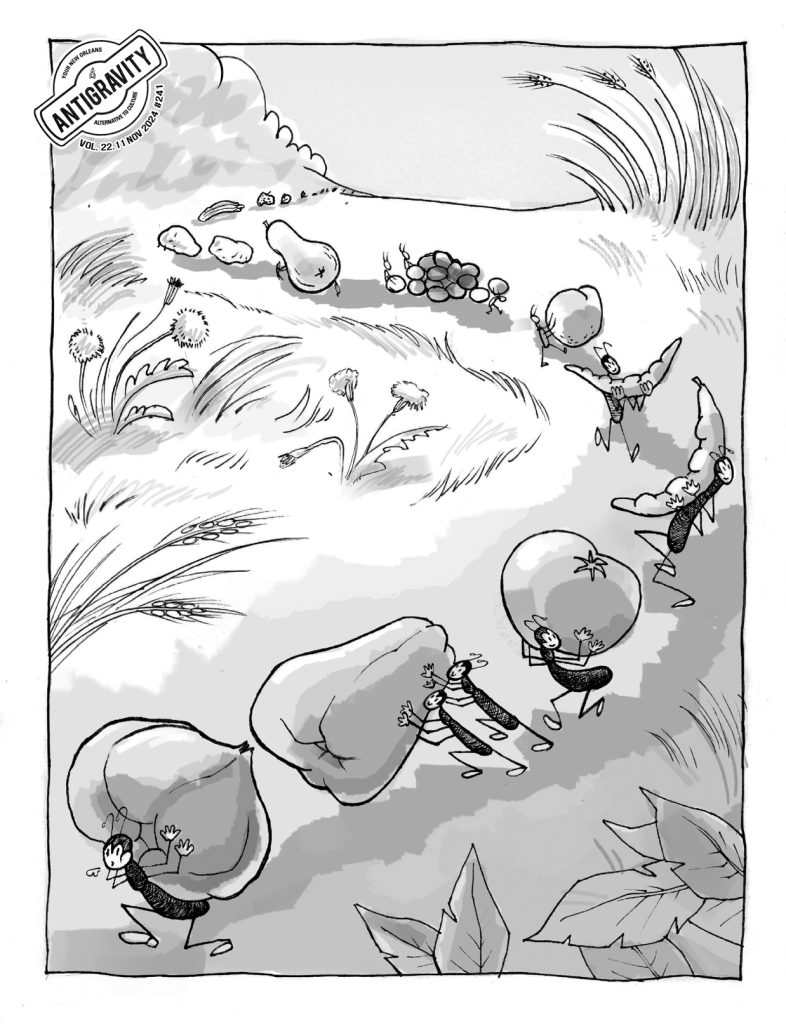
November 2024 cover illustration by Kate Lacour
