
A few months ago, Dan Fox sent me a mysterious message. “I have a project for you,” he wrote, “but you’ll need a record player.” I was intrigued.
The mystery revealed itself during a late night phone meeting (official ANTIGRAVITY business is conducted between the hours of 10 p.m. and midnight) to be an enormous postal box full of all the submissions people have sent us for review that had not been selected by our mercurial review staff. “A review roundup,” he called it. I thought that sounded like an exciting challenge. Now I see it for what it is: a euphemism.
In a better world, review material would arrive at official ANTIGRAVITY headquarters to be received by eager, well-paid culture writers at the ready, no mailed-in material ever going unseen. However, within the absurdist, scarcity-ridden creative economy constantly threatening us with starvation, the absence of an office and full-time staff are facts of life. We don’t pay people enough to tell them what to do. Thus has ANTIGRAVITY’s content long been at the mercy of our contributors’ creative whims.
Reviewing new content is humble, surprisingly difficult work, and our stalwart superheroes Mary Beth Campbell and Willie Archambault notwithstanding, the section has been increasingly suffering neglect. Watching these items—many of them sent in personally by the artist—languish tugged on Dan’s heartstrings, and he knew mine were just as tender. When he dropped the box of hopeful art babies at my doorstep, it was clear I had been drafted into service. How could I say no?
Soon, every surface of my small kitchen was covered in records, books, cassette tapes, and the sweet, handwritten notes sent along like prayers their creators believed would see their precious cargo into safe harbor. What would I do with them all? Was I qualified for this? My taste, cultural lenses, and perception of contemporary media is eccentric. I judge written content ruthlessly, jumping on every errant word and architecturally faulty idea. But with music I am generally too inundated by sensation to think critically about it. On top of all that, I don’t frequent the internet nearly enough to be plugged into the general zeitgeist. In the better world I long for, this job would go to someone well-suited to it. In this world, I was just the soldier who said yes.
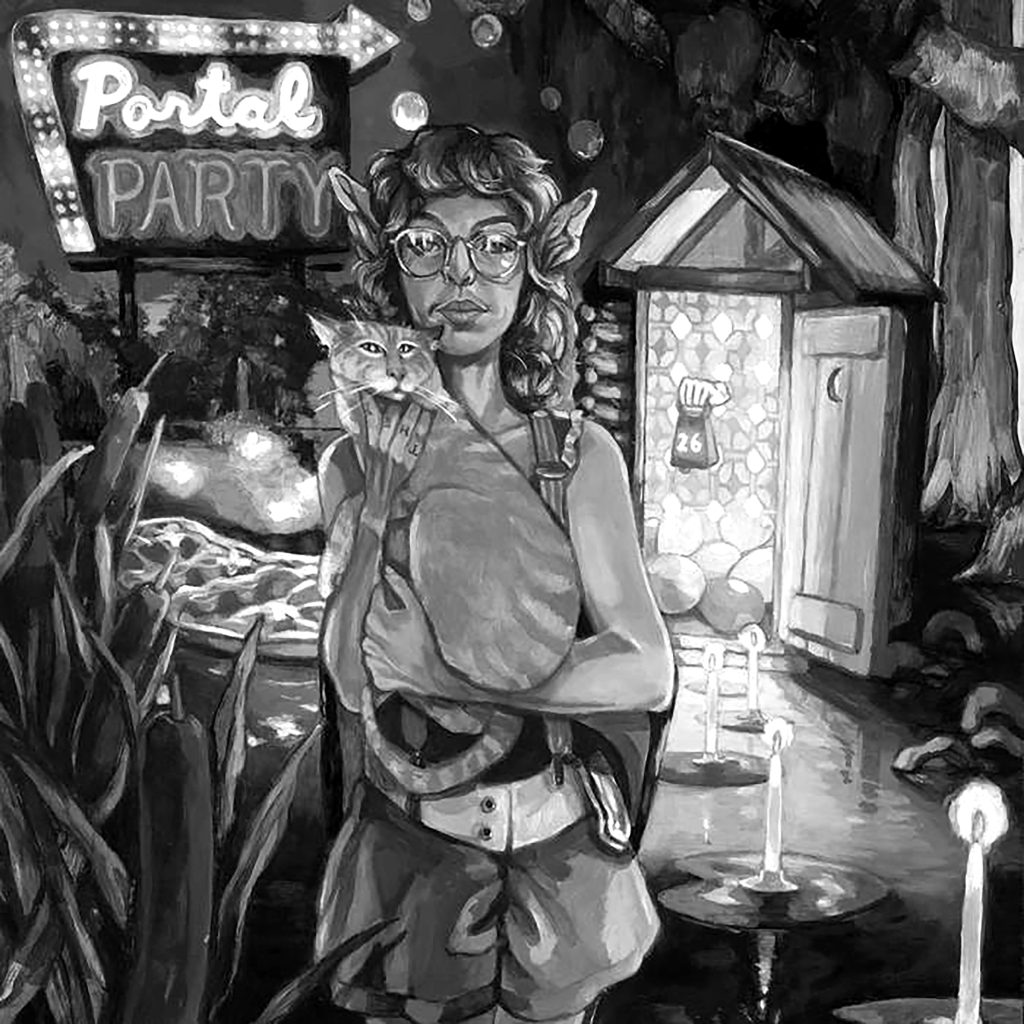
Lacking all pretense to authority, I approached with my mind and ears open, and with Portal Party by 26 BATS!, my first selection, there was immediate payoff. The cover of the record depicts a hip, magical realm with candle sticks glowing on lily pads and some kind of queer, punk woodland creature holding a cat beneath a neon sign bearing the name of the album. This is pretty much where you end up while listening to the album, and I must say, I like it there. The vibe is floaty, cool, and soothing, and makes me feel like night swimming somewhere with a DJ.
No such luck with Criminal Ghost by Dre Perish. As hinted from the post-apocalyptic cover art, Criminal Ghost is clearly coming from a place of distress. The lyrics are full of broken glass and broken bottles, needles and explosions, knives and violence, and when I put on the album my ears were in immediate agony.
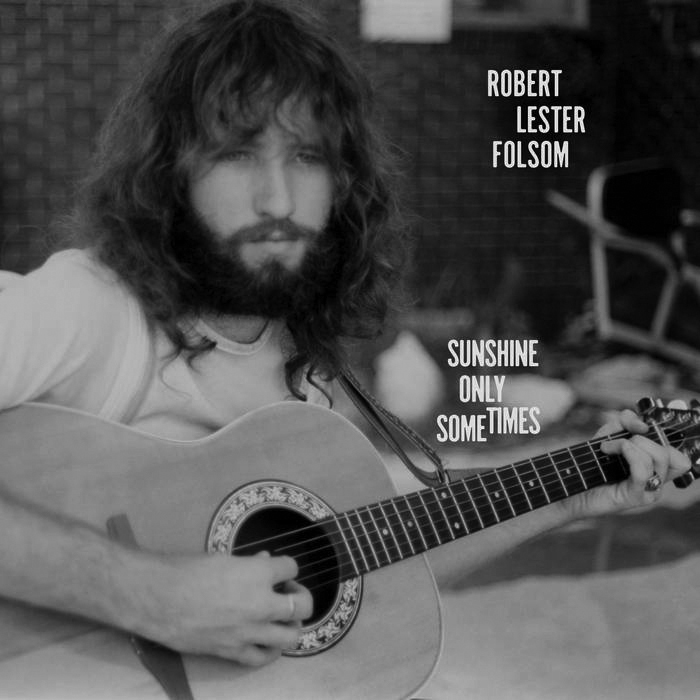
Fortunately, a vintage release from the archives of the ‘70s folk singer Robert Lester Folsom provided a balm for troubled ears. Sunshine Only Sometimes it’s called, but its beam of sepia-toned ‘70s sunlight held steady all the way. To You, And To Me, And To Make It All Easier by Butte kept me feeling good, with a rich sound that needs more time to absorb than I have. The Silver Panthers of Luna is some audio experiment fever dream by Ben Blohowiak, inspired by a broadcast by Black Panther Eldridge Cleaver after the Weathermen busted Timothy Leary out of jail, and it’s my kind of radical. All I can say about Sea Listers by Sunrise: Sunset is that it sounds exactly like the parody rock band Mystik Spiral from MTV’s Daria, which made me laugh. Though Clumsy With Sound: Anesthetic Asides And Alien Code From The Utopic Jail, a record of a live event from Hans Dobbratz and Matt Baldwin at L.A.’s mysterious Philosophical Research Society intrigued me initially, it just turned out to be bad poetry set to mediocre background music. The John Krupa Project’s single Lifetime on the Run was white-dude-with-electric-guitar, and the last record in the pile.
Music mission complete I happily returned to my eternal comfort zone: the book pile. Attracted by a book cover painted by local artist Max Seckel, I picked up It’s Fun to Be a Person I Don’t Know, by Chachi D. Hauser. My first thought was: If you don’t know who you are, doesn’t that make you unqualified to write a memoir? Then I remembered that in today’s literary hellscape, there’s no such thing as an unqualified memoirist. Yet another addition to the trendy, insipid blend of navel-gazing and intellectual cherry picking that every creative writer with an Annie Dillard complex thinks they are the first to invent, Hauser’s particular version is a self-serious confessional that winds between the author’s pedestrian New Orleans love affairs and, as a relation of Walt Disney, her discomfort with the family inheritance. The psychological inheritance, that is—at no point is it suggested that Hauser’s sentiments of solidarity with Disney World’s minimum wage workers should go so far as to interfere with the Disney legacy’s financial benefits. On the contrary, the lifestyle of a niche writer and documentary filmmaker that the book describes strikes me as mathematically impossible unless Hauser, who now lives in Paris, is drawing upon Mickey Mouse coffers. The memoir’s breathy, self-reflexive base is then seasoned with hollow musings on Louisiana’s climate crisis (that will be very old news to anyone who’s thought about the matter for more than five minutes), and a potpourri of quotations from such pseudo-intellectual crowd favorites as Jean Baudrillard. If you’ve ever met someone you suspect of moving to New Orleans solely to live out a bohemian fantasy born in a liberal arts college dormitory, here’s your chance to find out what such self-absorption sounds like from the inside.

Next up is The Gemstone Peridot, a spy thriller by local writer Jon Hébert, but it’s no use—I do not find thrillers thrilling, and this one promised to be a genre cliche hit parade. Similarly, I worried about beloved AG contributor Danny Cherry Jr.’s historic gangster drama The Pike Boys, because gangster sagas aren’t really my thing. But there is always a loophole for me where New Orleans history is concerned, and Cherry does a fantastic job of bringing 1920s New Orleans to life. The Pike Boys is a classic American tale of crime and thirst for social mobility. Protagonist Jesse Pike may run liquor and a high-end brothel, but he dreams of legitimate enterprise and the love of a well-educated, independent woman. The writing is a little inconsistent, though for the most part the prose is lively and well wrought. The historical detail is impressive, but the plenty of liberties taken suggest that more than anything he is there to have fun with the time period. The Pike Boys is a fully realized world that is imagined with sincerity, care, and plenty of humor.

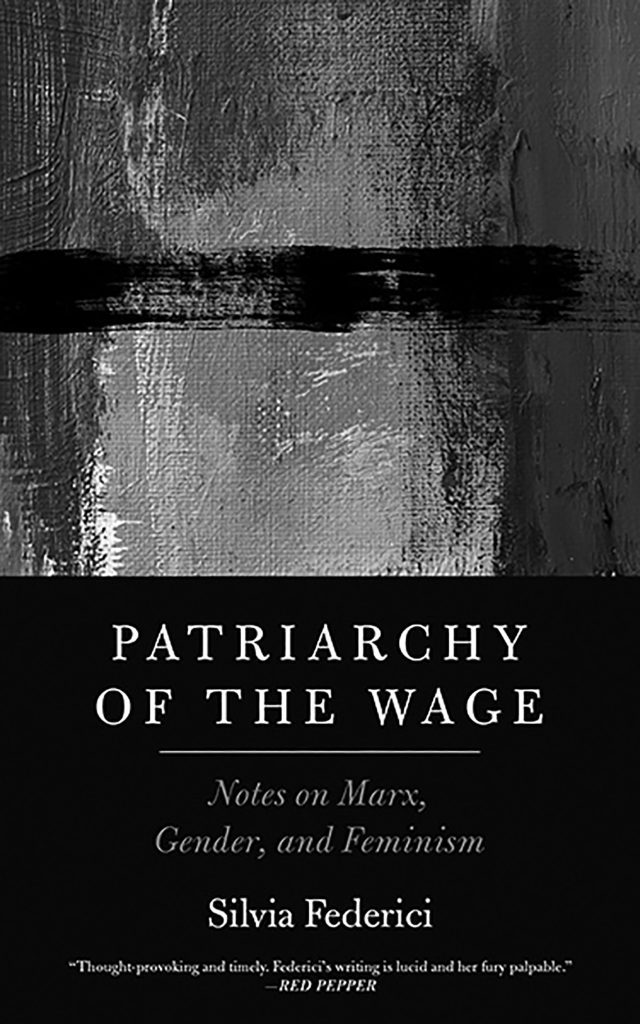
The fun’s over with the next book: Patriarchy of the Wage: Notes on Marx, Gender, and Feminism, sent over from the radical PM Press in Oakland. Silvia Federici is a badass who has contributed a great deal of original thought to radical scholarship, from her studies of medieval witch persecution to theories of collective ownership inspired by her experience of Nigeria’s commons. Patriarchy of the Wage is rather less scintillating. I know Federici has always been a Marxist, but as I read I couldn’t help asking myself why she continues to shove her big, beautiful brain through Marx’s tedious ideological machine, particularly in this slim but hellaciously verbose little volume—and in the name of feminism, of all things! Personally, I prefer to honor the memory of his long-suffering wife Jenny (who spent her life scrambling to feed her husband and seven children on whatever Engels could spare of the profits extracted from female laborers toiling in the sweatshop he inherited and used to fund his revolutionary pas de deux with Marx) by refusing to throw in my proletarian lot with an ideologue whose vast theoretical empire rests on the time-honored leftist maxim, “do as I say, not as I do.” Federici argues that “what the feminist return to Marx has demonstrated is that his methodology and critique of capitalism remain necessary for analysis of women’s exploitation in capitalist society.” I argue that Karl Marx is a bad radical boyfriend, and she can do better.
In Settling St. Malo, a book of poems by Randy Gonzales, the community historian seems less interested in poetic form or particular rhythms in language than conveying the world of Filipino Barataria past and present that lives in his mind’s eye. This he does beautifully. The poems bleed into each other, forming a patchwork of images that you can slip in and out of like a dream, a gracious invitation into a hidden part of Louisiana so few of us know.

Hello, I’m a ghost is the first issue of a lovingly assembled and perfectly bound photo magazine featuring a collection of photographers from the Deep South such as Craig Mulcahy, Casey Joiner, Devin Lunsford, Benry Fauna, and Jennifer Shaw, and the only visual arts contribution in the bunch. It’s beautiful, dreamy, and fun, and with that kind of high quality curation and production value I’d say it’s worth a subscription to stay tuned to Density Magazine.
And then it was over—I was finished reviewing an artistic microcosm in a postal box, and it left me exhausted. As much as I appreciated the flash flood of cultural content, much of which I would never have been exposed to otherwise, the assignment is fundamentally flawed. The care and effort it takes to birth something new into the world deserves to be considered individually. At its best, reviewing is about helping the work find its true audience. Instead of giving my reading public a long list of my likes and dislikes, I’d much rather facilitate other people’s participation in the process. In no time, this review pile is going to build right back up, leaving all sorts of new art babies without a happy home. And so to you all I issue an official invitation to get on in here. We need reviewers (badly) and you might well need a short, sweet, and satisfying new creative project. So go ahead, reach out to us from time to time, and see if someone has sent out some precious piece of their soul to be considered, maybe with a cute note attached. Then just tell us what you think.
Potential reviewers get in touch, via our “about” page.
