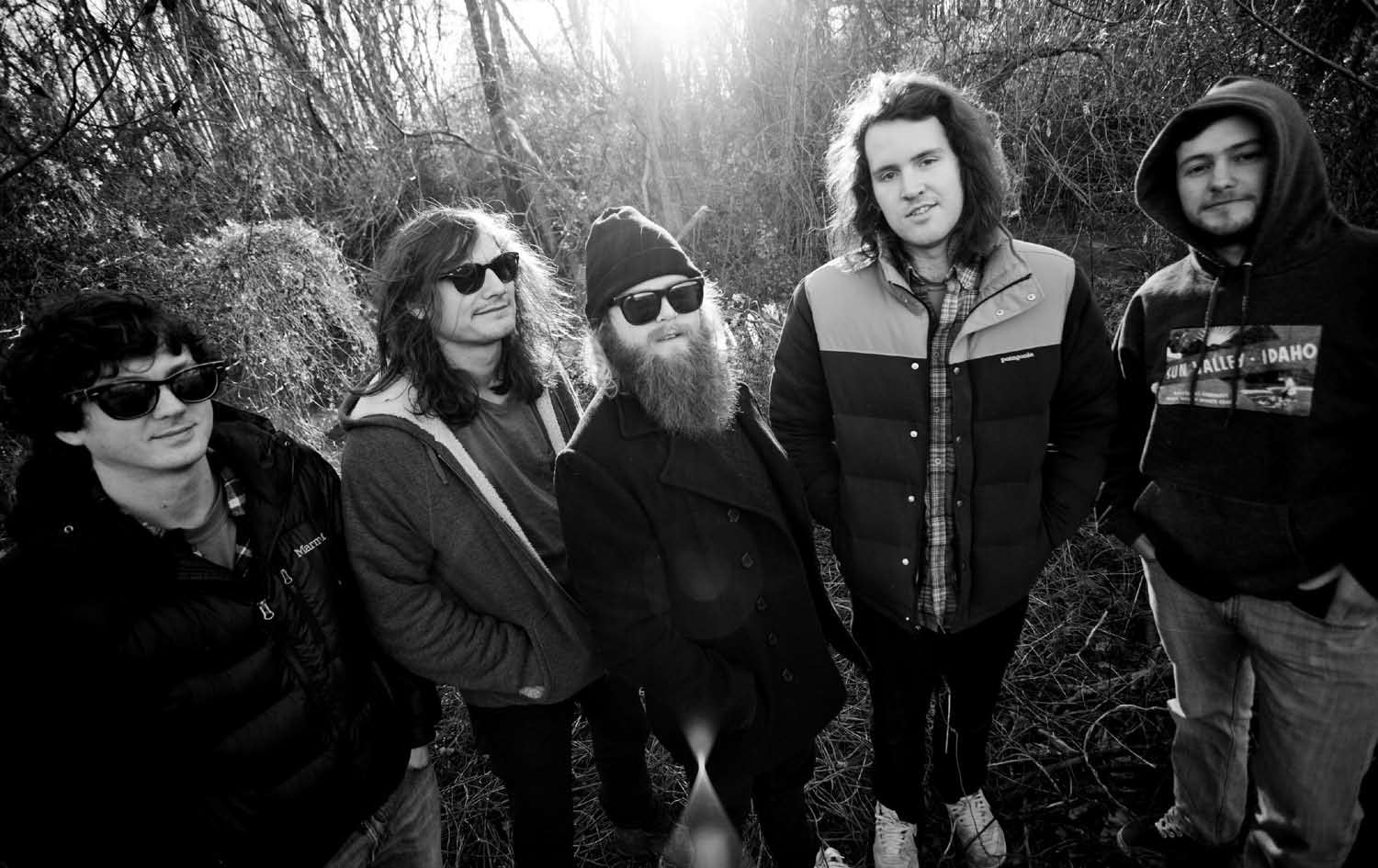
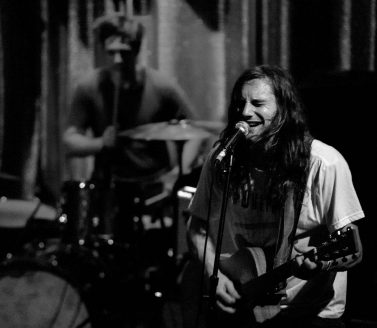
 Athens, Georgia has long been a fertile ground for musical innovation. The latest gift it has bestowed upon the world comes wrapped in a big, loud, trippy package. Futurebirds meld the endearing storytelling traditions of country music with the complex, expansive aural nature of psychedelia, all frosted with a heavy helping of classic guitar-driven rock. Lead singer Carter King sat down to talk with me just before Christmas about what the first few years of this band have been like: touring with Athens legends, fighting dismissive labels and producers to see their visions realized, and owning their Southerness. Futurebirds wrap up their current tour with a final stop in New Orleans on February 9th, where King promised me we’d be treated to one hell of a show.
You guys are from Athens, Georgia— fount of all good musical things. Did you all grow up there?
Carter King: We grew up all over Georgia, except for our drummer, who grew up in Colorado. But we all met in Athens when we were going to school there at the University of Georgia and just kind of stuck around for a few years after that.
Do you think going to college in a city with such a rich musical tradition influenced your decision to start a band? Or do you think it would’ve happened wherever you landed?
One of the big reasons I wanted to go to UGA in the first place was for the music scene. It’s a pretty great place to start a band, because it’s got this really great scene, but it’s also a pretty small town. It has a constant influx of young people because of the university being there and it’s a great support system. If you’ve got a small band, you’re hanging out in all the same bars and you meet the club promoters; and those people pride themselves on helping smaller bands out, so when a national act comes through, there’s a lot of opportunity to get some really good opening slots and get your stuff out there that way. It’s been said many times before, but it’s the perfect incubator for a baby band.
Did y’all draw influences from any particular Athens bands that came before you?
Absolutely. I don’t know if there’s just something in the water there, but a lot of our earliest reviews compared us to a lot of older Athens bands and half of them, I wouldn’t even know who they were. So there seems to be an influence that’s coming from some other realm.
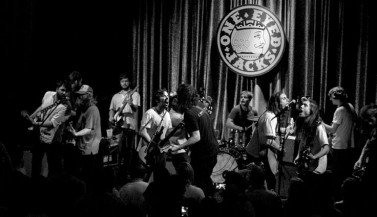 You got the chance pretty early in the game to cut your teeth touring with some of the bigger Athens bands like Drive-by Truckers, Widespread Panic, and the Whigs. What did you glean from those experiences?
You make sure to take your notepad every time you go on tour with bands like that. The Drive-by Truckers are the best example of that, because they were definitely on that next level. They had kind of “made it.” You see how they run their operation and it’s one of those things where you can learn from other people’s mistakes and not have to make them yourself. And their trajectory in the beginning was a lot of DIY stuff— they pulled together money to put their first record out on their own—so we were able to take in those lessons and get our own thing going in that way and see how they made it successful.
What’s the single best piece of advice anyone from one of those bands ever gave you?
That’s a tough question. It may never have been said in these terms, but the best overall lesson we ever picked up was from going on tour with the Truckers. And it was essentially that you don’t ever have to take shit from anyone, that the reality is that everyone’s telling you what you want to hear, but the hard part is finding out who actually means it. They definitely always had that air about them. They’ve gone through a lot of different people as far as management and record labels and have had their fair share of falling outs with folks, so that was an important lesson to learn from them.
 A lot of talk is made of genres and classifications in the world of music. Everyone is assigned a box. The one I see you guys most often placed in is psychedelic country. Do you feel like that’s a fitting moniker for what you do?
I don’t really think anything is completely fitting—we have a lot of different hats we wear. Somebody said it once and we thought “Okay, that sounds cool.” [laughs] We definitely have psychedelic tendencies and country tendencies, but we have 100 other tendencies as well. And that will change from night to night and from city to city. I like that one personally because it has a nice ring to it, but I don’t think it’s the full picture by any means.
When I was growing up, country was one of two things: classic tunes from artists like Patsy Cline and George Jones or pop-influenced tracks by Faith Hill and Tim McGraw. These days the banner of country is enveloping so much more, including rock/Americana acts like Shovels & Rope and the Civil Wars and bands like you guys, who mix country sounds with more experimental genres. A lot of those bands are seeing widespread mainstream success. Do you feel like these guys being pulled under the country umbrella is a good thing for the genre?
I think it’s a great thing for country music as a whole. Some of the top country this day and age has electronic drumbeats! We love the old, golden era country, but we also listen to a lot of ‘80s and ‘90s mainstream country. I think it’s great for country music that people are kind of carrying the torch of that older, true sound so it doesn’t get swamped over by dubstep. So we’re proud to wear the country badge. Like I said, it doesn’t get the whole picture, but it’s definitely a big influence on us and I like to think it shows in our music.
Your last record [Baba Yaga] was, by all accounts I’ve heard, a hellish wrestling match that you barely survived. What was the hardest part: balancing influences or creative control, finding a cohesive vision for it? What gave you the most trouble?
A lot of those things gave us a hard time. In the end though, it was really finding the right team of people that saw this thing like I did. We had a very specific vision for this record; it was a really long record that ended up being a double LP, which record labels aren’t exactly excited about releasing these days. It was our second full-length, but a lot of people still saw it as a debut of sorts—our first chance to be heard by a larger audience. And we had this specific vision of it and the people we talked to said everything we wanted to hear at first, you know, “We’re an artists’ label and an artists’ company and we want to help you see your vision.” And then six months into the conversation, it’s “The one thing we’re going to need is for you to cut it down and we want this old song of yours on here;” and all I could think was “Well, this sucks; I don’t want to do this at all.” So we had to start back from square one and, oh my God, it was like a black hole! We wanted to put this record out and it just kept getting pushed farther and farther back and we thought the thing was never going to come out. We recorded it off-and-on between tours when we could afford studio time, so it ended up taking us seven months total to make the record anyway, followed by a year and a half of all this bullshit. It’s the stuff you really hate to deal with— the business side of things. And you have to learn as much as you can about it, because if you don’t, you’re probably going to get screwed hard. But dealing with all that crap just got us really far away from the music itself and the part of it that we got into it for in the first place. But then Fat Possum came to the table and they were a light in the darkness. They really saw it like we saw it and they said “We’ll give you all the advice we can give you,” but at the end of the day it was our record to put out. So everything worked itself out.
So I take it you’re happy on the new label?
Yeah, very happy.
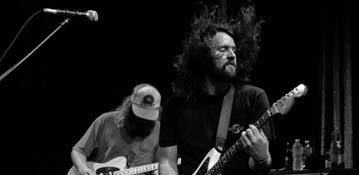 Considering the arduous process last time around, do you guys have plans to record again anytime soon?
Yeah, I actually got back at 1 a.m. last night from ten days of tracking and recording in a studio outside of Richmond, Virginia—Montrose Studios. It’s for another full-length, which we’re planning to go back and finish after we wrap up this tour in February and hopefully it will be out deep into next year [2014] some time.
How does the sound compare to the last one? I mean, Baba Yaga is monolithic. Is the new one going to be another heavy hitter? Or maybe a change of pace?
It’s definitely got some big, weighty songs on it, but a lot of the songs are shorter. Working it down a little bit and not getting into every one of our indulgences. But there’s definitely some new sounds on it, which we’re all really excited about. Some heavy country influence in some of the songs too, one of which I wrote after a morning of listening to too much Dwight Yoakam.
When were these songs written? Was it in the midst of the last album’s craziness or since you’ve been touring in support of it? Where were they born?
They had a very long gestation period. We were in labor for a while. [laughs] We tour a lot, so you write when you can. Little bits and pieces of songs come to you and melodies here and there. But sometimes you get back from a tour and the last thing you want to do is pick up a guitar. But it all came together and we got some pre-production stuff done in this house outside of Athens. We just holed ourselves up for a couple of weeks and everyone brought their songs to the table and we worked with them. Some songs come to the table fully complete but some come just as bones, so you gotta build around what’s there. So that was a time when a lot of progress was made on the songs. That moment when you first get them out in the open to everyone else and they stop living just in your head is great. Actually being in the studio, a lot more of that goes on and parts become something different than they’d previously been and all that.
Southern musicians have a grand tradition of storytelling. Do you feel, as a lyricist, that you’re continuing that? Or do you feel more concerned about telling a story through instrumentation and arrangements?
 I think it’s very important to keep that alive. Sometimes you write a song with a specific story in mind that works itself out with a setting, a place and an occurrence—that type of thing. But sometimes you’re writing more about a feeling or an image you have. So that might be a little more abstract, but the lyrics still tell a story. Whether it’s forthright and direct or a bit more in the ethos, it’s there. That was another thing recording these new songs: you write what you know and we all know the same things because we’re living the same sort of existence right now, touring together all the time. So a lot of the songs on the new record are seeing the themes coming out the same, even though we’re not writing the songs together originally; they’re all coming from the same place.
You and I are about the same age, so maybe you can relate on this point. I feel like when I was growing up in the South, most of the popular, mainstream musicians I knew about were very “other” in that none of them (outside of country artists of course) were Southern. Kids these days are growing up with bands like Alabama Shakes topping charts and racking up wins at award shows. Do you feel like Southern music is experiencing a renaissance? Like maybe suddenly the rest of the country is paying attention to contemporary artists from our region?
You can say that’s been happening in some way since the Rolling Stones—an English band that ripped off old black men from the Mississippi delta region. Look at the most popular band out there right now—Mumford & Sons— they’re all playing banjos and guitars and essentially playing southern Appalachian music.
But what made it cool to put banjos on FM radio and to dig on that old blues sound? Is it just because music is cyclical or are we just a cooler generation?
Well, we’re definitely a cooler generation, no question about that. [laughs] But you know things do come back around. Music starts going all in one direction until things get saturated and people start looking for “the new sound” and it usually turns out that it’s not new so much as it’s been on the shelf or under the rug for 30 years. But yeah, it is good to see bands that are from the South and of the South doing that Southern thing and getting recognition for it.
So you’re going to ride that wave to worldwide stardom, right?
Yeah. And then we’re going to start ripping off British music. Everything is cyclical, you know.
Futurebirds play One Eyed Jacks with Natural Child opening on Sunday, February 9th at 9pm. For tickets and more info, visit futurebirdsmusic.com
