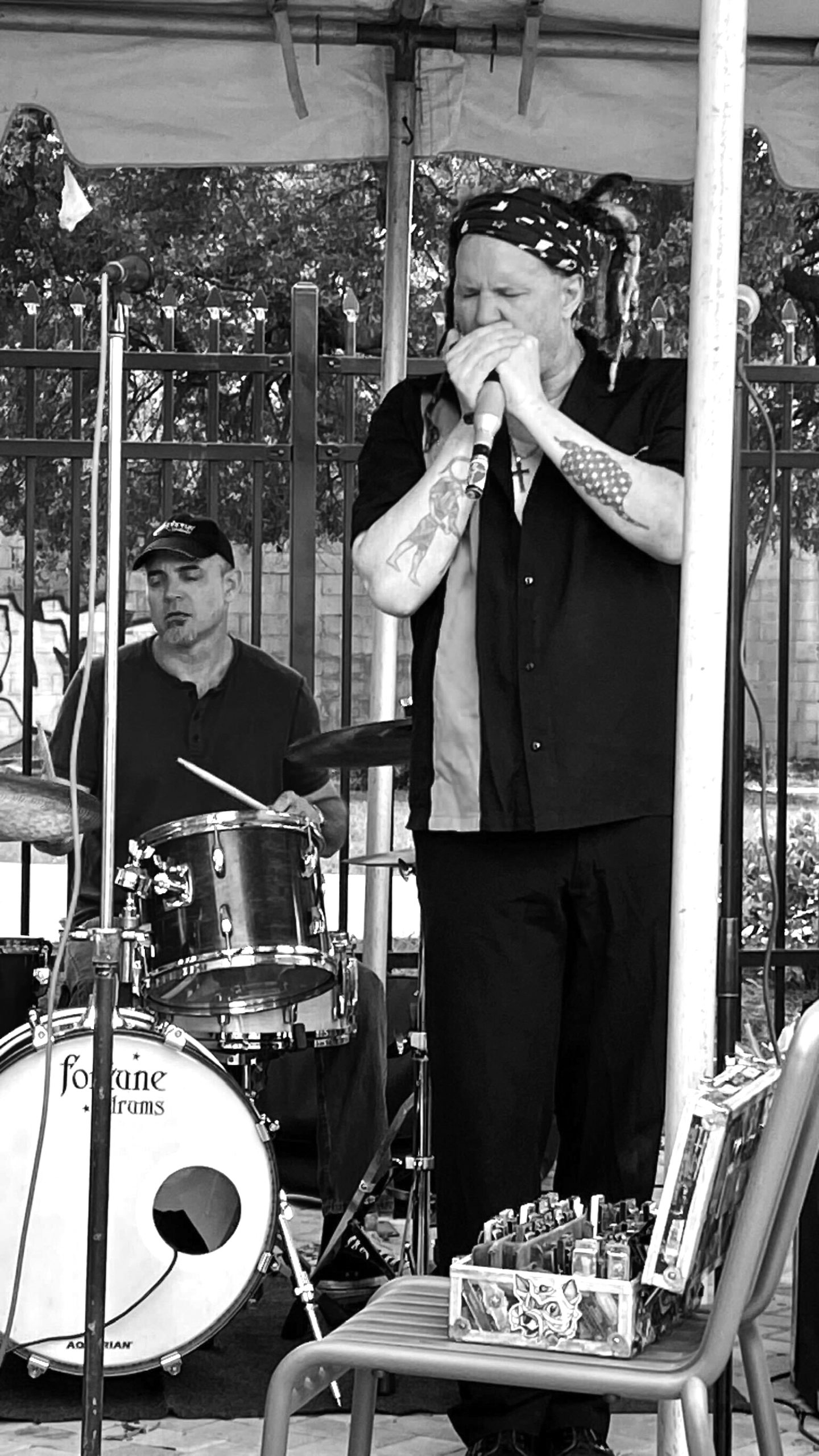
Known for its unique music lineup and food staples like crawfish bread, the New Orleans Jazz & Heritage Festival1The New Orleans Jazz & Heritage Foundation is an advertiser with ANTIGRAVITY stands as one of the major cultural events in the city. But like many other music festivals, it’s also known for an ample selection of alcohol and other mood enhancers. Booze often feels more readily accessible than water. It’s no wonder, then, why events like Jazz Fest can sometimes be difficult for people with more complicated relationships to drugs and alcohol. There are many varied and valid ways that people can approach substance use, and for some people, it’s abstinence. Zero Proof Jazz Fest is a mini-music festival that precedes the main event to allow festers, artists, and others to meet similar people in or around recovery. Imagine Recovery, an addiction treatment center in New Orleans, hosts the event, which is organized and managed by Christopher O’Shea, Felicia Montiforte, George Kalmar, and Jeffrey Goldring. Founded in 2021, this will be the event’s fourth year, and has featured local artists in the past such as Jason Ricci & The Bad Kind, Anders Osborne, Ivan Neville, and Joe Gelini of Cha Wa. I sat down with some of the festival’s leaders, as well as Gelini, to learn more about what inspired Zero Proof and how it ties in with the larger festival culture.
What inspired Zero Proof?
Christopher O’Shea: The inspiration comes from the same reason we built Imagine. Our belief is that recovery’s great struggle isn’t when you’re at the mountaintop being told how you’re going to now rebuild your life—it’s when you’re in that life, desperately in need of connection and support. There are a lot of things outside of substance use that affect every human being. We wanted to help people with that because we went through the same thing.
So you have been through recovery as well?
CO: I’ve been sober for over 26 years now. I got sober in New York City. I worked around entertainment and I had such anxiety and fear of being a person in that [environment] sober. I had about nine months and some friends kind of forced me to go see an improv dance recital. I was a little excited but mostly scared. I had been using substances in one way or another since I was probably 12 or 13 years old. And we went in and it wasn’t fancy, but about halfway through, the emotion I felt—unfiltered by booze or drugs—was so impactful to me that it gave me the courage with this group to now finally live life. I think that was one of the things that secured the strength it took for me to stay sober.
What made it a scary experience and did that inspire you to help start Zero Proof?
CO: I think what it is, if we really think about it, is that there are lots of people who use substances in a healthy way. There are lots of people who use a little of it to calm themselves, a social lubricant to be in the world. I completely understand that. I couldn’t, though, because it tends to lead me to abuse. So living in this world, completely unfiltered, is a very complex emotional experience for everyone. I had always used substances to adjust myself to the world. I’m a pretty over-the-top type person. So my friends who were more reserved, quiet, I wanted to help them. And I think that’s where we got to with Zero Proof Jazz Fest. We’ve recognized at Imagine that if you can help people discover their passion and their love of life without substances, you’re helping ensure they will stay sober. Having something worthwhile outside of relationships or money is finding that part of ourselves that attracts us and makes us feel belonging. Whether it’s music, art, theater, dance, comedy—it doesn’t really matter. So we decided to create places where we could do that.
And how did you get involved in Zero Proof, George?
George Kalmar: So my experience was I grew up in New Orleans and I hadn’t been to Jazz Fest in about 30 years. I had left town, and at the first Zero Proof Jazz Festival event we had, I had an opportunity to meet people who were in New Orleans who were coming from out of town. And when I ran into them at the Fair Grounds, it gave me a tremendous amount of security to know I can still enjoy this festival. There are still people I can reach out to if need be. The fest gave us that opportunity.
What did you like about Jazz Fest?
GK: I love Jazz Fest. I mean, the music, the food, the art, and I finally got a chance to go back. It was a completely different experience for me. Open eyes and being able, like Chris said, [to] take in everything with a clear head. It was great. Couldn’t drag me out of Jazz Fest. I was there both weekends, morning and night, didn’t care about the weather, either.
And do you also help organize Zero Proof?
GK: To be fair, I don’t organize it. I’m kind of just a get-stuff-done kind of guy. I’m also in recovery and went through Imagine as a client three years ago. I worked at the Imagine House as a live-in manager and now I work for Chris.
And Joe, what made you want to get involved in the event?
Joe Gelini: I am a musician in recovery. I’ve been sober for 15 years. And service is really important to me. It’s essential to what we do in general, being in recovery. One of our tenets to stay sober is the ability to give it away. And for me, I got sober and was very much committed to continuing to play music, but I was also terrified to go see live music and start performing music again. It had become more of a performative thing because I was just mostly interested in getting high and drunk. I was faced with the idea that the thing that I love the most—which is playing music and listening to music and going to concerts and playing concerts—became a very, very slippery slope. I suffer from anxiety. I’ve been gigging since I was 16 years old in bar rooms and the social lubrication of being inebriated allowed me to deal with my fear, which took a rapid descent as I got older. So one of my missions is to be able to give other musicians and music lovers in New Orleans and around the country some inspiration, some hope that not only can you continue to be a professional musician, but that you can continue to go be a part of all these wonderful cultural things that we have in New Orleans. Not just concerts, but second lines and parades and Mardi Gras. And Jazz Fest is really the culmination of all of those things put together for our year. And maybe six months into my own recovery, I remember both going to Jazz Fest and performing and almost feeling like I was getting high. I realized I had lost the natural high of playing and listening to music. And eventually, that came back, but it came back exponentially greater the longer I was sober. I want people to realize that it comes back. And not only does it come back, but it becomes even greater. So I think having a safe place to listen to music during Jazz Fest is one of the best gifts that you can give to someone, because I didn’t get sober to be miserable.
How do you find other people in New Orleans or in the music scene perceive your sobriety and interacting with the music world sober?
JG: I think initially people were surprised that I was sober. I still have friends that can do impressions of me when I was loaded 16 years ago. It’s a whole new world. It is terrifying but it’s also beautiful. A friend of mine who is involved in all of this, Anders Osborne, we both got sober the same year, and he’s nine months ahead of me. So he was really supportive and helpful in my journey, especially in early sobriety. And there were other musicians that I’m still very close with, some of my closest friends that were right there with me that were taking me by the hand and saying, “Try this, do this. Have you thought about this?” And I started my band, Cha Wa, in sobriety. We’ve had some relative success. We’ve been nominated for a couple Grammys and toured the world. We’ve had a real amazing experience. I started experimenting with it at the end of 2010, which was right around when I was about a year sober. All of my friends in recovery were super supportive. In fact, Anders told me one time at dinner, I asked him, “What do I do? I’m playing with all these guys that party and I’m uncomfortable. I think they’re uncomfortable around me because I’m a mirror to their own addiction.” And he said, “Well, what’s your favorite type of music?” And I said, “Mardi Gras Indian music.” And he said, “Great! Do that.”
CO: I think Joe is a great example of what the artists from this city, especially the sober ones, took [on] as a responsibility as they left the state and the city and shared part of what they are in the world, which has only added to our reputation as being an authentic place for music and creation. I think that’s important. I was thinking as Joe shared this… so I grew up in entertainment, right? I was raised by two gay men. One of them was the writer Truman Capote. And so early on in my life, I spent a lot of time around creative people who definitely could have used sobriety. Then as I got older, I was lucky enough to work with Andy Warhol and then went on to work in the film industry with my sister and her husband. My sister and her husband made Die Hard and all these big movies, The Thomas Crown Affair, The Hunt for Red October. And I wasn’t sober for a bit of it. And it was so uncomfortable. And then when I got sober, it was even more uncomfortable. That was in the ‘90s. But I can tell you that after being sober for a while, I was better in that world than I had been, even when I used substances to help me navigate it.
Life isn’t easy. And I think we need to always have a sympathetic eye towards people’s need and use for using substances. We’re not judging anyone. We get it. If there was a healthy way for me to have that experience, I probably would still be doing it. I couldn’t. I think especially when it comes to art, music, culture, there’s a sense of what that lights up in us that we associate so much with also substances, and all we’re trying to say is, “No, you can have that organic real experience without any of that added stuff, but it’s even better in a community.”
I was a Deadhead. I am a Deadhead. We used to go to [Grateful] Dead shows in the ‘90s when I was sober, and they had an area that was sober. Ninety-five percent of the rest of the people there were tripping on LSD, so it was kind of weird, almost like an art-house movie experience. But even that in itself, we still got to be a part of the art that we loved. I got sober and realized there was some stuff I didn’t really like, and I didn’t have to go anymore. When we tap that creative side, whether it’s as a fan of it, or a part of it, or both, our statement with Zero Proof Jazz Fest is, “Yes, you can be a part of all of that, and then some.”
Joe, do you remember your first Jazz Fest after you became sober?
JG: My sobriety [anniversary] is September 29, 2009. So that first sober Jazz Fest party that we had was just that sort of vibe. It was a bunch of newly-sober people. Some people had long-term sobriety. There were people that play at Jazz Fest. I play at Jazz Fest every year. It’s an opportunity to show people that you can do all the same stuff that you want to do sober. By the time I was at the end of my journey with alcohol and drugs, my life got very small. I was isolating myself and doing less and less things and playing less and going to see less music. So it’s [a] great opportunity for people to come together and be in a safe space to celebrate the music and all the different things that we normally would sort of associate with having a cold beer or partying or whatever it is. That’s part of the laissez-faire attitude of New Orleans.
How did you feel coming back to playing music sober? What was that like for you?
JG: It was really scary. I think what was most helpful was the recovery community and being around them. One of the beautiful things about this is to have a community, people that are sober and have an experience like Zero Proof. Being able to go and have all of the musical and cultural aspects like food, fellowship—all of those different things that we love in New Orleans, especially in the recovery community. It’s great to be around people that have long-term sobriety that can do it. And as someone who is in early recovery, I think it’s essential to be hanging out in those environments. When I would go out, I would go out with a group of other sober people.
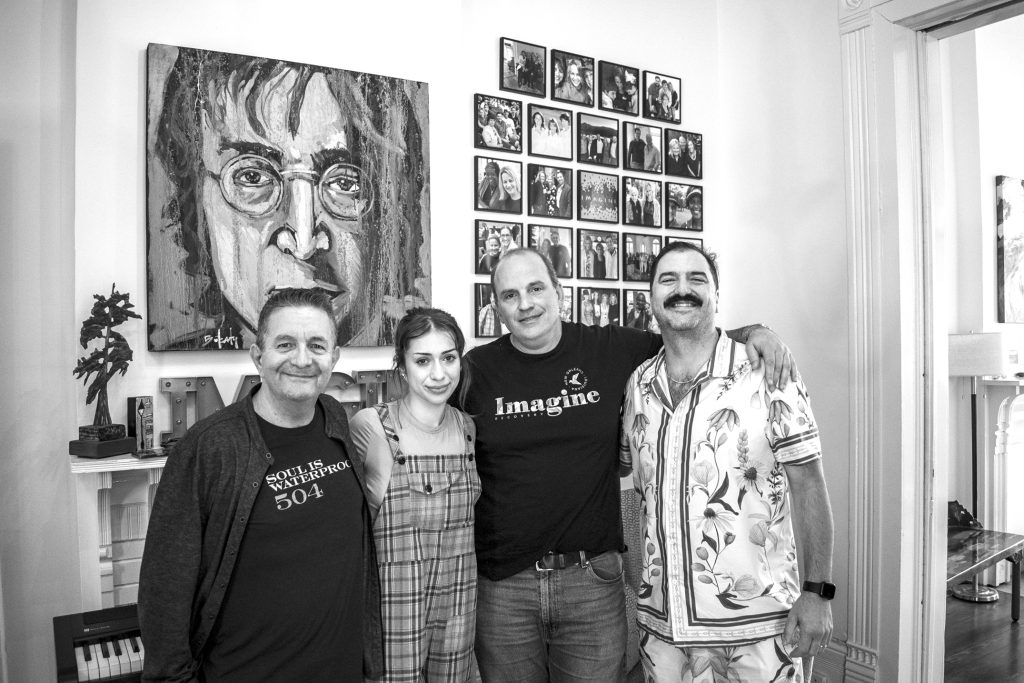
L-R: Christopher O’Shea, Bella Lott (Imagine Recovery Office Manager), George Kalmar, and Joe Gelini of Cha Wa at Imagine Recovery
Photo: Dalton Spangler
A lot of musicians in New Orleans have gone through the recovery experience. Is there a reason y’all think that the music scene especially in New Orleans has that attitude or substance culture?
CO: New Orleans is home to some of the greatest musicians that have ever existed. If you look at the background of almost any great group of the last 30 years, the talent in those groups would be from New Orleans. Most of the studio musicians—so many great artists—were grown from this city, or at least began part of their career here. So as a result of that, a lot of them found recovery, some didn’t. But MusiCares is an organization that’s been here. It’s from Los Angeles but has a big hold in this city. So there’s a family tree of people they helped get sober 20, 30 years ago who, as Joe was sharing, part of our code is if someone helped you and you’re better, you are obligated to make sure your hand’s out for them. That’s part of recovery. But it’s also part of the artists in this city. They want to help support each other. Substance misuse has always been around the music community especially. And as we’ve seen in the last 30 years, that stigma has changed. You don’t have to be a partying crazy person to be a great artist or to even be an artist. If you look at Sober Fest that Bridge House/Grace House put on, it was Ivan Neville, Anders Osborne, Jason Ricci & The Bad Kind were the three main acts. All three are very public about being in recovery. And they have a link to one another. They’ve all helped one another. This year, Jason Ricci & The Bad Kind will be our main act and in the New Orleans style, we leave it alone. Joe hopefully will sit in and then the other artists will come. It’s also about them feeling in their community. Not there to perform, not there to do anything, to just be a person among the people, you know, a person in the group.
What made y’all choose to do it on Jazz Fest eve?
CO: So many people come from out of town that are in recovery, right? And once I moved here, people would say to me, “Oh, you live in New Orleans. I go to Jazz Fest.” I’d say, “I had no idea.” And they’d say, “I’ve been going for 20 years. I’ve been sober for 30.” It’s about that. It’s about people from all over the world coming here and you meet [up]. Isn’t that the great thing about Jazz Fest? The cultural mix that exists. When we say the word[s] “melting pot,” which, you can find less and less of that in the world, but in New Orleans, you find it at Jazz Fest. It’s the epitome of it. People from Norway, Scotland. I met a guy from South Africa last year. [Someone from] New Zealand in recovery showed up. We also love having people who may not actually have substance problems, but are choosing a life of not using substances to have the real experience of life. Unfiltered. Whether it’s good, bad, or indifferent, when I put something into my body, I lose it being real. I’m looking at it through a lens. And there are lots of people who don’t have substance problems at the levels that we all did, where we had to really make a choice. And they’re just choosing that. So the group’s expanding. It’s not just, “I don’t use because I was a horrible person at one point.” It’s, “I want to be around people where they’re having the real experience.”
So Zero Proof is open to anybody?
CO: It’s open to anyone who wants to come and eat some crawfish and listen to some music. There’ll probably even be karaoke. Everything’s free of charge. I think a lot of people don’t understand some of the reasons we do all these events, and one of them is we actually feel it benefits the community in a way where people come together. There’s nobody giving speeches about it. It’s just coming together and people connecting. Sometimes we get people who are family members of someone who’s still struggling. They come and they bring the message back, like, “Hey, there’s all these sober people. They were at the same thing you were at and you were behind the toilet throwing up and they were all listening to music, enjoying themselves.”
I was also thinking that a big part of why this is important isn’t just the music. We just came through Mardi Gras. There were tons of sober environments where you could go and feel safe. Of all the environments that happen in this city, that’s probably one of the wildest ones. And yet there’s also a culture and a custom. People have grown up here, they’re attached to this experience. Some of that is difficult. Maybe you’ve always experienced it with a beer in your hand. So do you have to give that up now? We say, “No, definitely not.” You can have a new experience and create a new memory.
Looking towards the future a little bit, what are some plans you have with the festival or other programs?
CO: Our goal has always been to keep expanding this. And that’s why we also include what we call “allies.” There are more people who are caring for someone who’s dealing with mental health and/or substance misuse than there are people dealing with it. For every one person we try to help, there’s usually three or four that are like, “I love this person, and they might die,” or, “I love this person and I want them to be happy.” It’s really that simple. So any of the things we do are open to all of those people. Sometimes helping that circle heal or at least feel safe and cared for exponentially helps that person. It just does. So our goal has always been to keep expanding this. Every day at Jazz Fest, for years long before we were here, people with substance misuse would meet together, at—
GK: 1:32.
CO: Right! It’s existed forever in an organic way every day at Jazz Fest. Everyone gathers around this white flag [between the Fais Do-Do Stage and the Artist Tent] at Jazz Fest just to say hi. There’s no group therapy. It’s not a meeting, It’s just people going, “Hi, where are you from?” I think the reason people have supported it for years is it’s just a little beacon in the middle of the day. You can feel overwhelmed at Jazz Fest. You don’t have to have substance problems—it’s a lot. That’s a big point of Zero Proof Jazz Fest. This year we went back to the original. It already has a legacy of people who come early the day before Jazz Fest starts, so that’s exciting.
What was the phrase you used before the interview to describe this, George?
GK: “Never walk alone.” It’s also Liverpool Football Club’s mantra. For me, it was guys like Chris and Joe who I would meet at the event before Jazz Fest and talk about: “Who are you gonna go see? What are you gonna go eat? Let’s meet up at this time.” Having a little more of an agenda or being a little bit more aware if I’m going out as a newly sober person, how do I stay safe and enjoy it, right? Knowing that there are other people out there makes all the difference in the world.
The 4th annual Zero Proof Jazz Fest will be hosted at the Imagine House (11 Marlborough Gate Place) on April 23 at 4 p.m. For more info, check out imaginerecovery.com/event and @imagine_recovery1 on Instagram.
Top photo: Jason Ricci performing at Zero Proof Jazz Fest 2024 with his band The Bad Kind. Photo courtesy Imagine Recovery / Christopher O’Shea.
