
Wesley Chavis was born in 1992 in Silver Spring, Maryland, but like most Navy brats, he moved frequently, spending much of his childhood in Virginia Beach. Although he claims Beaumont, Texas, as home, I met Chavis in Gentilly during his time as a visual arts professor at Dillard University. Like most students enrolled in the course, I expected his class to be just another box to check before graduation. I was eager to finish school and move on. But instead, I found myself looking forward to his two-hour course. Unlike the usual weary professors running on caffeine and routine, he was bright-eyed, enthusiastic, and eager to share everything he knew about art. He didn’t see us as just a sea of students—he met each of us with grace, encouragement, and a genuine desire to see us grow. Through his teaching, I discovered art—especially painting—not as a pursuit of perfection, but as a healing force.
Yet beneath his warmth lies a man who has wrestled with his own shadows. His debut book, Big Wrap, Forearm, is an exploration of homoerotic fantasies, meditation, and self-reflection, told through aged prayers, letters, and poems. In July 2023 Chavis began working on Lore and Sentiment, a long-awaited visual arts collaboration with photographer Elliott Jerome Brown Jr. While initially intended as a traditional exhibition, Chavis found himself drawn to something more intimate. As he sifted through years of writing—words he had originally put down as a healing mechanism, a way to process complex emotions—he realized they held a deeper purpose. Rather than displaying his work on gallery walls, he reached out to the gallerist (KAJE, in Brooklyn), proposing a publication instead. In a moment of serendipity, the gallery had funds set aside for just such a project. What began as scattered writings became Big Wrap, Forearm, a compilation of personal reflections.
On a warm day in January, Chavis and I sat down to unravel Big Wrap, Forearm along with the complexities of celibacy, the connection between art and spirituality, and releasing the fear of perception.
Wes, for almost a decade, you’ve expressed yourself through various mediums—painting, sculpture, music, and dance. What inspired you to make your debut as an author?
I really love what art can do for the person who’s making it, and for people receiving it. One of the things I feel as a maker is that art makes me braver. I’m really able to use art as a friend who protects me. When communicating through art, oftentimes people can receive it easier, or maybe there’s this air of disbelief or skepticism that people have. [Big Wrap, Forearm] is not quite like an autobiography, [the book] has a life of its own. It can exist apart from the artist and have an effect on someone and tell its own story.
Is there a particular aspect of art-making that you favor? Is there a central purpose that drives you?
When I’m making art, I’m able to say the hardest things and pour out some of the deepest things that I think about or feel because sometimes people can receive it a little bit easier, a little better. That’s one of the things I love about art. I make paintings, I make sculptures, I make music, I gather people for events, and I’m really invested in people’s creative energy shining, and mine too.
In Big Wrap, Forearm, you explore themes of romance and sexuality. Was this a deliberate choice for your authorial debut, or did it unfold more organically?
Honestly, so much of the writing wasn’t meant to be seen. A lot of the writing stemmed from a desire to heal or process or understand. It gave me the opportunity to create something that challenges people’s ideas of what a queer person is as it relates to spirituality, or what they might think about how writing is threaded together in a book, because there’s different kinds of writing and different kinds of tone of voice throughout. There’s also a question of tension between darkness and violence, and also beauty and tenderness, and thinking about if those can exist together with these elements of play. So creating something that mirrored the complexity of the questions or the tensions that I was dealing with, I thought that was important.
The book includes many intimate moments of prayer and meditation. How significant was it for you to weave your Christianity into the narrative? There are moments where you fully expose your relationship with Christ—was that difficult for you?
I thought it was super important because it’s a strong part of who I am, and it’s something that’s been a strong artistic question for me—not necessarily always revolving around Christianity as a religion, but just about the nature of God, and knowing God, and always having this curiosity for our body’s ability to channel spirit. I’ve always encountered things I couldn’t quite explain, or what I would call miraculous healing, or beautiful coincidences, that felt very spiritual to me. I’ve grown up with this faith, and as a young child, I really believed that God loved me. It’s just a strong part of how I make things, and “How is spirit active in this?” is always a pretty central question for me. I think a lot of the things I’m questioning when it comes to sexuality and romance also have to do with my prayer life with God. And for me, trying to figure out how to love people well, while struggling in some ways to love myself and how to love God well, while struggling to shed a lot of the religious baggage that I carried about the sinfulness of queer sexuality, or gayness, or people attracted to the same sex. I’ve been untangling that for a long time, so it just felt like a kind of unavoidable thing if I’m going to talk about desire, longing, romance, sex.
Since the release of Big Wrap, Forearm, do you feel differently about yourself? Do you feel more accepting of yourself now that you’ve shared such transparency and vulnerability?
I can move past those questions with more speed. Those questions and that tension in between how to love people, how to love myself, how to love God as a queer, Black man, and to do so with this sense of peace, happiness, strength—there was always a fraught tension there. And since putting a lot of this out, I don’t care so much about the tensions anymore. Now that I’ve purged all that I’ve been thinking through and sitting through, it’s almost like I can move on now. I don’t care about untangling this anymore. I’m just a vessel. I don’t care about me. I feel like releasing this gave me new thinking, new freedom. But I also do think that there’s things in there that could be potentially offensive to some people, and putting it out there helped me to embrace this part of me that needs to learn to not care so much about people’s perception of my life. I’m still learning not to care so much about that and to embrace some of the uglier or darker parts of me. It’s almost like I can accept that part of me more freely and fully too.
It sounds like you’re feeling exposed—like when you scrape your knee and it becomes a scab you don’t want to touch because it’s so sensitive. Is that a fair comparison to how you’re feeling about this work?
Yeah, I think I’m growing my scab right now. After releasing this thing, I’ve been trying to maintain the right posture with which to talk about it with people, because there are subjects in the book that are so new and raw to share, and I’m trying to develop a thicker skin with this part of my practice. Like I said before, in art there’s this protective barrier where people just see it or receive it as beautiful art even if it’s like an ugly truth. However, with the book, I find that people might read it and think of it as a memoir, which a lot of it is very vulnerable in that way, but it takes twists and turns that aren’t autobiographical. And I think I do feel a little bit nervous about people not reading it with nuance.
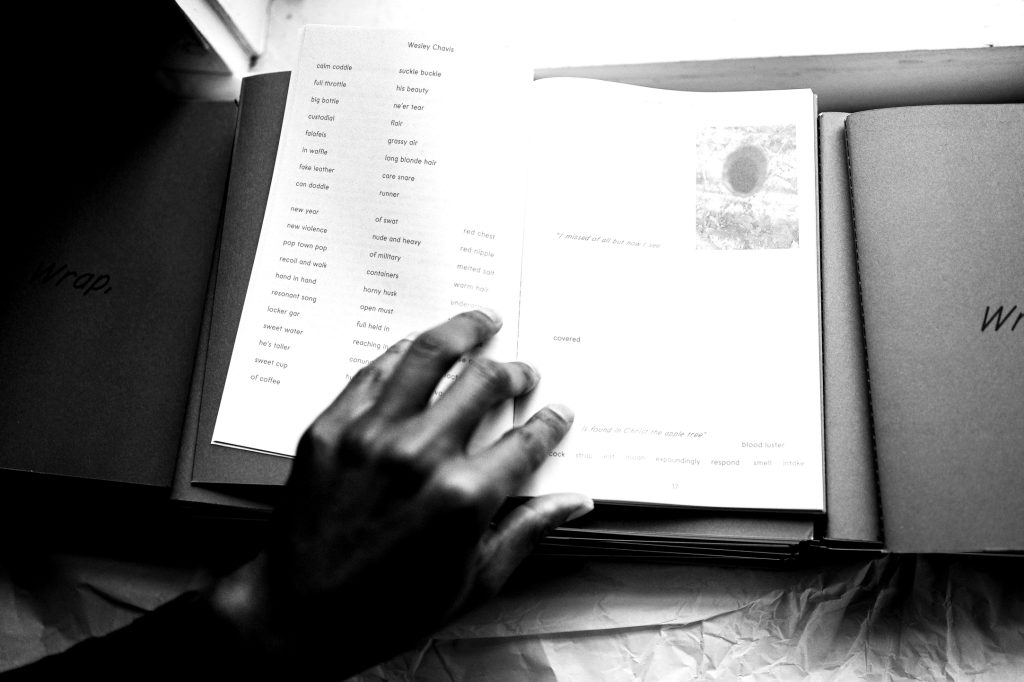
I hear you mourning the shift from being a visual artist, which offers protection, to being a writer, fully exposed, like a newborn baby. I think it’s clear that all of this is storytelling, but for me, reading your book provided a deeper connection to who you are as an artist. When I looked at your past work, I felt like there were pieces missing or hidden layers. But in your writing, I connected so much more to you. Your stories resonated with my own journey as a queer, Black woman trying to find her place in the world, navigating the cost of choosing spirituality while embracing my sexuality. For so long, I wondered where I fit, but your story helped me unpack this sensitive, often taboo subject. It was a breath of fresh air to see a Black man express sensitivity, sexiness, and transparency with such grace, while also leaving room for nuance. Your fear of how others will perceive you is valid, but I want to stay in that discomfort with you for a bit longer. Did you hesitate before releasing the book? Did you consider the aftermath?
I was ready. I didn’t even stop to think too much. I knew if I did, I would either change the writing a lot, or I would edit it in a way that feels less raw. I also only had about three months to put it together. I did a lot of the writing beforehand, and I made a lot of new writing in that three-month timeframe, too. But it was a very quick release, so I didn’t really have too much time to stop and think. But now that it’s out in the world and I’m getting some more feedback and reception, I’m having to tap into that courageous part of me that says: Though some of this is hard to hear, let’s keep going forward. Let’s keep putting it out there. Let’s still do it because you believe in the impact of this.
I want to ask about one of the passages in the book. You’ve mentioned that the book isn’t a memoir, but it’s not entirely fiction either. “Journal Entry: Day 1 of the Ignatian Spiritual Exercises / Sept 2022” documents your spiritual experience with Jesus, and by the third paragraph, you write: “So, I was sitting on the lap of Jesus, my husband.” Although I’ve never had that particular experience in any form of prayer, I found that passage to be both tender and brave. Why was it important for you to share your fantasies about Jesus and explore where sexuality and spirituality intersect in your life?
I was the most hesitant about releasing that because it almost felt too personal to me, and God. And I went into prayer with God, wondering if I put this out there in an art form for people to potentially consume—it almost feels like a small betrayal of a moment that we had, or maybe opens up something that was so important and vulnerable and intimate for me to criticism and feedback in a way that I don’t know if I fully want to open myself up to that. So I think some of those moments with Jesus that are referenced in the book are the ones I had the most questions about releasing. But I decided to do it because I thought they were groundbreaking for readers and they were groundbreaking for me in my spiritual life, and I wondered if it could be for someone else who is struggling with how to bring their sexual selves to God, whatever that looks like for them. I feel like the church, and honestly, a lot of religions, approach sex really poorly, and there’s a lot of shame that is put upon our sexual selves. And I feel like some of those fantasies and some of those prayerful moments with God were moments where shame was referenced, but also shame was released because of God’s response or God’s presence in those fantasies. And so I wanted to create an opening where it’s like, “Hmm, could this be true? Could this be a true form of prayer?” And to ask someone the question: “Do you believe in this? Can God engage like this?” For me the answer is yes, but there are very traditional, religious folks that might read that and reject it. Even a non-religious person may reject it. So I think part of the question is: Why might this make you feel uncomfortable? Do you believe that this is Jesus engaging with me, or is this just my creative, imaginative mind making up some sexual fantasy? The question is there, and I think engaging that part of someone’s belief is interesting to me.
I must say, I read that passage over and over again because I was so moved by how you shared such a tender, sacred moment. I’m really glad you did, though, because it expanded my understanding of God’s love. You made it clear that your sexuality wasn’t something to hide but something to embrace with confidence. Can I share something with you?
Yes.
For a long time, up until I read this book, I was ashamed and embarrassed of my sexuality. I felt like there was no space for me to express it, especially growing up in church. But witnessing your journey in this book was so touching. It gave me the courage to express myself, shamelessly.
I think what you’re describing is really the core of the book. And just moving through that, in those moments with those fantasies with Jesus are really important, because they bring in sex in a way that’s really affirmed and holy with God, whereas I feel like it was something that I always tried to hide from God. In my prayer life, I just approached my sex life through repentance and shame, but I feel like this book is about approaching my sex life and my sexuality with honesty, like you said, and not hiding. Those passages with Jesus are really important.
There was a grace from God that was just like, Look, I know you’re trying to hide all this from me and from other people, but let me have this experience with you. Let me have this deeply erotic and beautiful experience with you, so that you know that I’m not afraid of you. I’m not afraid of this, and you don’t have to be afraid. Let’s open this up so you can be who I’ve made you to be. You can be OK. When you’re hiding parts of yourself because you’re ashamed, there’s no real freedom in your spirituality. I think that also plays into a much more beautiful, deeper openness about the nature of who God is and how he creates people with different sexual urges and different desires and what are we to do with that? The question is so much bigger and so much more beautiful, so much more full of love, you know.
For sure.
He really loves us, queer people, and I think he really does something through the way that we’re made and through our lives. That’s not about just carrying this burden.
How can you create such erotica, as you describe it, and still remain celibate?
For me, the sexual impulse is not just about intercourse. Actually, the simplest way to answer this is just pray, because I don’t want to make it sound [like] if you have sex with someone you’re not celibate, because people make mistakes in their celibate journey. But that doesn’t mean because you had a moment that you failed. For me, that’s not how I think about it. I think about celibacy as more of a spiritual journey or a path that’s about turning your sexual impulse more and more towards God. And some of those passages with Jesus are good examples of that kind of connection.
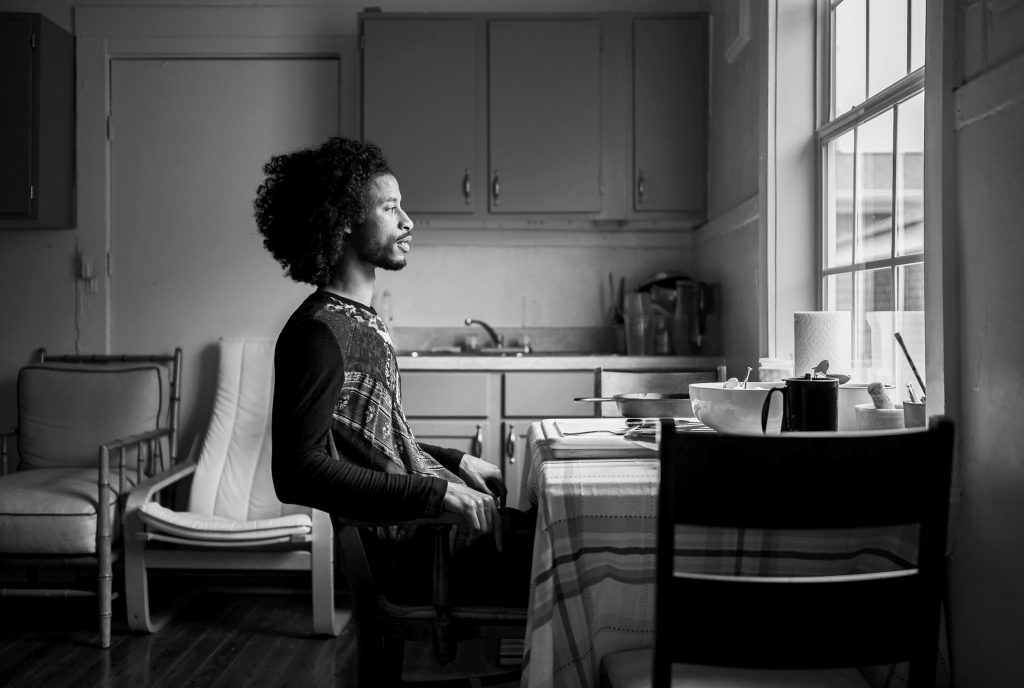
Are you saying that when you experience sexual urges, you think about Jesus? Could you expand on that?
I would sit down and pray for like an hour. I would have my whole room set up with candles, this beautiful purple holy water, that smells like something. It’s like all these senses are in my room, and I light the candle, I burn the sage, sit down and pray for an hour, and I just talk to God. And sometimes, if I’m not hiding that sexual part of myself, I’ll open it up to God. And sometimes that’s how the prayers will go. They’ll be really erotic.
Sex is a spiritual force and it’s not relegated to just intercourse with a person. I want to turn to this poem right here, actually. So this poem, “Gray and Purple Skies Roll So Slowly Overhead.” It’s sort of about sitting on my porch, really longing for this guy that I was having a sexual relationship with, but it ended. And I was just looking at things in front of me, with this sexual lens of longing and desire, but there are some moments where I just feel so centered that I’m going for a walk through the woods and there’s something about the senses and my smallness that’s just piquing this sexual part of me that feels like I become, in some way, like, satisfied.
It’s clear that you’ve been sitting with these thoughts for a while, and I’m grateful you’ve chosen to share them. What do you hope readers take away from this work?
Honestly, after you shared your perception and experience with the book, I felt seen. So in many ways I loved the way you responded to the book. Through this writing I hope to inspire someone to be more brave about sharing those freakier parts of themselves or sharing more vulnerably about who they are, or talking about those things that are more taboo… I think oftentimes religious stories are told without nuance, but I’m trying to make the picture of a spiritual life more complex than that. What if, within the moments that could be considered traditionally sinful, that’s where God wants to operate? And that’s kind of where God dwells in order to unleash and reveal a more whole picture of who you are as a human? And I think we often don’t think of God that way. We think that God is like this lawful master in the sky—at least from the Christian point of view—that’s trying to get you to be more and more perfect. I think God is bigger than that, and can operate in the deep, dark depths of who you are, or what you struggle with, and enter into it and show you love.
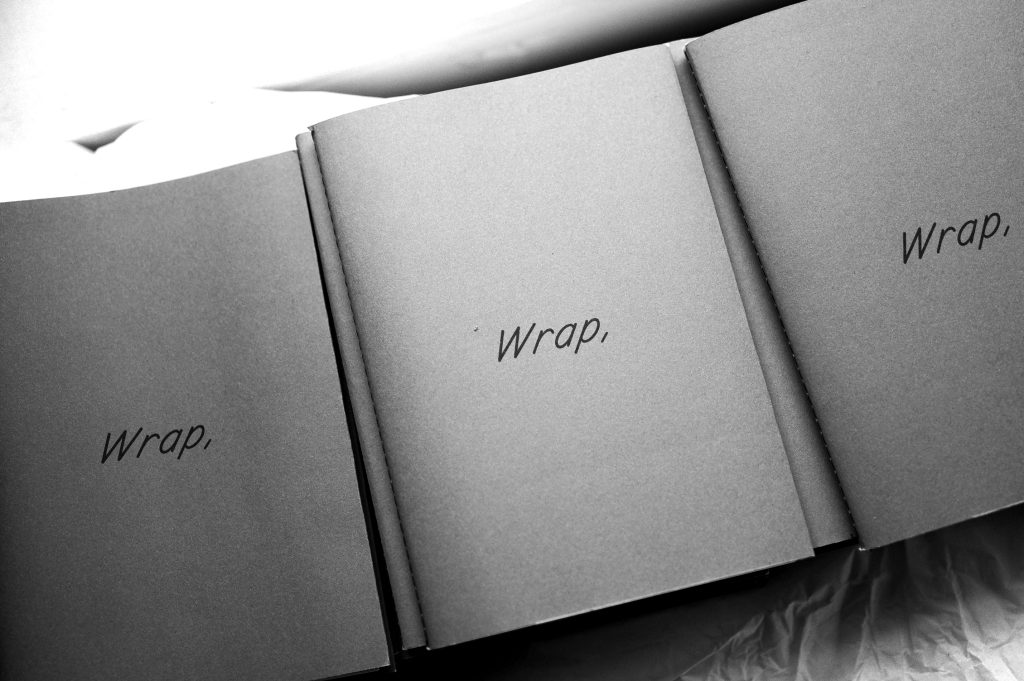
For more info, check out kaje.world/big-wrap-forearm.
Photos by Katie Sikora
