
Mary Beth Campbell is a trained public health professional, but this feature is not a substitute for advice or care provided by a licensed medical or health care professional. All information provided is current at the time of publication, but new information may arise.
In March 2024, the first reports of dairy cattle in the United States infected with Highly Pathogenic Avian Influenza A (H5N1) arose, the first time that this species of animal was known to be infected with this virus. About a month later, the first animal-transmitted H5N1 infections in humans were reported. And now, a year later, cases in animals and humans are on the rise, with one fatality reported in a person in Louisiana. As we enter the fifth year of the COVID-19 pandemic, the start of a second Trump administration—which put a pause on all external federal health agency communications and threatens to cut public health funding—and, in Louisiana, the onset of the Super Bowl and Mardi Gras amidst peak respiratory virus season, there are a lot of questions and concerns about what H5N1 is, what the risks are, and how to prevent it. The good news is that the virus is currently not transmissible between humans. There is still time to limit transmission to humans and other animals and to prevent another pandemic, provided that we take the time to both understand the disease and the driving forces behind it.
The Basics
To understand the situation we are in, it’s important to first understand the virus that we are dealing with. There are three types of influenza viruses that primarily infect humans: A, B, C. Types A and B both cause the seasonal flu epidemics in humans, and type A viruses are the only known influenza viruses to cause flu pandemics, though it is important to mention that not all type A viruses end up causing pandemics. Highly Pathogenic Avian Influenza A (H5N1) is a Type A influenza virus. Based on current data, most influenza viruses that cause disease in mammals—including humans—originated in bird species. This is what is known as a zoonosis, or a disease that is transmitted from other animal species to humans; and the current outbreak is known as a panzootic, meaning that it is an epidemic that spans borders and can cause disease in multiple species. The more chances it has to be transmitted, the more chances it has to mutate, and the higher the probability that an outbreak can and will occur. This is one of the reasons why early disease surveillance and prevention efforts are so important—perhaps we cannot prevent viruses from circulating in the ecosystem completely, but we can implement efforts to reduce transmission and, in the current case of H5N1, reduce the probability that the virus will mutate to become transmissible between humans.
H5N1 is transmitted via contact with sick or dead animals, specifically their feces, mucus, saliva, and aerosols, as well as contaminated surfaces. Symptoms in humans are typical of influenza and other respiratory virus infections, and may include: fever, chills, eye redness or irritation, respiratory symptoms (i.e., cough, sore throat, runny or stuffy nose), muscle or body aches, headaches, and fatigue. Transmission is most commonly via aerosol or contaminated surfaces, which is why taking preventive measures such as wearing personal protective equipment (PPE) such as masks, gloves, and goggles—especially when working around humans and other animals with symptoms—and handwashing and sanitizing surfaces are so important. So, too, is avoiding eating raw (unpasteurized) or undercooked dairy and poultry products: as just one example, H5N1 viral particles have been detected in raw milk products. Lest we think that humans are the only species negatively affected by H5N1: Recently, there have been cases of domesticated cats becoming ill or dying after consuming raw milk and cat food that tested positive for H5N1. Despite the current trends and bizarre right-wing movement around consuming raw foods, this is a good reminder that pasteurization—which is simply heating up a food product to a specific temperature for a certain amount of time to kill off bacteria and viruses—is actually a very important method to prevent foodborne illness. As Dr. Sarah Michaels (clinical assistant professor in the Department of Tropical Medicine and Infectious Disease at Tulane University’s School of Public Health and Tropical Medicine) explains, “Before pasteurization was widespread, we’d have a lot of illness and death, especially among young children, from milk contamination… This relatively new health craze… [is] putting people [and other animals] at much greater risk.”
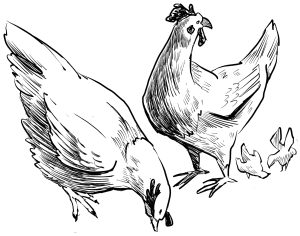
Limiting both human and domestic animal exposure to wild birds is also a good idea. Many people enjoy feeding wild birds with backyard bird feeders. According to Dr. Michaels, “Any time there’s a lot of bird droppings or there’s sick and dying animals, you certainly want to dispose of them properly, wear gloves, other protection, and wash your hands. Please wash your hands, especially after filling up your bird feeder… and if you have backyard poultry, it might be a good idea to not have a bird feeder, so you aren’t bringing other birds around your flock.” If you do have a bird feeder, sanitize it regularly with boiling water and soap or a diluted bleach solution. Handwashing is also important after handling domestic backyard birds and their eggs, a practice that should be in place whether or not there is risk of a panzootic avian flu. As cats both wild and domestic are at high risk of H5N1 infection, with an estimated mortality rate of 67%, it is a very good idea to limit or eliminate the exposure of companion cats and zoo animals to wild birds. In January, H5N1 was detected in a domestic cat in Orleans Parish; it is not known at this time what the origins of the H5N1 were or the status of the cat, but it is a reminder to, once again, take this seriously and take precautions. Cats infected with H5N1 may exhibit respiratory or neurologic symptoms. If your cat exhibits these symptoms, take precautions for yourself and contact a veterinarian as soon as possible. While we want to prevent spillover from cats to humans, it is also a good idea to prevent their risk of H5N1 exposure and disease for the fact that they are living beings who do not deserve to suffer from a potentially fatal illness.
While getting vaccinated is also an excellent prevention strategy, the H5N1 vaccine is not available to the general public at this time. There is one in development, but, as it is still considered to be experimental and has not yet gone through clinical trials, it has not yet been approved for use. In January, the U.S. government awarded Moderna $590 million to advance the development of the H5N1 vaccine, and there is an emergency stockpile of the experimental vaccine just in case it is needed. Vaccines for other animal species—at the moment, mostly for agricultural animals—are also in development. In the meantime, we are still in the midst of peak respiratory virus season, and it is still important to receive seasonal vaccines—not only to prevent seasonal illness but to also avoid any potential co-infection with H5N1, which could lead to more human-adapted strains of the virus. Presently, there is no evidence of human-to-human transmission of H5N1, and, in order to prevent another pandemic, we need to continue efforts to reduce the risk of that happening.
H5N1 Origins
How did this all begin? Though it wasn’t really talked about in mainstream news outlets until this past year, H5N1 is not a new virus. It was first identified in domestic waterfowl in Southern China in 1996, and in 1997 the first human outbreak occurred in China and Hong Kong, with 18 associated cases and six deaths in humans. From 2003 to 2005, outbreaks in poultry—caused by wild birds—were observed in Asia, Africa, the Middle East, and Europe. Over the past two decades, sporadic outbreaks in humans have been observed, with approximately 890 human cases reported in 24 countries, with the World Health Organization (WHO) reporting an approximately 50% case fatality rate in humans. However, as case fatality rates do not take into account unreported mild illness or asymptomatic infections, it is unclear at this time if an H5N1 pandemic would see widespread fatality rates of 50%. This is not meant to downplay the very real risks and concerns associated with H5N1, merely to state that there is nuance when reporting about diseases, something that public health communicators sometimes struggle with. In addition, panic is never a good public health strategy, but education and vigilance are. Dr. Susan Hassig, Associate Professor Emerita at Tulane School of Public Health and Tropical Medicine’s Department of Epidemiology and an infectious disease epidemiologist, wants people to remember that human-to-human transmission is not currently being observed at this time. She adds that “The fewer human infections we can experience the less likely [human-to-human transmission will happen]… So it behooves us to work very carefully on that interface between humans and any poultry and other potential reservoir animals… given that we don’t have a vaccine, it’s very challenging to provide a way to one hundred percent say you don’t have to worry about this… I think remaining aware but not freaked out is the best strategy to take in thinking about this particular pathogen.”
The Current Outbreak
This most recent H5N1 outbreak is believed to have begun in 2021, with a new strain of the virus observed in wild birds across the globe, which then spilled over into domestic birds and over 48 species of mammals in 26 countries. Exposure occurred either through direct contact with infected wild birds or poultry, and cases ranged in severity from no-to-mild disease to severe disease and death. This mass transmission and mortality in wild animals does not only pose a risk for humans, of course, but also for the viability of these species and the ecosystems they are a part of.
In March 2024, the first cases of H5N1 infections in goats and dairy cows on farms in the United States were detected in Kansas and Texas. Soon after, the first human cases in the U.S. were reported in farm workers on dairy and poultry farms. At the time of this writing, there were 67 confirmed cases of H5N1 infection in humans in the United States. While most of the human cases ended up being mild, there was one death reported in early January 2025 in an individual from Louisiana, and another serious case in North America in a teenager in Canada.
In the Louisiana case, the Louisiana Department of Health (LDH), in its official press release, noted that “The patient contracted H5N1 after exposure to a combination of a non-commercial backyard flock and wild birds.” From this statement, it is still unclear as to where and how the person was exposed, which does not help the general public determine the best preventive measures to take. “I think that the messaging needs to be very, very clear and unambiguous,” says Dr. Hassig. “Individuals who have [outdoor domestic] birds in close proximity to their residence and their family need to understand what they need to do to protect themselves… It comes down to clear messaging from LDH or any other public health agency to ensure that the actions that people should take are very clear. There is nothing in what I recall of that notification that said anything about primary prevention of human infection from interaction with and contact with backyard chickens, and that, I think, was a huge missed opportunity.” Dr. Michaels adds that “[LDH only] advise[s] people who work on poultry or dairy farms to talk to [their] provider[s] about getting the seasonal influenza vaccine, and… it’s something that we should all be encouraged to do… we’re really trying to get people who are not co-infected with avian influenza and seasonal influenza, and so… limiting the recommendation of who should get vaccinated I think really confused the messaging.” The need for clear guidance on vaccination is especially important now, when national influenza and COVID-19 vaccines rates are low and H5N1 is looming in the background. Louisiana’s vaccine rates are lower than the national rate, a trend that is especially troubling in light of both the news that Louisiana state health department workers are no longer allowed to promote influenza, COVID-19, or mpox vaccines in any official manner, and that vaccine skeptic Robert F. Kennedy Jr. is expected to take the helm of the Department of Health and Human Services.
There have been criticisms of the current U.S. response to H5N1, including a lack of coordination between government departments, priority being given to industry’s needs over that of public health, and a lack of real-time disease surveillance. The CDC recently released guidance for all people hospitalized with the flu to be tested for H5N1 within 24 hours, which is a step in the right direction. “I think that surveillance is an absolutely critical component in terms of any kinds of disease prevention and monitoring and early intervention strategies, and I think it can always be enhanced,” says Dr. Hassig. “The system that we have in place is not awful, but it’s not what I would call stellar… it takes cooperation, not just from a federal agency or a local health department or agriculture department, there are many players that need to be involved.” Dr. Michaels is slightly more optimistic, noting that “the surveillance systems are working well enough that we’re picking up… human cases of avian influenza H5N1 that we would not have otherwise… we’re doing surveillance when people are associated with animals that are infected, but this widespread flu surveillance… is giving us an indication that there’s more activity, and we’re capturing a piece of it.” She adds, “I’m a little bit more concerned about the [sustainability] of those systems as we see more and more disease among animals, especially if we have [changes] in the public health infrastructure in the coming months,” including Trump’s withdrawal of the U.S. from the WHO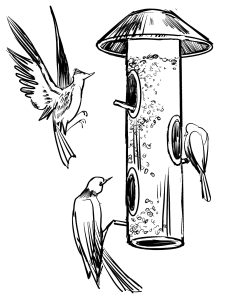
Other Factors To Consider
Climate change and changes in ecosystems go hand-in-hand with zoonotic outbreaks, disproportionately affecting poorer and more marginalized communities and contributing to disease spread across the globe. Rising global temperatures have altered avian migratory patterns, increasing transmission of H5N1 worldwide, and increasing the number of species who are exposed to and potentially affected by the virus. Changes in weather patterns also provide more ideal conditions for pathogens like H5N1 to survive and be transmitted. As ecosystems are destroyed or altered and human habitats encroach on those of wild animals, the probability of zoonotic spillover increases as well. “I think people underestimate the amount of zoonotic disease that there is, and the amount of spillover from animals,” explains Dr. Michaels. “We are living in this global interconnected society… we always say that ‘diseases know no borders,’ but it’s more that diseases can easily be passed across continents much more rapidly than they used to.” She adds that “Humans and animals have a shared environment and are both impacted by changes in the environment. In general, we have seen global climate change impacts, we’ve had some temperatures increasing, we’ve had record-breaking years for the last several years, with changes in precipitation and humidity, and that affects both humans and animals alike… With people living in, often, much closer in proximity to other people… that increases the risk of rapid disease spread.”
Animal husbandry practices—particularly larger industrial farms—also contribute to the spread of zoonoses. Increased demand for animal products globally has led to keeping livestock in high density living quarters, moving livestock across borders, increased populations of livestock globally, and poor animal health due to their living in close quarters. In addition, expansion of commercial farms has led to further destruction of ecosystems, which increases the risk of spillover. Transmission of H5N1 amongst poultry and livestock is also leading to food shortages and rising egg prices, at a time when the cost of groceries is already inflated.
These commercial farms are not always known to be safe working environments, either. Most of the known human cases in the U.S. appear to have been due to unprotected workplace exposure on poultry and dairy farms. Having access to protective eye gear, masks, gloves, and other PPE on job sites would help mitigate the transmission of H5N1 from infected animals to farm workers, which would, in turn, help prevent wider transmission. Labor rights, immigrant rights, and protections for farm workers in the U.S. are an ongoing issue. In the U.S., an estimated 73% of all farm workers are immigrants; roughly half of those individuals are undocumented and half of undocumented workers lack health insurance. For good reasons, people who are undocumented may not be comfortable going to a physician or getting tested for disease surveillance purposes, especially since mass deportations are a priority under the second Trump administration.
Commercial farms may not always be keen on testing their workers, either. The CDC has recently released recommendations on how to protect farm workers from H5N1, including increasing access to PPE, vaccines, and surveillance testing, but guidelines don’t mean much unless they are enforced, and they do not address the stark inequities in health care access and legal protections that still exist. “It is [the] unfortunate reality that industry is always trying to cut costs, and prevention actions are costly… It’s been a challenge for prevention and a public health perspective all along is trying to communicate to industry or policy makers the benefits of preventing a problem rather than dealing with it after it has occurred,” explains Dr. Hassig. Dr. Michaels adds, “On the animal side, there is more of an incentive, because of the reimbursements for culling the animals if the illness is recognized early in the flock,” but “a farmworker being tested, of course, would be excluded from work in most cases, and so, there is this disincentive to report symptoms, just like we saw earlier with COVID. And so as far as having a job where you’re not afforded sick leave or any kind of leave, or you’re not paid for your time… there’s a disincentive for reporting illness, and that’s an issue.”
What Is Next?
There is still much uncertainty around H5N1, which, understandably, incites fear, especially in an age where there is already so much unknown. The current effects of the H5N1 outbreak are serious, and the implications of a potential human H5N1 pandemic should not be taken lightly, but this is not the time to panic. This is the time to take action. As mentioned many times over, the virus has not yet mutated to be transmitted between humans, and there are still efforts that can and need to be taken to mitigate any current and potential effects of the virus. “I think the most important thing is that people need to understand that there is science that can help us understand how to address these problems to recognize them when they do occur, and that we need to pay attention to information coming from reliable [scientific sources]… this is not something where everybody just gets to make up their own mind about how they’re going to take care of things,” Dr. Hassig explains. “This is again a public health problem, where individuals can take steps to protect themselves, but it’s really going to take a collective effort to keep everyone as safe as we possibly can be.” She adds, “These new infectious diseases are going to continue to emerge, and if we don’t learn from our most recent experience with the COVID pandemic, we are going to find ourselves in very difficult situations with regard to potentially even more severe [implications] than we experienced with COVID, which was already awful.”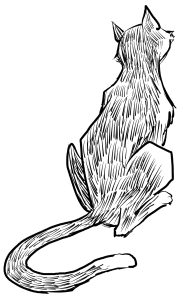
illustrations by Kate Lacour
