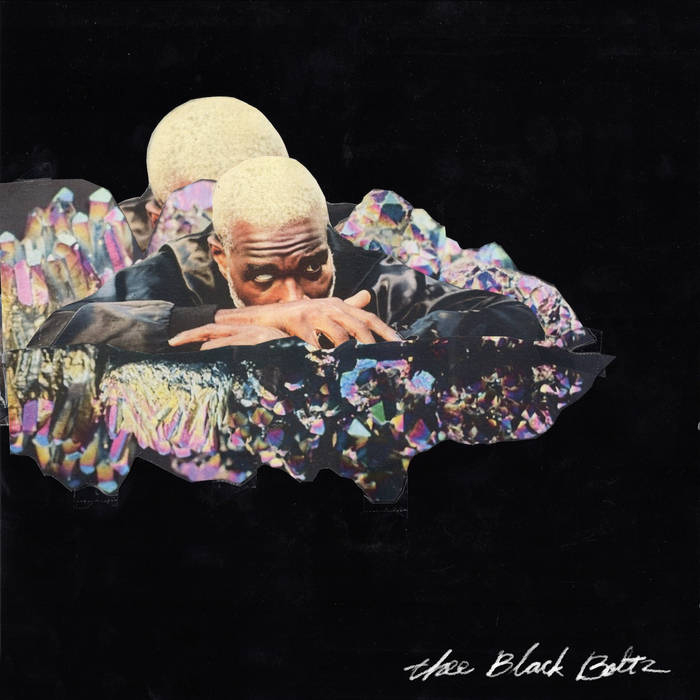
As things become increasingly dire, we need to hold on to the reminders of beauty in this world, one of which is this: It is a very good time to be a fan of TV On The Radio and all related projects. In addition to a much-anticipated reunion tour and the 20th anniversary re-issue of Desperate Youth, Blood Thirsty Babes, frontman and Star Wars universe actor Tunde Adebimpe makes his solo debut with Thee Black Boltz. Named for the Marvel Inhuman character and co-produced by multi-instrumentalist Wilder Zoby (Chin Chin, Run The Jewels), Thee Black Boltz is a meditation on grief at the personal and societal levels. This is not an album that invokes despair, however. Lead single “Magnetic” dares you to try not to dance in rebellion (“I was thinking about my time and space / I was thinking about the human race / In the age of tenderness and rage”). Under Zoby’s co-production, Adebimpe’s vocals are the focal point of every song—powerful and commanding without being showy. While much of the album evokes early TVOTR (“Magnetic,” “God Knows,” and “Ate The Moon” in particular), Adebimpe also plays with ‘80s synth pop (“Somebody New,” “The Most”), R&B (“Streetlight Nuevo”), and acoustic rock (the heartbreakingly beautiful “ILY,” a tribute to Adebimpe’s sister, who passed away in 2021). An album of immense swagger and heart, Thee Black Boltz is a reminder that, sometimes, apocalyptic forces need to be countered with rock’n’roll. —Mary Beth Campbell
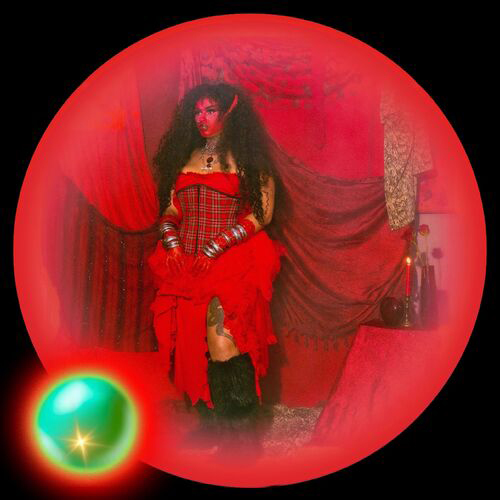
BLÜ has become omnipresent—seizing attention with just her appearance—but now we get to experience something beyond the surface: MERCURY MET MARS, a soundscape that matches her mystical aura. BLÜ’s voice feels remote, a blend of piercing symphonies and whispering echoes. Alongside collaborators Topaz Tears and MATGENIUS, she crafts something akin to magic. The 8-track EP unfolds like a ritual, beginning with “night in june,” an honest, daring, and lustful opener that aches for unwavering affection. But that intensity quickly gives way to something more subdued. Tracks like “human!” and “idwbf” offer lyrics that hint at the pressures of fame, as BLÜ confesses, “I don’t want to be famous, I just wanna feel love.” Her lyrics are forthright, paired with melodies that feel effortless. She’s not trying too hard—and that restraint works in her favor. However, on “the one that feels” the breathy moans and heavy sighs come across as flat and uninspired. While the guitar work stands out—in fact, it almost outshines her vocals—that may be more of a compliment to the guitarist than to BLÜ herself. The final track, “Fly away, hide away,” leaves us in the throes of her pain—beautiful, raw, and undeniable. BLÜ is clearly creative, but there’s something amorphous about her music. This EP shows promise—especially in the first three tracks—but the rest left me wanting more. I’m curious to see how these songs are performed in front of a live audience. For now, though, I’m not sure if her melodic sensibilities can outshine the mystique of her aura. —Nijah Narcisse

At first listen, Garret Scott Dowell’s debut Animal Shapes, released under the moniker G.S. Dowell, is confusing. Album opener “Turbulent Eddie” thrusts you into the realm of the experimental with what sounds like a 20-second field recording of wild animals in the jungle, the last segment of an animal sound looped a few times before a sudden heavy metal-esque guitar riff, a trap beat, and backing synthesizers give way to the rest of the song. As we move into the pre-chorus, the song calls to mind alt-J with its guitar melodies, synths, and drums, albeit more orchestral and gothic. The rest of the album shifts between genres just the same, slipping easily between piano folk balladry on “Anywhere But Here,” to sounding like Maynard James Keenan (of Tool, Puscifer, and A Perfect Circle) for a split-second on “Dinosaurs,” and to dance-able darkwave on “Animal Shapes.” The next seven tracks continue in a similar vein, meandering predominantly somewhere between electronica, gnostic pop, and darkwave, with threads of heavy metal, industrial goth, and the orchestral woven throughout. I didn’t expect to like this anywhere near as much as I did, and each listen grows on me more. More favorites of mention include “The Lake” and “Empress,” both more traditional darkwave numbers, the former of which mentions levee bonfires, Hurricane Betsy, and Grand Isle. While Animal Shapes lands in the realm of synth-pop, his more recently released single, “The Gentle Deep,” is more electronic rock, Dowell’s reverb-soaked vocals hovering above heavy and aggressive guitar chords, moving towards a growing wall of fuzzed-out guitars at its climax. Even as Dowell’s work eludes definitive genre, it offers a little something for everyone. —Daniella Cherner
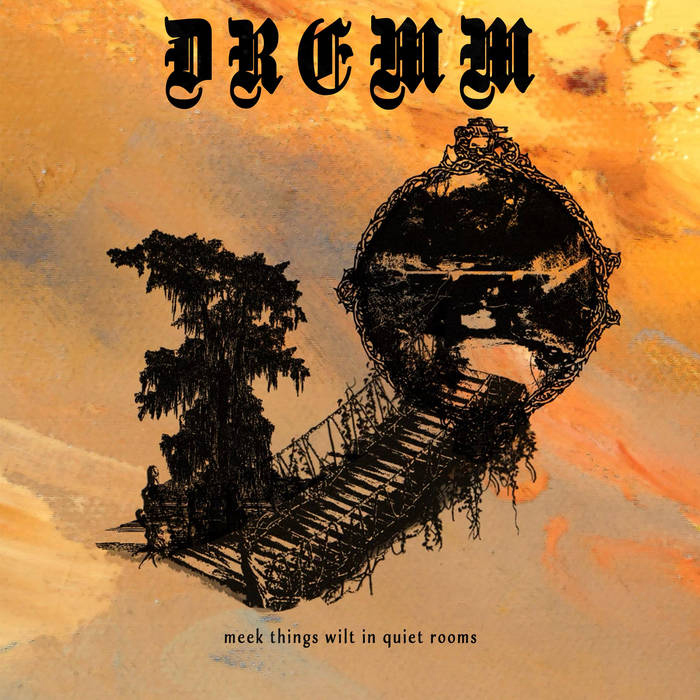
When it seems you and everyone you know is struggling to just hold on to their sanity, much less get by, it’s easy to ask yourself, “Why bother? Why should I or anyone I know keep going?” These are the questions local two-piece Dremm wrestle with on their most recent album, Meek Things Wilt In Quiet Rooms. Comprised of Ethan Pye on guitar and Evan Baham on drums, with both pulling double duty on vocals, the band’s limitations foster no-frills hardcore with a rudimentary power. With this new album, Dremm has stepped into a legit recording studio (HighTower Recording) rather than doing it themselves, which is enough to set this album apart from their previous efforts. The improved production quality has translated their raw energy and sludgy heaviness from their live show perfectly. This fidelity allows the angsty lyricism about suffering and loss to carry emotional heft even if you can’t decipher the screams without a lyric sheet. However, there are rare moments of clarity like the spoken word verse on “Departure,” where the band’s poetic lyrics come into focus as their angular and aggressive sound provides a chaotic backdrop. Overall, Meek Things hones the band’s raw power and reflects the work they’ve done to not only grow as a band but also to defy a cynical existence. —Dalton Spangler
For their first demo tape in 2023, New Orleans band Portia wrote deadly serious post-hardcore as an act of creative defiance to “a society that would rather us dead.” Now, they’ve returned with a live recording of sorts, named after a defunct cafe in the Upper 9th Ward. Sonically, it’s a huge upgrade, the heaviness of Malimo Session making the scraggly distorted guitars of the demo sound like surf rock by comparison. Two tracks off the demo, “It’s Gotta Be Something” and “Burn Your Bridges,” reappear on the new recording but thanks to the one-take live quality of the album and better production, the difference is immediately recognizable. Independent studio Dead Air did the mastering for the release which likely impacted the leap forward. However, that isn’t to take away from the band’s songwriting, as they have highly textured skramz in the vein of Saetia or Orchid. Moments of hushed reflection and bright guitars descend into unbridled shouts and chaotic cymbal crashes, obscuring cryptic lyrics as on “Waterfowl.” Much like many other post-hardcore acts before them, Portia knows how to write poetic and cathartic music that speaks to the dynamic range of human emotions. —Dalton Spangler
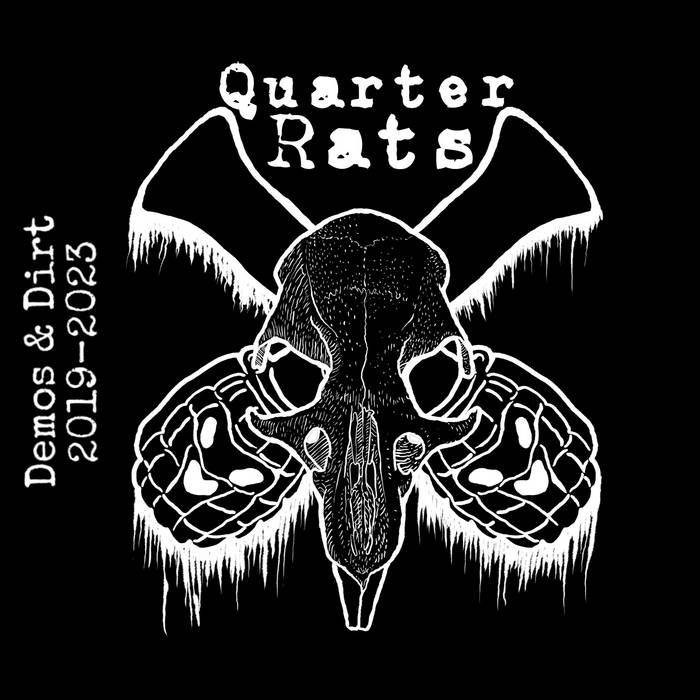
Local band Quarter Rats is back with a collection of 25 tracks to grace the hot summer approaching. Duo Dre Perish and David Vannatta have created a collection of dissonant, dark punk tracks reminiscent of noise pioneers Sonic Youth meets ‘80s hardcore. While I may have missed the boat on seeing Quarter Rats live, Demos & Dirt feels like you’re in the room with their rage and having a great time doing so. Tracks from “Devil’s In Yr Bed” to “I Wanna Go Home” resound with a pulsing sarcasm in every beat, adding aggressive, muffled lyrics and discordant guitar tones that make Demos & Dirt an eclectic album. While Quarter Rats may be disbanded, this collection serves as a perfectly intimate artifact of what happens behind closed doors in New Orleans. —Sara Nicole Storm
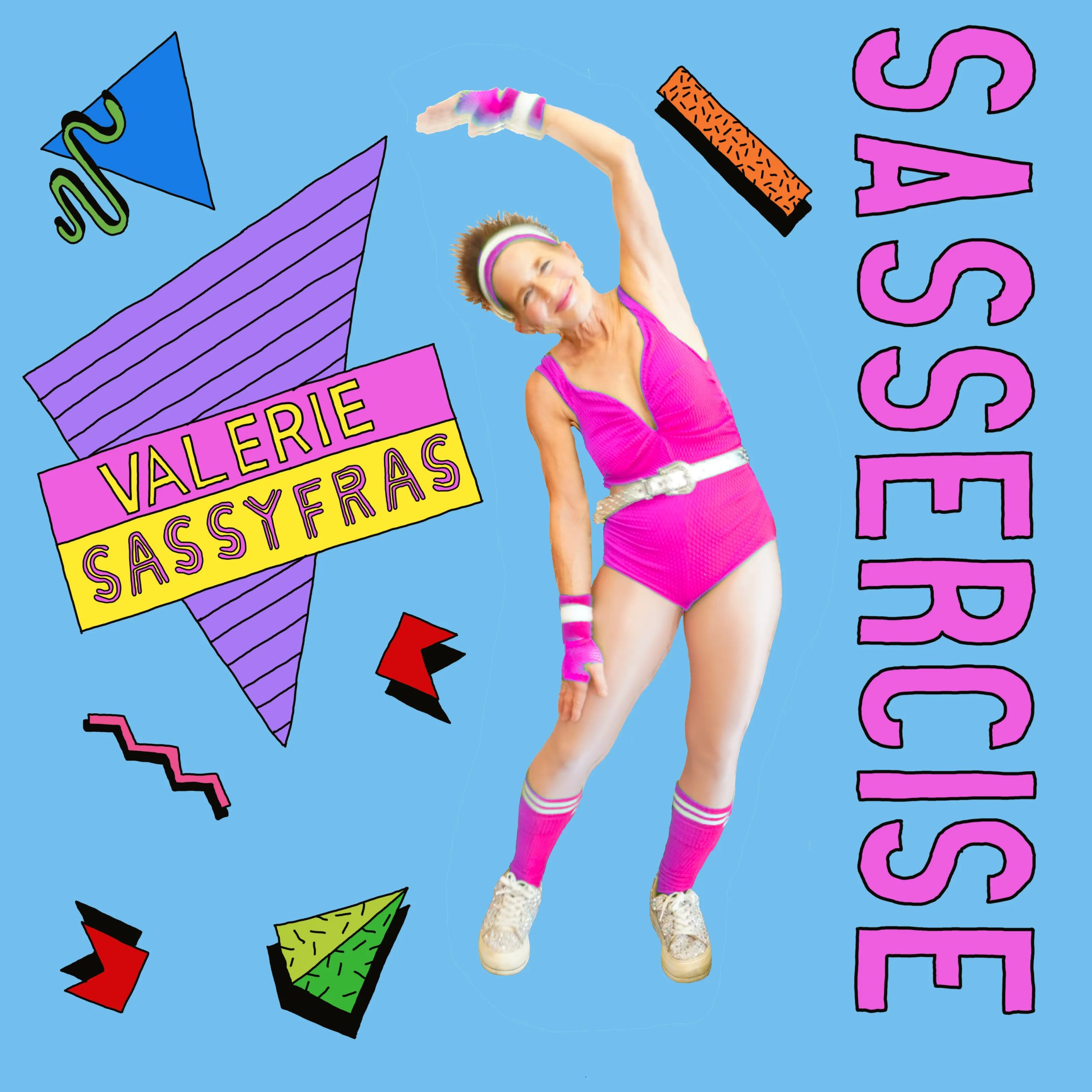
New Orleans’ very own multi-threat artist Valerie Sassyfras graces us with her newest album, Sassersize. With 10 new songs centered on exercising, Sassyfras has outdone herself with witty, fun, new-wave-meets-zydeco songs capable of inspiring anyone to work out. While Sassyfras made her breakthrough with “Girls Night Out,” fans will be charmed by the standout track “Let’s Get Stoned and Screw,” with its cleverly fun storyline of an intimate comedown after nine body movement tracks, reminding us that sex is also a workout. Sassersize has a unique blend of sampled electropop sequences with Sassyfras’ classic accordion style, especially on the track “Exercise Is My Religion” which features a short sample of a familiar Madonna song. Sassersize is bound to become a classic for fans of Madonna, Cher, and Laurie Anderson. —Sara Nicole Storm
Local anarcho-punks STGMA make straight-ahead classic punk with the occasional power-pop edge, formed by some of the members of Mea Culpa and Crackbox, with new additions. This EP, their most recent release since their self-titled LP released in 2023, is an ode to fast, angry, conscious punk of decades past—and of decades current, because as their Bandcamp bio notes, punk isn’t dead. Opener “Cowards” lets you acclimate to the tone and guitar chords for a few bars before lead singer Corrina’s screaming begins, launching the first shouted verse shortly after: “You said nothing when they came for them / Who’s gonna say a thing when they come for you.” My favorite lyric from this track comes near the end of the song—“A question in mind is a dangerous thing / They’ll hate you if you think for yourself,”—calling to mind for just a moment new wave group Romeo Void with their sardonic delivery, before we jump straight into the melodic, reverb-soaked guitars in “Flabbergaslit.” After the slight surf punk detour, we head back into fast and aggressive drums on “Oxymoronimus,” a hardcore track only a minute and six seconds long. The title track and closer takes us back to the melodic side of punk to see us off, the four-track detour having cost us less than 10 minutes of our day. Fans of bands ranging from Agent Orange to the Ramones will find something familiar and fun here. —Daniella Cherner
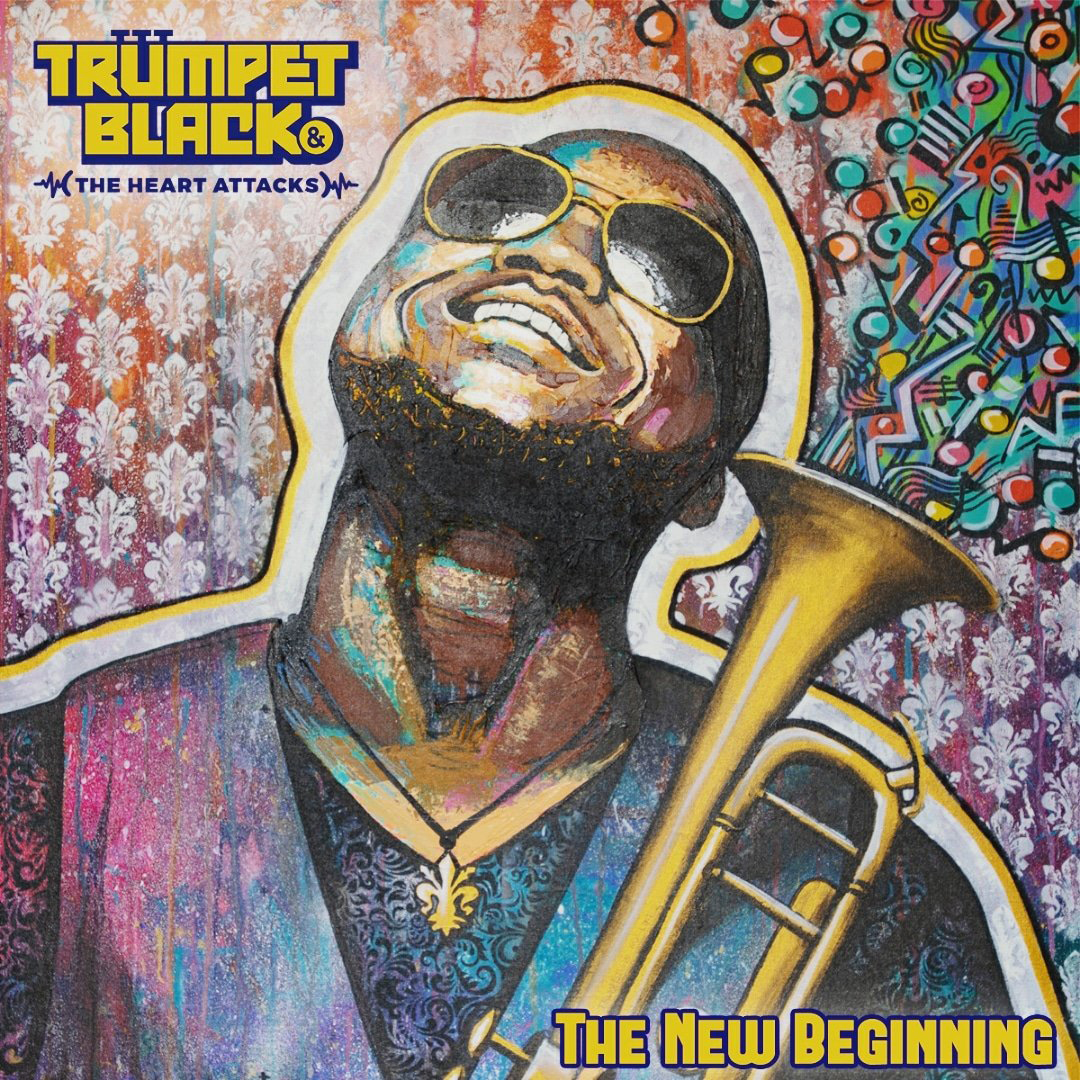
Many in New Orleans were shocked when Travis “Trumpet Black” Hill suddenly passed away in May 2015 while touring Japan with the Osaka-based Blitz and Squash Brass Band. A decade later, Hill’s long-awaited album The New Beginning serves as a testament to his life. The trumpeter and singer, a relative of the likes of Troy “Trombone Shorty” Andrews and Jessie Hill, made impressive progress in the years leading up to his passing. In 2011, Trumpet Black was released from prison following a stint for armed robbery. As he puts it during an interlude on The New Beginning, “I once was incarcerated as a kid and I didn’t get to play trumpet for 10 years. I was lucky and blessed to be able to come back and do what I love.” Upon his release, Hill turned to using his musical abilities to encourage youths to avoid the choices that altered his young life. On “Trumpets Not Guns,” Hill autobiographically sings, “I’d rather carry around my trumpet than a chopper,” and calls for listeners to “stop the violence.” In addition to serving as a platform for this powerful message, The New Beginning offers his take on “St. James Infirmary,” a cover of Earl King’s “Street Parade,” and plenty of endearing originals like “Good Life.” These cuts showcase Hill’s abundant musical talents and those of skilled collaborators like Trombone Shorty, June Yamagishi, and Terrance Houston. Although Hill passed away far too soon, The New Beginning offers an opportunity to revisit his life and build a legacy around his name. —William Archambeault
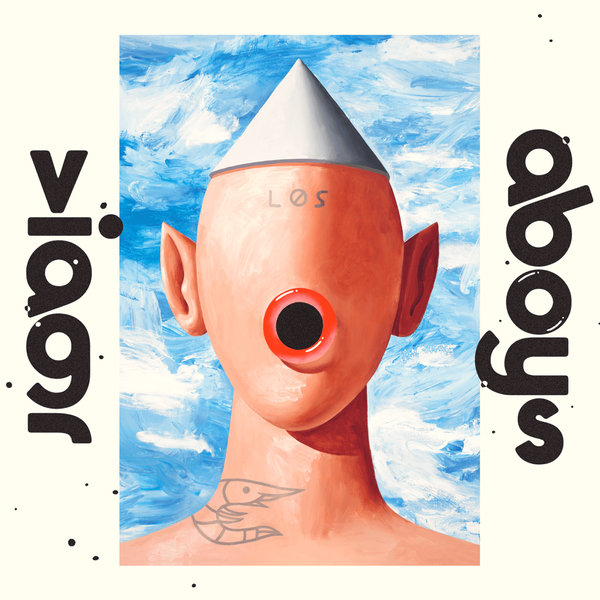
Viagra Boys could be described as punk rock anthropologists, dissecting the various absurdities of the modern world with surrealist humor and a sharp eye. It would be easy for the Stockholm-based group to devolve into one-dimensional snarkiness but viagr aboys, their fourth full-length album, manages to avoid this trap. At the heart of their music and their critique, Viagra Boys are more interested in using humor to understand the cruelties around us rather than in merely exposing them. Fully preserved peat bog women (“The Bog Body”), sinister desert wellness cults (“Pyramid of Health”), and hedonistic supermarket creatures (“Man Made of Meat”) are conjured as Viagra Boys try to make sense of the rot at the center of our hyper-masculine, capitalist society. For the queasy, be warned: Viagra Boys are known to revel in grotesque sound effects and imagery, and this release is no exception. While much of the album is composed of frenzied punk rock swagger and disco beats, there are quiet, poignant moments amidst the absurdity as well, most notably on “Medicine for Horses” and the surprisingly peaceful closing track “River King.” Viagra Boys may not have all the answers right now, but they know that by forcing us to gaze inside the funhouse mirror of our reality, we’ll be one step closer to waking up to the truth (“Best In Show pt. IV”: “I need all the help I can get, man… / I need access to heaven or ain’t none of this is gonna work out”). —Mary Beth Campbell

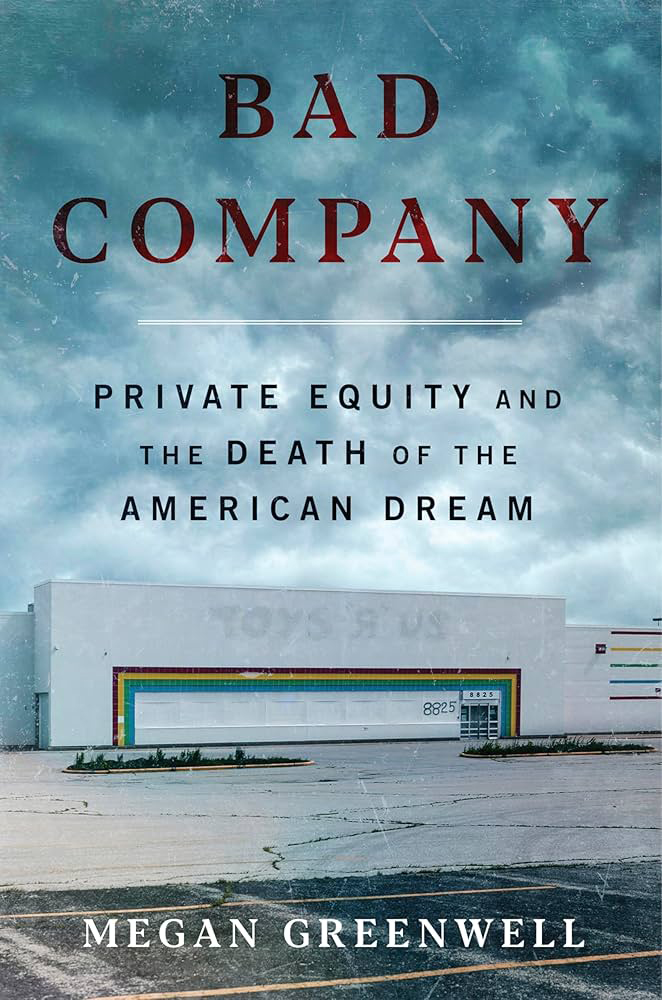
Journalist Megan Greenwell became interested in private equity—investment firms that buy out existing businesses with backing from institutional investors like pension funds and hefty loans—as editor-in-chief of Deadspin. She left the celebrated sports outlet after conflicts with its private equity owners. Here, she explores the industry through the eyes of four subjects, one each affected by private equity buyouts in retail, health care, housing, and the media, which turned their climbs along the middle-class ladder into struggles. Her rapport with her subjects and skillful storytelling humanize what could be a dry subject. She makes a convincing case that private equity’s pattern of loading businesses with costs and debt, neglecting the interests of employees and community members, and often failing to modernize or even maintain existing operations, can be deeply harmful. Even companies that could use the kind of turnaround expertise private equity firms often claim to possess—Greenwell’s examples include a rural hospital, a newspaper chain, and Toys“R”Us—are instead treated as cash cows, ensuring investment firms at least break even while the businesses fizzle. And with private equity billionaires donating to both political parties and prominent nonprofits, Greenwell offers little reason to believe much will change any time soon. —Steven Melendez
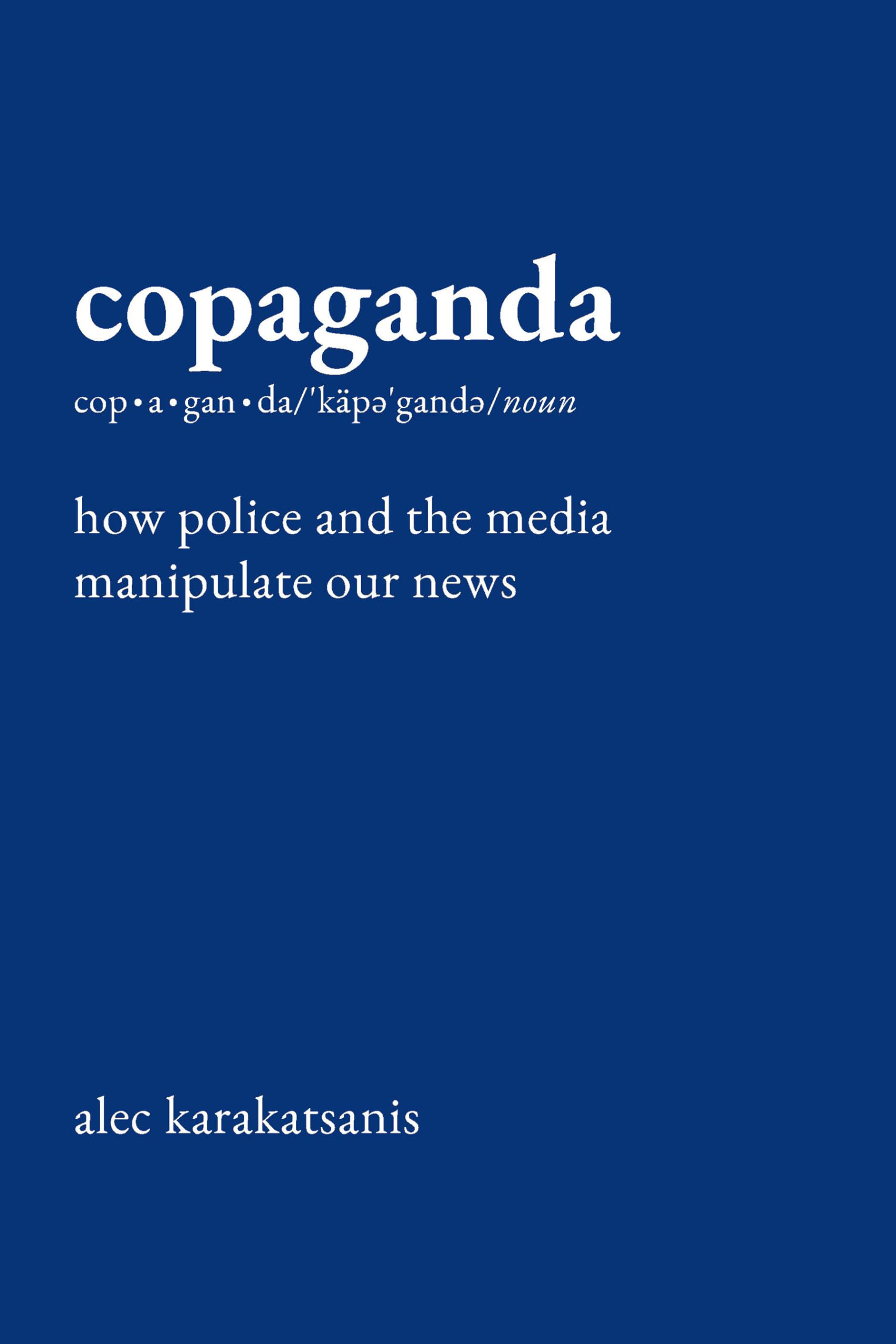
Civil rights litigator Alec Karakatsanis has for years used social media to crusade against pro-policing bias in the news. Here, he documents in detail and fiery rhetoric how mainstream news organizations amplify fears of crime and assume the notion that more policing and more imprisonment are the solution to the problem as fact, despite the lack of anything like a scientific consensus. Meanwhile, he points out, reports of police violence and corruption, horrifying prison conditions, and widespread poverty will be the subject of occasional investigative stories, even if the situations they describe ensnare new people each day, while individual petty crime reports will each be given top billing in the daily news. News organizations also tend to portray non-policing solutions, like spending on social programs or affordable housing, as foolish progressive idealism while depicting calls for more police, stricter bail conditions, and harsher sentences as common-sense solutions, and treating sources who’ve been paid by policing organizations—like New Orleans’ own Jeff Asher—as independent experts. Despite occasional, somewhat jarring bits of humor that may not age well, the book seems likely to become a classic of media criticism. —Steven Melendez

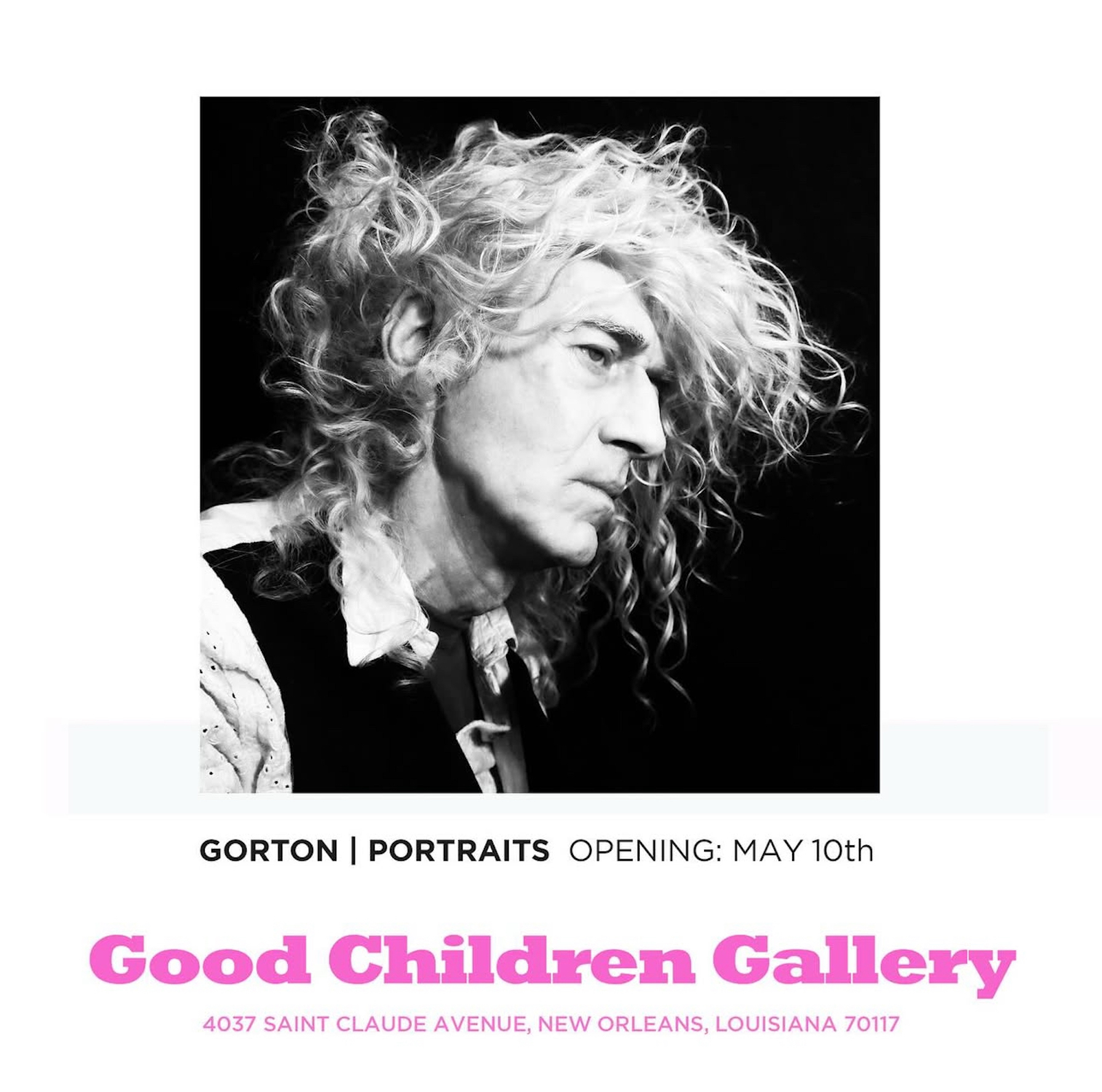
Julia Gorton’s Portraits is an ongoing community portraits series and a slide show of her innovative photographs of the no wave and punk scenes of Downtown 1970s and 1980s New York City. Gorton exhibited at the Pensacola Museum of Art and the nearby 309 Punk Project, where her one-month residency in 2022 procured her an invitation from co-director and curator Valerie George to exhibit here at Good Children. Gorton’s move from Delaware to New York, to attend Parsons School of Design in 1976 to study design, positioned her presciently between two small clubs, CBGB and Max’s Kansas City, where new music was forged out of the ashes of arena rock’s excesses and a city teetering on bankruptcy. Her Polaroid camera captured and contributed to the zeitgeist by documenting the edgy art, music, and style of local artists and scenesters such as Richard Hell, Patti Smith, Lydia Lunch, Anya Phillips, Debbie Harry, and those passing through like Iggy Pop, George Clinton, and David Bowie—to name just a few. These photos were featured in Beat It!, Gorton’s scene zine with collaborator Rick Brown, in addition to other local and national publications. This is a time long before social media and just after Pop Art’s democratizing accessibility of culture. Locals could see themselves in small publications like these. Gorton’s natural design instinct combined expressionistic portrait angles with bold cut-and-paste graphics, picking up where modernism fell asleep at the wheel and just different enough from Jamie Reid’s ransom note lettering designed for The Sex Pistols in England. Eventually moving from the neighborhood to start a family, Gorton promoted her return to photography by placing her collection on Instagram in 2016. A large and continuous slide show of Gorton’s archival photographs offered history and inspiration on the wall of the second room at Good Children, opposite her mobile portrait studio where “comrade” photographer Derek Atkinson assisted and shared ideas. Gorton encouraged volunteer subjects to be themselves or channel heroes, then, emerge as icons through the spell of her Fujifilm X-E2 lens. These photographs were then printed as inkjet prints and layered above the two grids of older community portraits that lined the walls of the front gallery for the opening reception. Through the action of portrait-taking, the visual din of the slideshow, and the static stream of community portraits from various dates and sites running through the front gallery, this process of looking and being seen became one with the present moment. Seeing people see themselves on that wall was as intimate as sing-screaming into a mic with your fave band and friends. Having thrived in the varied CBGB scenes myself, I cherish opportunities to connect with other artists directly and share that experience. While the poses in these photographs varied, what was clear was the model’s sense of agency (sometimes with a little coaching from Gorton)—whether they were vamping or being serious. My favorite community portrait featured a woman displaying her breast cancer scars, inviting you to witness her self-acceptance and peace. (Portraits is on display at Good Children Gallery through June 8.) —Veronica Cross
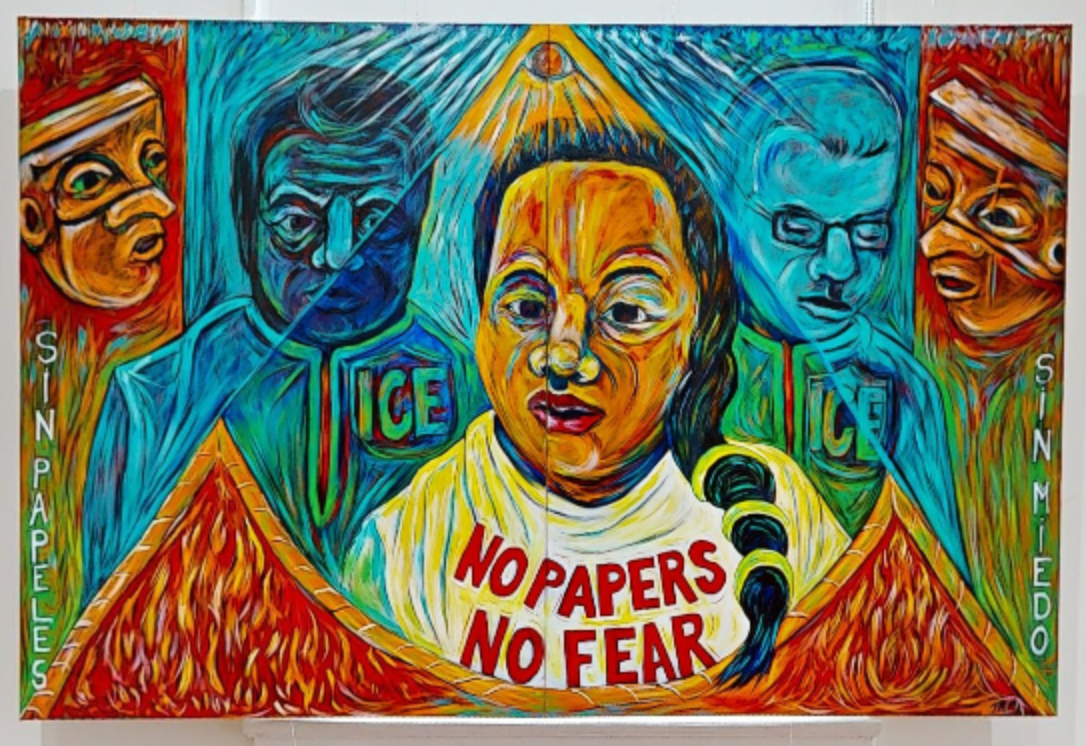
Antenna’s 2025 Louisiana Group Show From Where We Stand asks visitors to “consider and witness” perspectives and experiences of artists José Torres-Tama, Beatriz Soco Ocampo, Bvlbancha Public Access, Gabrielle Garcia Steib, and Marion Forbes. This exhibition is curated by Antenna’s 2024 Curatorial Fellow, Niama Safia Sandy, a cultural anthropologist, curator, producer, organizer, multidisciplinary artist, and musician based in New York. Soco Ocampo honors the exhibition title in mixed media on paper, collapsing time in collaged and painted overlays of Afro-diasporic masks, New Orleans architecture, lush greenery, swaying American flags, and a dark-skinned laborer’s back. Encased in a triangular frame often reserved for the folded flags of fallen soldiers, this presentation acknowledges the forced sacrifice and labor of the enslaved. The triangle appears again in José Torres-Tama’s acrylic on canvas diptych, Zero Tolerance Policy, where a mother grieves her dead child held in ICE detention as two ghoulish agents monitor them. Immersed in a pyramid of fiery light, the mother and child image recalls both Michelangelo’s Pietà (the Virgin Mary holding the body of her son Jesus) and the spiritual powers of Mesoamerican pyramids. Consider this painting in the context of the violent expansion of ICE’s reach and the threat to birthright citizenship, and the people fighting back. Nearby, Indigenous media channel Bvlbancha Public Access offers decolonial community resources accessible via QR codes. This includes guides for data sovereignty, preservation and revitalization through Poucha Houmma Revival, an Indigenous business map, profiles of Indigenous media makers, The Unrecognized Stories zine, and more. Presented in solidarity with The Promise of Justice Initiative, Bvlbancha Public Access includes PJI’s short documentary About Time nearby on a monitor, addressing the persistence of Louisiana’s Jim Crow laws and the school-to-prison pipeline. Like Torres-Tama’s work, the discourse expands in real time; polling for SB 218 reveals that 65% of Louisiana voters support that “people still incarcerated due to a non-unanimous jury conviction should be given a chance for retrial or sentencing.” Garcia Steib employs archival documents and her slice-of-life photographs of Nicaragua and Mexico in Nueva Orleans es La Frontera Espiritual con el Caribe, an ongoing mixed media collage project that situates New Orleans as a spiritual frontier with the Caribbean. The complexity of this narrative unfolds with a reprint of a declassified CIA budget summary detailing the U.S. cost of the Contra War intervention, begging the question of cost for Nicaragua’s citizens. A letter detailing the artist’s great-great grandmother’s death announcement positions the personal in the political as Garcia Steib reveals in conversation that this ancestor had to evacuate after a death threat by the U.S. supported Somoza regime. I was not prepared for the sparkle of the children’s voices in Marion Forbes’ installation Field Conditions, a ceiling-mounted installation of sound cups playing recordings of overheard conversations, featuring the voices of Rashif Holmes, Sadie May, Ashley Shelton, Maverick Steward, Naima Griffin, and students from the Metairie based co-educational Kehoe-France School. There is a lovely spillover between these nine cups, offering intergenerational slices of humanity for those who can hear. The optimism of children’s dialogue about Legos in this sound piece is not only a counterbalance to the issues of human rights explored in this exhibition, but contributes to the exhibition’s totality and its invitation to meet people where they are. —Veronica Cross
Photo: José Torres-Tama, NO PAPERS! NO FEAR! (Sin Pápeles / Sin Miedo)

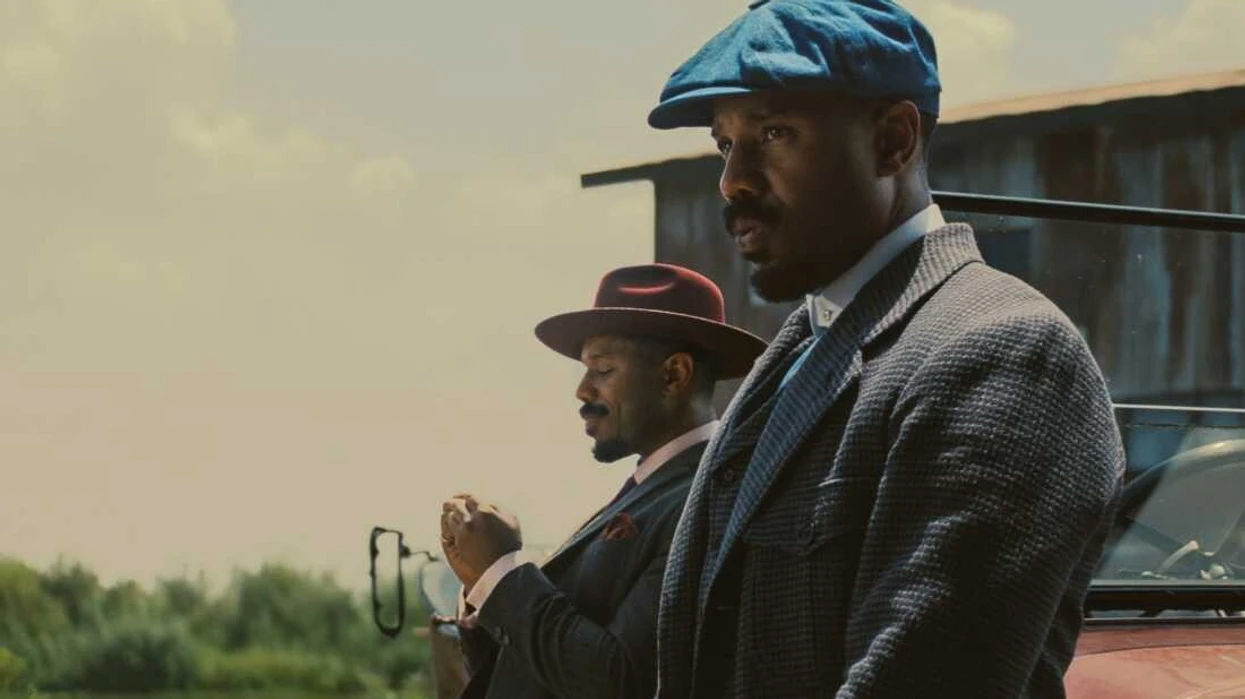
Sammie Moore (Miles Caton) approaches a tiny white church, blood-soaked and broken guitar in hand. He enters the morning service and walks to the pulpit towards his preacher father, Jedidiah (Saul Williams). While Jedidiah begs Sammie to put down the guitar, demonic flashes intersperse the holy scene. A title card flashes across the screen, and we jump back 24 hours previous. And so begins Sinners.
Directed by Ryan Coogler, the movie takes place in Clarksdale, Mississippi in 1932 during the Jim Crow era. Sammie, otherwise known as “Preacher Boy,” is a sharecropper who loves the blues, performing in town in defiance of his father. When his cousins, Stack and Smoke (both played by Michael B. Jordan) return from Chicago to open a juke joint, things turn lethal as an Irish vampire named Remmick (Jack O’Connell) sets out to transform the local community into something else—an undead community.
While the movie is breaking box office records nationwide, its significance here is unique. Sinners was shot entirely on large format film stock here in Louisiana, and the Prytania Theatre was one of five American theaters that screened the movie in 70mm upon initial release.
When we see two Michael B. Jordans pass cigarettes and booze back and forth, seemingly to prove they can, I admit I had my skepticism, but Jordan quickly squashed my doubts. Miles Caton gives an outstanding breakout performance slinging the blues and holding his ground, while Delroy Lindo steals every bit of screen time he’s given, both with comedic relief and an improvised performance that encapsulates what the blues really is. But Coogler and composer Ludwig Göransson elevate the movie into another dimension in that juke joint. If you’ve seen it, you know the scene. As Sammie begins his performance of “I Lied to You” the walls of sound and time break down and remix—leaving us, the viewers, rapt with the sacred, eternal spirit of song.
The simple narrative would frame vampirism as a metaphor for whiteness as a thing that steals and destroys. But Remmick’s focus is not simply to kill; it is to kill and unite. His mission is one of assimilation—something that, unlike Black Americans, Irish immigrants were (eventually) allowed to do—as he and his group repeatedly yearn for being “one people.” Coogler complicates our antagonist, and by doing so respects the intelligence of his audience.
We are a substance-starved media-watching populace, accepting the scraps thrown to us in the form of sequels, prequels, remakes, and rebrands of existing IP. AI is becoming more deeply embedded in our art and daily lives, while the laziness and greed of production companies and streaming sites choke out real art. It’s a rare crossroads that Sinners positions itself at: a blockbuster that goes beyond surface-level analysis of its subject matter while still being fun as fuck. It takes both us and itself seriously (but not too seriously), proving that passionate, original stories shot on film still find their way to the top. —Marisa Clogher
