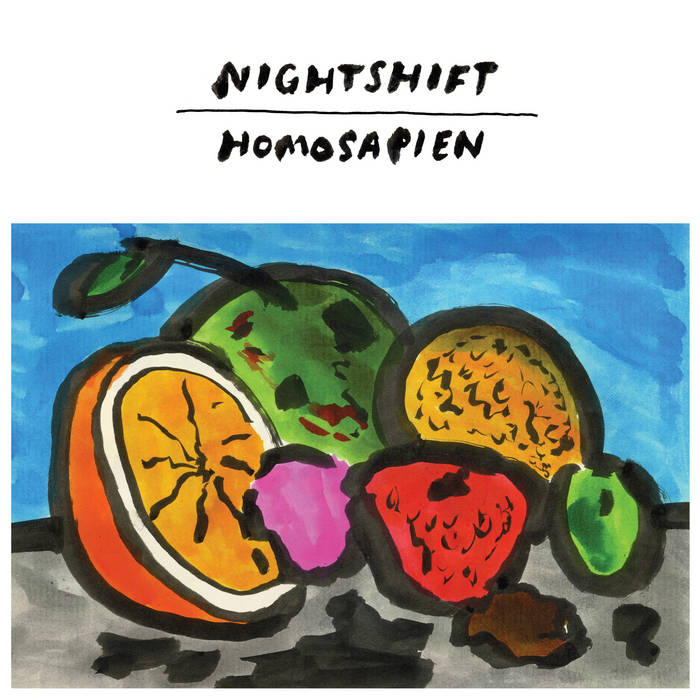
Over the past couple of years, Glaswegian band Nightshift has had a restructuring of sorts, with several band members leaving (the former quintet is now a quartet) and others changing roles (former drummer Chris White is now the guitarist, with new member Rob Alexander on drums). With this changed dynamic, the band has also refreshed its post-punk sound. Homosapien, their latest release, finds Nightshift playing with more upbeat rhythms and structured guitars than on previous works. They are also experimenting with genres, incorporating rockabilly, indie pop, and psych rock into their music in a more cohesive way than expected. And, despite the fact that the songs tend to deal with more serious topics, there is a sense of playfulness woven throughout that offers a balanced, even earnest outlook. Homosapien opens with the psychedelic-infused “Crystal Ball,” with lead singer Eothen Stearn’s dreamy vocals belying the song’s musings on the realities of an increasingly fascist, post-Brexit government. “Together We Roll,” which features bassist Andrew Robert Doig on lead vocals, is a rollicking ode to community organizing, and “S.U.V.” is a laid-back daydream about modern relationships, with Stearn’s intonations reminiscent of Courtney Barnett. The album ends with “Crush,” a jaunty indie-pop number that invokes the excitement and sheer anxiety of human attraction via increasingly frenetic drums and guitars. Homosapien is a smart album and exciting new chapter for Nightshift: an accessible existential musical journey that manages to avoid taking itself too seriously, or veering off into despair. —Mary Beth Campbell

For those uninitiated in the ways of Primpce: Be prepared to enter a singular dimension. The New Orleans experimental art-punk band creates music that could be the soundtrack for a cult classic film that was too forward-thinking for its time. Utilizing samples and field recordings—the full list of sample credits, featured on their Bandcamp page, rivals that of De La Soul—The Beauty of Blister Packs (Primpce’s third full-length), is a wry, mid-century-American-inspired ode to automation and fabrication (song titles include “Automatic Atomizer Electronic Cigarette Blister Packing”). Each track (25 in total) centers around a different fictional product like a surreal advertising jingle. Though they might be jarring at first, trust that there is a method to the chaos. The songs are meticulously arranged by Alex Brownstein-Carter, with the band’s technical instrumental skills and artful sampling elevating the music further. And, of course, unlike the culture of automation they are writing about, these songs are not shallow or soulless. Listen beneath the surface and you will glean glimmers of social commentary: (“Best Crown Spring Connector Automatic Assembling”: “female terminal / clip crown spring auto / highly efficient / piece of equipment”). The Beauty of Blister Packs, as with all of Primpce’s music, takes you out of your comfort zone, challenging you in the way all good experimental art is meant to do. —Mary Beth Campbell
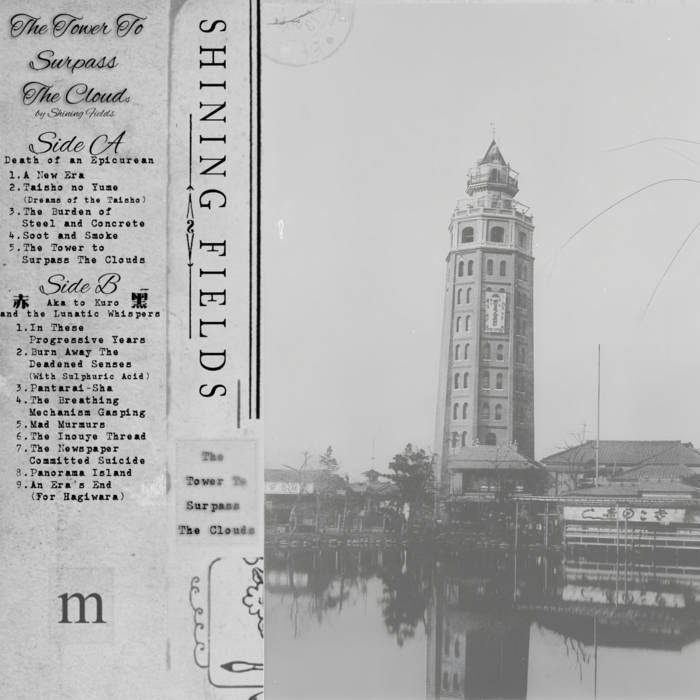
Local experimental musician Sebastian Figueroa has a long history of creating ambitious works by using his textural instrumentals to engage with the historic and political. Half of his 2019 tape Symbolic Exchange & Emptiness, released under the moniker Proud/Father, served as a “a study in the history of Puerto Rican independence movements and the fading boricua identity post-[Hurricane] Maria.” This time around, Figueroa has turned his focus towards 1920s Japan, using shifting musical terrains to consider the turbulence brought about in the era marked by the Great Kanto Earthquake in 1923 and Emperor Taishō’s passing in 1926. He finds particularly strong inspiration in anarchists Tsuji Jun and Kyojiro Hagiwara, naming each of the two sides after a work by each respective author. The music held within this tape is Figueroa’s interpretation of heavyweight themes such as the rise of nationalism and executions of anarchists without trials, all with a Tower of Babel-esque structure. Non-instrumentals “Taisho no Yume (Dreams of the Taisho)” and “The Tower to Surpass the Clouds” push these themes to the forefront, while the majority of the tape explores these ideas strictly through an oblique yet beautiful array of drifting textures. —William Archambeault

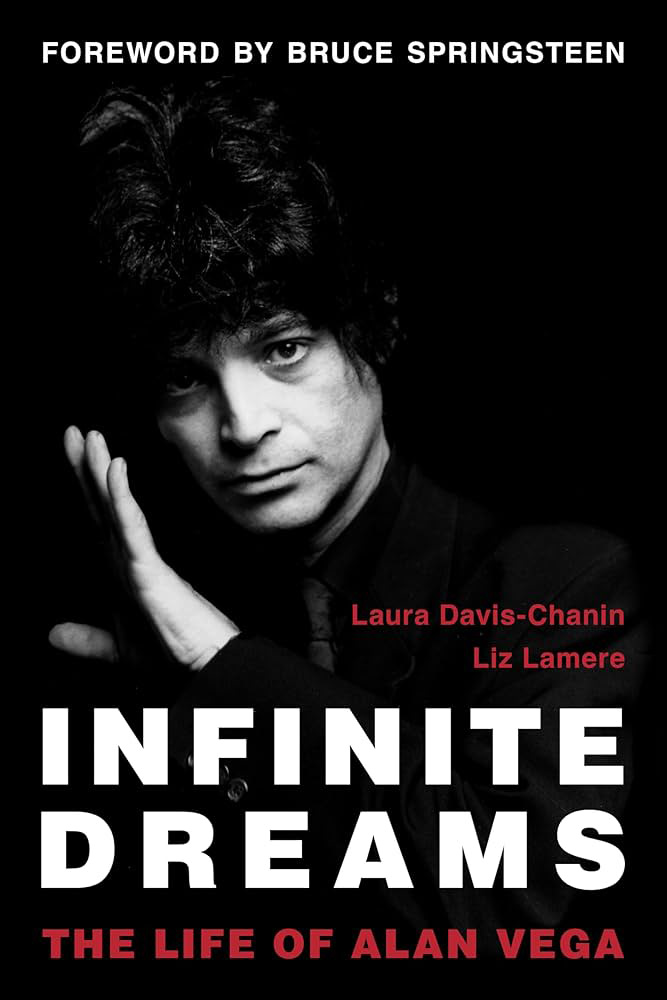
Alan Vega was most notable for his work in the band Suicide, a New York synth punk band, from 1977 until his passing in 2016. Though Vega passed in 2016, the music of Suicide and his solo endeavours continue to inspire those who listen to his work. Infinite Dreams: the Life of Alan Vega explores his life’s work as a visual artist, a performer, and a family man. Written by Laura Davis-Chanin and Vega’s wife Liz Lamere, Infinite Dreams paints a vivid portrait of a man who touched the lives of many artists. Included in this book are letters by Henry Rollins, Lydia Lunch, Billy Idol, and various others who worked alongside Vega, allowing the reader insight into these personal narratives of creative encounters and life-altering interactions. Vega made numerous musical collaborations with Panasonic, Alex Chilton, and Ric Ocasek. Infinite Dreams perfectly documents a place and time in New York among artists, lowlifes, and everyday happenings which allowed Vega to thrive in life and in luck. Full of rare pictures, letters, interviews, and lyrics, Infinite Dreams is a must read for fans of Suicide, Alan Vega, and punk history. —Sara Nicole Storm
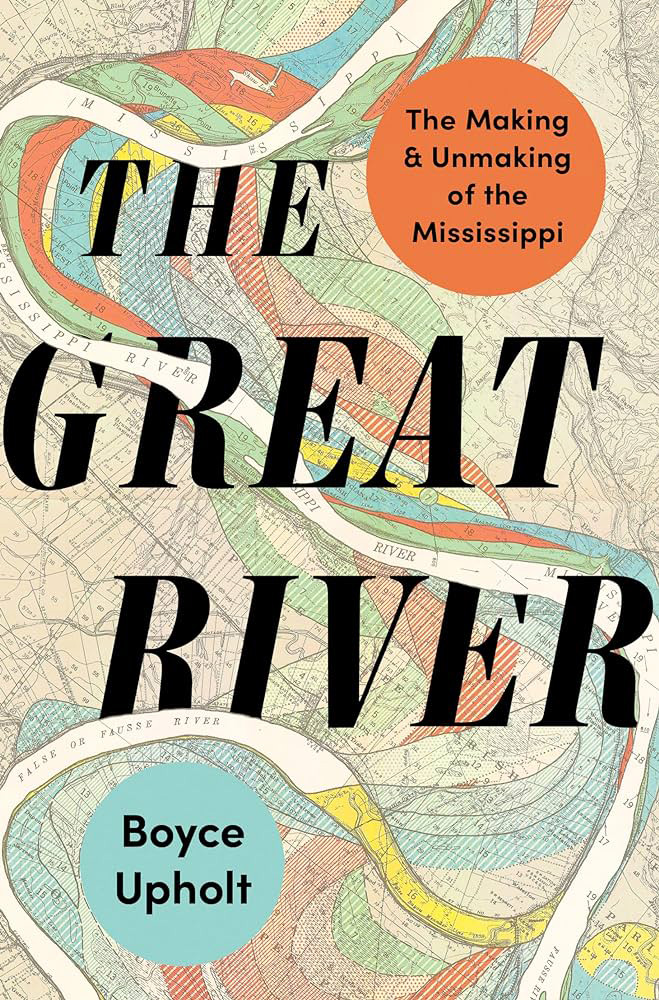
Writing a book about the Mississippi River in 2024 feels audacious. What more could there be to say about such a subject, and what even qualifies a writer to make the attempt? But New Orleans journalist Boyce Upholt proves more than up to the task. The Great River combines physical geography, thorough historical research and interviews, and years of personal exploration of the river to create a flowing narrative history in the tradition of writers like John McPhee. Upholt touches on the usual suspects like Mark Twain, Bienville, and the 1927 flood with fascinating details and minimal cliche, and sheds new light on often-underreported bits of the river’s history, from pre-Columbian civilizations and later Indigenous struggles to a now-defunct, massive scale model of the river built near Jackson, Mississippi. He wisely lets his own extensive experience paddling and otherwise traveling along the river pepper the narrative without taking over, as can be a hazard for adventurous writers. Overall, The Great River is a delightful and informative exploration of the Mississippi and centuries of human efforts to understand, tame, and document it, from a writer who has clearly carefully honed his slice of that story. —Steven Melendez
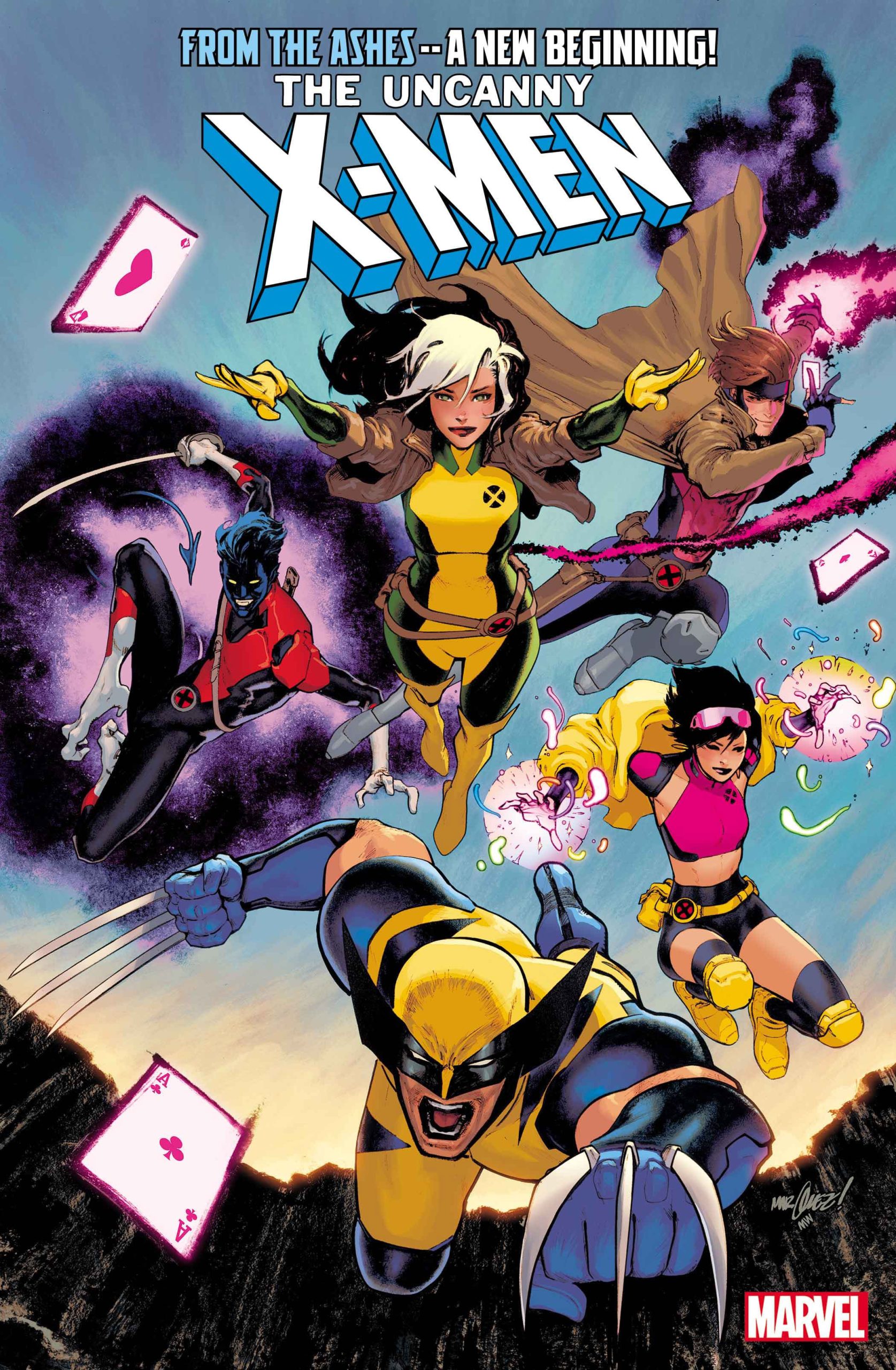
New Orleans houses the headquarters of a classic team of X-Men led by Rogue, as they protect the youth and face both mysterious plots from extremists and prophecies about mutantkind. Readers are treated to the inner thoughts of Rogue, also known as Anna Marie, who wonders about the purpose and responsibility necessary from a mutant world that is politically transitioning from Professor X’s imprisonment, after he betrayed the X-Men. Rogue expresses her personal conviction about the X-Men and the role they play in youth, safety, and education. Rogue’s company—her husband Gambit, adoptive brother Nightcrawler, and friend Wolverine—adds depth to the symbolism surrounding the origin of her moral compass and where it may lead her next. The questionable union of the X-Men, the problems they face with being perceived and discriminated against, and the home Rogue is building in New Orleans all feel like narrative elements prepared to collide with dread and mystery in the horror genre. David Marquez’s art kicks off this run of the Uncanny X-Men with a range of different lightings and backgrounds, giving attention to the role that each different destination in the book plays with. Writer Gail Simone references Rogue’s foundation, upbringing, and accomplishments, so that readers can compare these qualities with the idea of being perceived as ugly and monstrous. Like with Rogue’s mutant touch, some mutations may have horrific consequences if not properly controlled. The comic repeatedly explores where someone might draw boundaries in perceiving their own identity, despite how others interact with them. The narrative of this issue also contrasts Rogue’s ideological conviction, control of her power, and romantic love with themes about horror coming from the most familiar of places, like one’s family home or home state. For mutants, the question of whether there is a welcoming home or not may sometimes even be about their own body fitting in with society, similar to Rogue’s original problem with hurting others with her power through touch. —Jamal Melancon-Hill

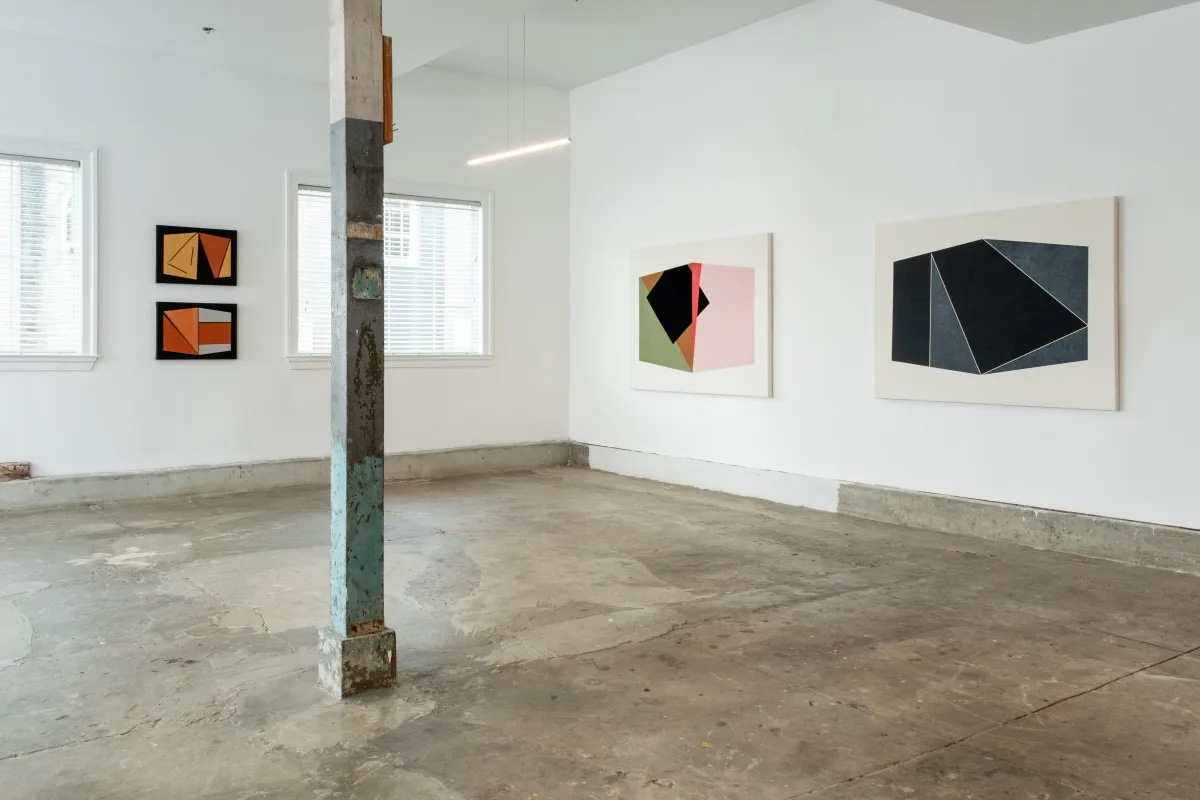
I didn’t plan to review this show, but Dickie Landry’s quietly monumental paintings got stuck in my mind’s eye on repeat. A Louisiana native, Landry is a world-renowned saxophonist in the minimalist canon, visual artist, photographer, and an advocate for and collaborator with our state’s regional music scenes. This self-titled exhibition at Other Plans gallery in New Orleans follows Landry’s recent distinction as Humanist of the Year by Louisiana Endowment for the Humanities.This past spring, Landry could be seen in the archival materials that accompanied the exhibition for his wife and collaborator Tina Girouard (1946-2020) in Tina Girouard: SIGN-IN at the Ogden Museum of Southern Art. The Dicky Landry exhibition at Other Plans is his first local showing since 1985 and includes 14 paintings from 2002 to 2023 ranging in size from the intimate Black Border Series, The Power of Gold at 16” x 20” to Red Slit (2008) at 78” x 110”. These are mostly acrylic on canvas, with a bit of oil stick and flashe paint. His diminutive barbed wire series, Mr. Lester’s Legacy, is also on view. The paintings are geometric in nature, and four large paintings integrate reprints of his archival photographs from his chronicles of the New York City art and music scenes from the late 1960s-on. The ever-present motif is an elongated hexagon that appears to float upon alternately black or white rectangular canvas backgrounds. Taking a cue from minimalist musical composition which champions repetition, this perpetual form can be understood as the pulse of the overall visual composition of the show. Like the phenomenon of retinal memory after looking intently at a light, Landry’s hexagons appear to levitate on the canvas plane on fields of white or black paint. Facets and linear negative space of the canvases invoke walls and beams. Bell Bottom (2002), has the mood and shadow of a chapel, and I want to imagine a young Dickie Landry singing Gregorian chants inside of the cool, dark space of that painting. In the surprisingly three-dimensional acrylic on canvas Black Border Series, Broken Lines (2023), lines read like ruptures, conjuring friend Gordon Matta-Clark’s monumental sculptural sliced-through areas of buildings known as “cuttings.” Landry’s color palette also invokes elements of old houses and the labor that goes into construction, as seen in the palette of workwear greens, plumbing pipes silver and copper, spackle pinks, asbestos floor tile gray, and denim blues. Black Square Tumbling (2023) upends perspective, or perhaps the viewer must wait to catch up to the logic of a tilted Earth. Then, the palette shifts to silver-grays of older cameras, and the hexagon becomes a minimalist stage in paintings with Landry’s large black and white archival photos of artists. In the tryptic icon portrait of William Burroughs, One Smile, William Burroughs (1973/2023), the sitter does smile, but the 1973/2023 portrait of his collaborator Philip Glass, captured as a pensive Caravaggio in faceted silvers and grays, steals his thunder. —Veronica Cross
