
Terrytown’s Eddy Benz creates dreamy, lo-fi, indie pop-infused R&B; his music is part of the emo rap scene that originated on SoundCloud and has grown popular across platforms like TikTok. Spectacle, his latest release, borrows from new wave and garage rock while still maintaining his signature sound: bleeding-heart-on-your-sleeve lyrics layered with downtempo instrumentals and Auto-Tune. There are 13 tracks on Spectacle and, while all are well-crafted, when listening to the album all the way through it feels like it was created to be heard one song at a time, and the songs sometimes blur together. That might be the point, though, given how social media has changed music consumption. Benz shines the most when he deviates farther from the typical emo rap path, especially when he leans into dancier rhythms. Opener “In Heaven” and “Silverdove” are both reminiscent of Yves Tumor, with the pairing of heavier synths and uptempo beats. “Lover” is a lovely, dark wave dance number that would fit in at any goth dance party. “Dynamo,” with its punkier guitars and drums, leans more into 2000s emo punk, and album closer “Ringo” is a fun, jangly garage pop rock number with Benz’ vocals slightly reminiscent of early Ramones. This of course brings to mind the longevity of some of these sub-genres that go viral on social media (namely, do they need to go back to the basics to remain fresh?), but Spectacle is, in its totality, an enjoyable listen that showcases Benz’ talent and potential. —Mary Beth Campbell
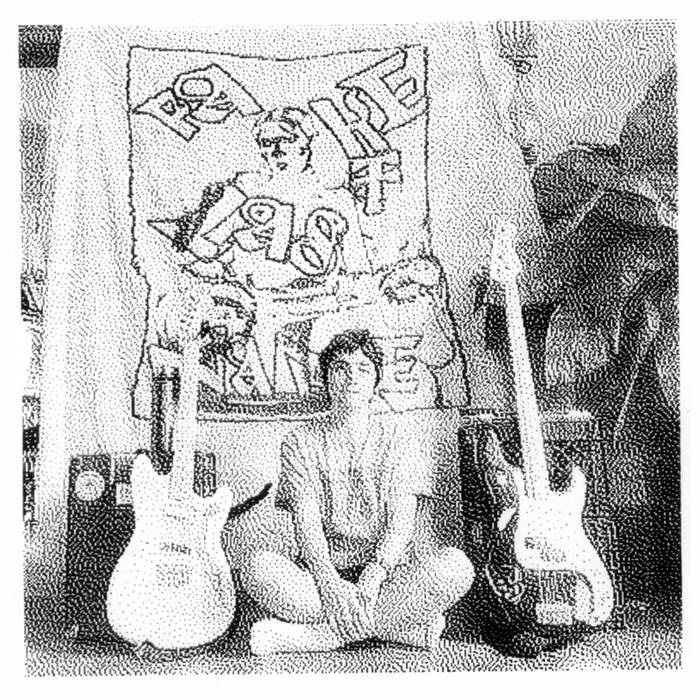
Fake Last Name’s latest 7” gives its listener just a taste of what Ronni What has in store for the future. Ronni What crafted all instrumentation on Three Persuasion Domains, and it sounds as if you’re in the room with them while they read aloud their personal dialogue of their days. Lyrically diaristic with lines such as “my mind is made up,” which appears in several intervals throughout this record, leaves one wondering if What has convinced themselves or if the listener must chant along in order to make up their mind as well. The track “Rain Come” is an introspective march that could willingly go on forever with its synthetic drums jabbing along beautifully placed arpeggiations reminiscent of Mamman Sani. “Gadfly” has been released previously via Tough Gum, but its placement on this 7” shows how lyrically pertinent Fake Last Name’s work is as a matter of poetry, with the music coming secondary. Lines like, “I’m grasping onto thin air, I’m looking into a small tunnel of information” suggest that everyday escapism is easiest in the digital realm, but Fake Last Name is able to find their way out of it by creating these mantras that must be heard and cherished. —Sara Nicole Storm
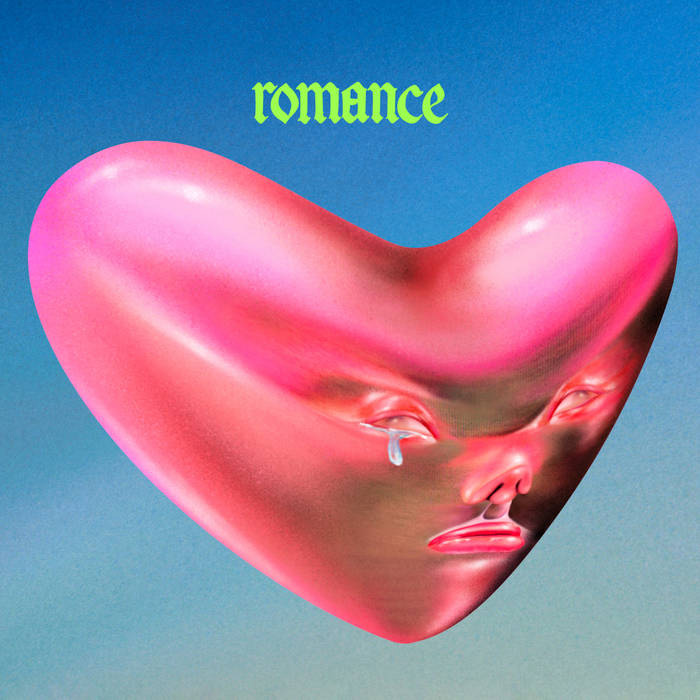
Fontaines D.C. have built their reputation on crafting dark, post-punk tracks that explore, among other topics, the band’s Irish identity, working-class roots, and politics. That is all still present in some form on their latest effort, Romance, but their sound is broader and more polished, playing with Britpop, ‘90s alternative (including nu-metal elements), and gothic rock. Romance also finds them more focused on exploring what it means to exist as both human beings and rock stars on a larger, global scale—they are no longer the working class boys of yore. The album starts with the menacing, gothic titular track, contrasting a sense of limitless possibility with dread. Lead single “Starburster” has a further edge of anxiety to it, leaning strongly into the aforementioned ‘90s alt rock influences as lead singer Grian Chatten croons about trying to make sense of the current reality (“I wanna take the truth without a lens on it / My God given insanity, it depends on it”). “In The Modern World” toys with giving in to the temptations of dissociation, while the lovely “Horseness Is The Whatness” (the title comes from a quote in James Joyce’s Ulysses) ponders the meaning for life, the inclusion of strings and the ultrasound heartbeat of guitarist Carlos O’Connell’s unborn daughter adding a sense of hope to the melancholy. Closer “Favourite” is a joyous and optimistic jangle pop tune and a tribute to the band members’ childhoods, families, and friendships with each other. The existential journey of Romance, from abject dread to peace and camaraderie, is an odyssey unto itself, offering a glimpse into where Fontaines D.C. find themselves at this crossroads, and where their music might go from here. —Mary Beth Campbell
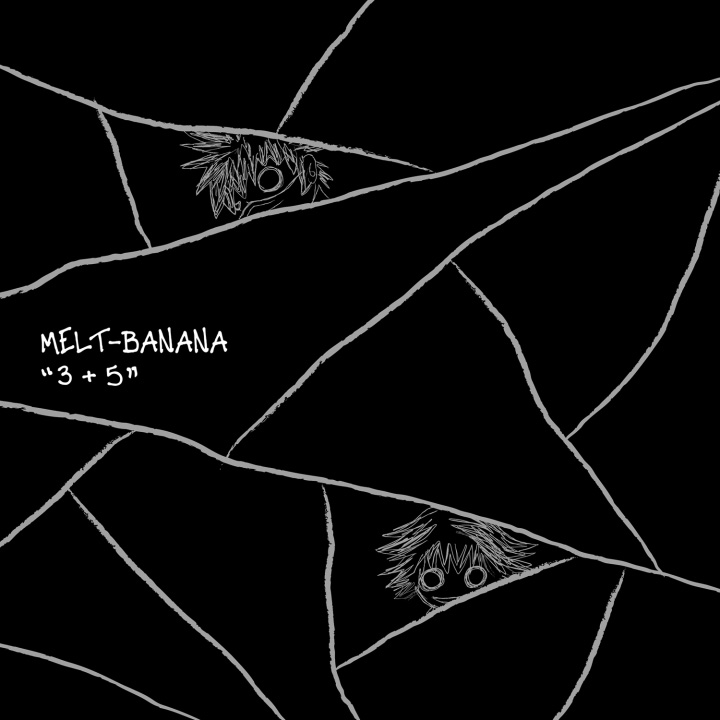
Melt-Banana is the type of underground powerhouse that should need no introduction. As Eyehategod bassist Gary Mader once put it to me, “That’s Japanese royalty.” Over the past three decades, Melt-Banana has created some of the most crazed music known to man, continuing to venture into new terrains with every release. The group’s second full-length since ditching their rhythm section and consolidating into a two piece, 3+5 features the bold sound of an experimental punk band no longer held back by the limitations of a human drummer. Although Melt-Banana is distinctly a guitar-based group, they occupy a space that feels light years removed from their power-chord-bashing punk brethren. Guitarist Agata’s extensive use of effects transforms his instrument into something of its own, opening the album with glorious high-pitched chaos on “Code” and transforming into a swarm of bees on “Whisperer.” 3+5’s dense layers of guitars and electronic accompaniment create a cold, metallic sound that feels synthetic in comparison to most bands. Twists and turns abound with every bar, constantly keeping you on your toes. As always, vocalist Yako’s sugar-coated (yet often indecipherable) shouts are front and center, creating a constant sense of urgency that demands your attention on tracks like “Case D.” While many groups this deep into their careers seem content to phone it in, Melt-Banana continue to feel absolutely vital. —William Archambeault

Meredith is a shoegaze project with ties from New Orleans to London to Glasgow, and originally formed in Jersey (British Isles) by long-time friends Carolina McPhail (vocals, guitar), Leon Gateley (guitar), and Jake Haslam (drums). The trio’s debut—and farewell—album, Seventeen, was recorded in Jersey by producer Lucas Saunter in 2021, during the height of the COVID-19 pandemic. It is finally being released on Daughter of Pearl, an independent record label that McPhail (now a graduate student at Tulane University and WTUL DJ) founded in New Orleans. Seventeen is a retrospective coming-of-age album, mixing personal nostalgia with broader themes of love and loss. The songs are expansive, invoking classic shoegaze bands such as My Bloody Valentine and Slowdive. On the instrumental side, McPhail, Gateley, and Haslam have created a spacious, dreamy atmosphere that deftly reflects the emotion in McPhail’s lyrics and vocals, ranging from moments of quiet to explosive outbursts. Though layered under the instruments, McPhail’s vocals are not overshadowed; instead, this production choice adds mystery, urging you to listen closely. On the single “Mf named Carlos,” McPhail draws upon the complex feelings of first-love and being a teenager. The intense and percussive opener “Meredith” is a meditation on gender dynamics, an issue both of the past and of the present (“I’m sorry for being sorry for something that you did”). Other standouts include “Water” and “Tell Me,” though this is an album that is meant to be experienced from start to finish. Seventeen is a nostalgia trip tempered by the wisdom that can only come with time. —Mary Beth Campbell
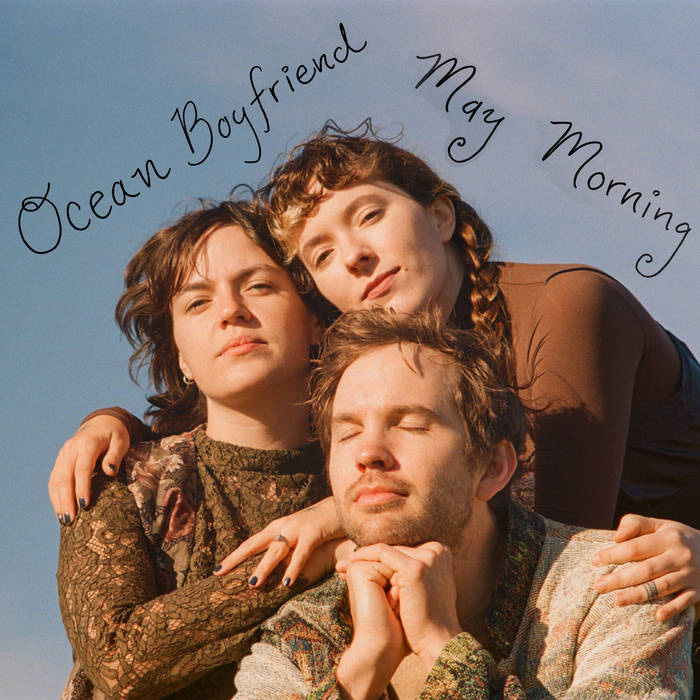
All three members of Ocean Boyfriend (Claire Givens, Rosemary Minasian, and Howe Pearson) are very busy musicians in the downtown scene, so it’s always a special treat when they can find time to record. Their newest album, May Morning (co-produced by the band and Toren Hardee) is about as delectable as it gets. From the silky smooth vocals to the gentle instrumentation, the loveliness of the album settles on a listener like morning dew. I am emboldened to use such language by the songs themselves. In “PFB,” a soaring number that makes me feel the way I imagine Taylor Swift fans probably do—like an inflated balloon and proud of it—there is a line about “prancing in a field;” and in “Garden” there is a reference to “composting in the garden of my body.” Other songs, such as “Canal,” have a poetry that is more understated, but even at their most doe-eyed, they earn their right to the imagery with the permutations of cello, flute, bowed bass, the occasional wind chimes, and chirping cicadas, all of which give the impression that you’ve awoken from a long sleep in the middle of a fairy’s garden party. It’s the musicianship that makes it all possible—Ocean Boyfriend has the skill to reach for the angelic notes, and they go for it, much to the delight of my beleaguered 21st century nervous system. I swear these harmonies are medicinal: Today I am a happier person because I listened to this record. —Holly Devon
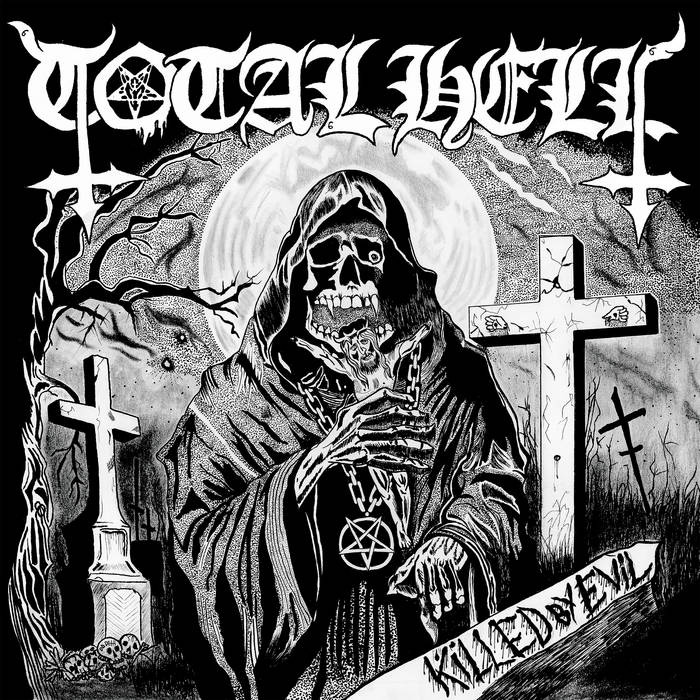
When Total Hell dropped its first demo tape five years ago, the local group proudly declared themselves the forebringers of a “New Wave Of Shitty Heavy Metal” by fusing their love for ‘80s satanic thrash metal with a welcomingly raw punk execution. After dropping a subsequent EP on the infamous Goner Records in 2021, the group has finally returned with its first full-length, Killed By Evil. The album’s intro makes Total Hell’s growth immediately evident with blistering dual electric guitar lead melodies that sail across a backdrop of acoustic guitar plucking in a gorgeous fashion that seemed completely unfathomable when listening to the skull-crushing sounds on the group’s first demo. Killed By Evil sees the group, which features some of New Orleans’ most prolific home tape recording punks—the likes of Trampoline Team and Sick Thoughts—finally stepping foot into a proper studio (House of 1000 Hz). The result is a turbocharged version of Total Hell no longer held back by the woes that notoriously plague anyone who dares to record to tape at home, such as the complications that trimmed their would-be Goner full-length into an EP. Musical growth and a change in environment have done a great deal to sharpen Total Hell’s already furious edge, as showcased on absurdly diabolical tunes like “Nuclear Satanic Warfare” and “Satanic Fist.” While the group still proudly waves the flag for their one-band movement, the demented sounds on Killed By Evil make it difficult to write Total Hell off as simply “Shitty Heavy Metal.” —William Archambeault

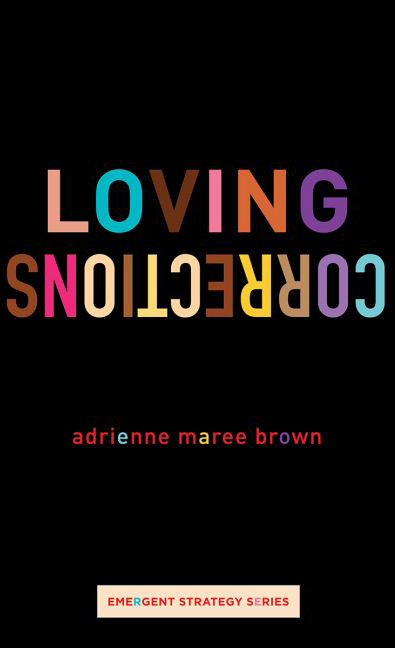
Activist adrienne maree brown’s latest work is an approachable and erudite collection of essays. A progressive treatise informed by Afrofuturism, Black feminist literature, and thought leaders past and present, it asserts that the more just world we want to inhabit is one we must first create within ourselves. Between direct admonitions of white supremacy and gender dichotomy, brown upholds that “loving corrections” are, above all, personal endeavors, transformations which can’t be realized by holding onto moral high ground or policing who gets to claim it. One essay is simply a conversation with her sisters about their tumultuous communication patterns during family gatherings. By exploring what preconceptions stop them from being able to show up for each other, their boundaries are shared and honored—and together, they vulnerably reimagine their beliefs and take action to be more “in right relationship” with one another. Eradicating racism, misogyny, patriarchy, transphobia, and environmental ravage is an elusive goal. Confronting strongly-held beliefs is fragile work; delicacy is required to unravel the nuances that uphold or undermine them, especially in our era of personalized media intrusion. When we’re all yelling in our own echo chambers, it’s difficult to engage in meaningful dialogue. With internet activism in mind and our flawed attempts to hold each other accountable at heart, Loving Corrections posits that with inner healing comes growth—and that being in right relationship with ourselves and our communities is critical to building a more just and caring world. —Terra Durio
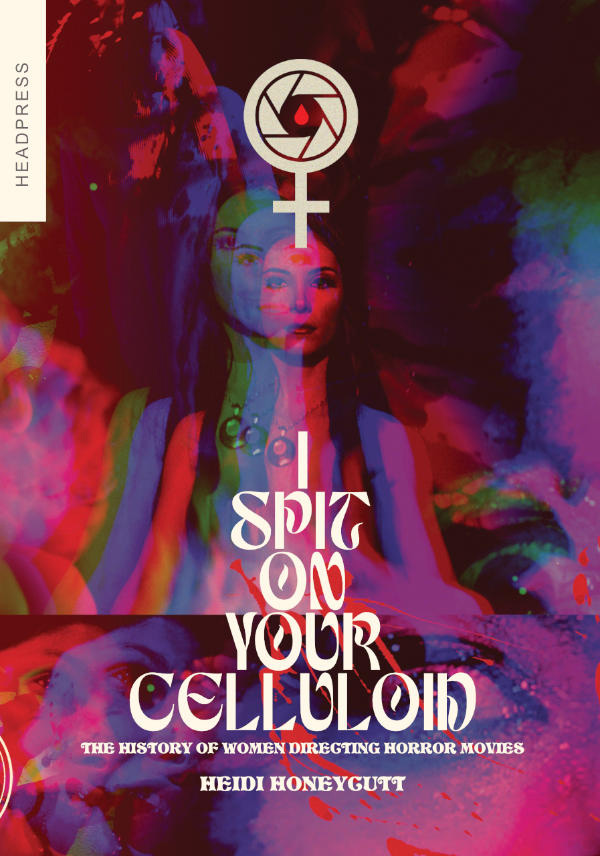
I Spit on Your Celluloid was 10 years in the making. Author Heidi Honeycutt’s breadth of knowledge is apparent as she takes the reader through the history of horror, from the start of the silent film era, to made-for-television, the direct-to-video VHS era, independent cinema, the international spectacle, and how women are directing films at present. Honeycutt collects interviews from directors such as Roberta Findley (A Woman’s Torment), Katt Shea (Poison Ivy), Jackie Kong (Blood Diner), and more to tell the story of how they got into directing, what they produced, and where they ended up. Thousands of films are listed with their unique histories—some even lost to time due to copyright and distribution, with the hopes of resurfacing. For the cinephile who wants to take a deep dive into the history of horror films, I Spit On Your Celluloid is the perfect guide. —Sara Nicole Storm
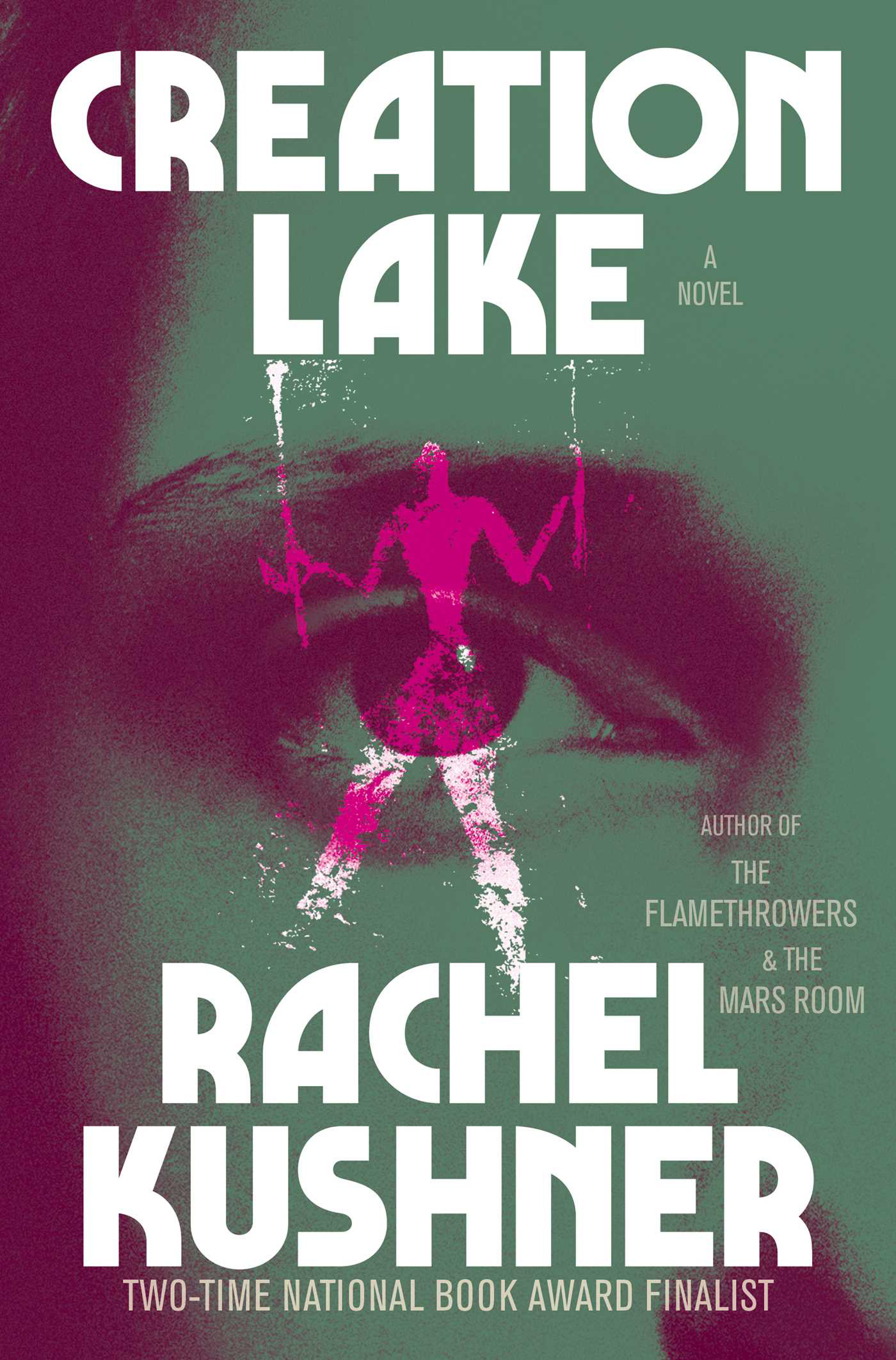
The narrator of Rachel Kushner’s latest novel is a freelance spy and agent provocateur, infiltrating a ragtag environmentalist commune in southwest France. We learn only a few details about her: her pseudonym Sadie Smith, her history of goading activists into criminality and sending them to jail, and her tremendous misanthropy. That becomes a channel for Kushner’s wit and near-uncanny talent at conjuring a scene with just a few resonant details. The novel takes place in the early 2010s—when Daft Punk‘s “Get Lucky” was inescapable—but also meanders through the history of failed revolutionary movements, from a seemingly fictional medieval-era uprising by the persecuted Cagot minority to the fizzling of the 1960s left. Smith becomes captivated by pilfered email correspondence from a local guru, a onetime acolyte of the Situationist Guy Debord who retreated to a cave after a family tragedy, convinced humanity never recovered from the fall of the Neanderthals. His musings on human evolution, oddly reminiscent of the Viagra Boys album Cave World, take up a somewhat bizarrely large fraction of the novel as he alone seems to evoke Smith’s sympathy (and reinforce her desire to retreat from the world) but—like the Boys—Kushner almost improbably keeps us humming along. —Steven Melendez

The sheriff is a unique institution in the U.S., granted a level of autonomy as a police officer and jailer by many state constitutions—including Louisiana’s—that can defy typical principles of separation of powers. And as elected officials, they’re also given more freedom to engage in politics than many other types of cops. Jessica Pishko, a journalist and lawyer, explores how many sheriffs have come to embrace right-wing ideas. They can come to see themselves as defenders against other layers of government over issues like gun control, vaccinations, and spurious claims of election fraud, even at times claiming wide power to deputize supportive civilians. And she highlights the potential for abuse of power, citing claims of brutality by deputies and sheriffs, including former Iberia Parish Sheriff Louis Ackal. Orleans Parish Sheriff Susan Hutson appears in Pishko’s narrative as well, as an example of the paradoxically limited power of “reform-minded sheriffs” to achieve significant change. Pishko’s prose can be dry at times, and the book would have benefitted from a bit more analysis of sheriffs in the pre-Trump era, but it’s still a valuable and comprehensive examination of sheriffs today and the inherent dangers of such a powerful office. —Steven Melendez
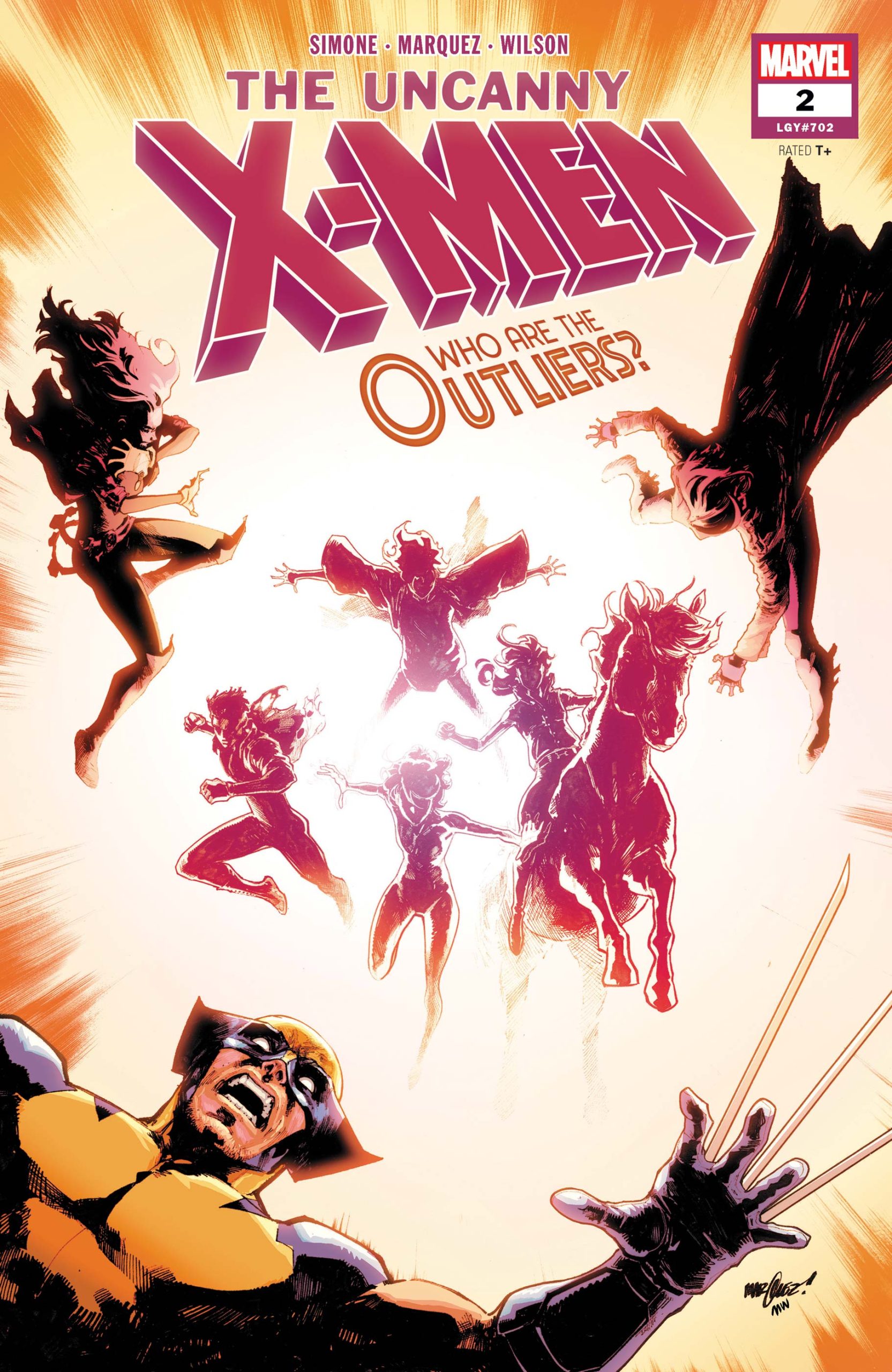
Writer Gail Simone’s Southern gothic tale in New Orleans creates a touching introduction to a new teen mutant group named the Outliers. Simone designed the team to represent invisible disabilities, referring to how one can’t tell that the teenagers are mutants by only looking at them. Simone and artist David Marquez prove their commitment to horror with action-packed interactions full of creepiness. Rogue’s husband Gambit might be cursed, the X-Mansion is now a prison run by extremists, and Professor Xavier’s college love interest has somehow become some sort of monstrous mutant hunter. This chaos is reflected in the lack of unity among the original X-Men. Rogue’s leadership is demonstrated beautifully when Wolverine’s lack of faith in himself acts as another catalyst for her to guide her peers. The parallels to Professor X and Rogue as leaders is another fascinating element at play, as both of these X-Men leaders’ romantic relationships have defined a large part of their character development and how they choose to express their morality and views on education. The interest in the extremists hunting down mutants may be lacking, but this is easily made up for by the enriching Southern gothic world Rogue’s personal narrative takes place in and the challenges presented to her character’s motivations. —Jamal Melancon-Hill

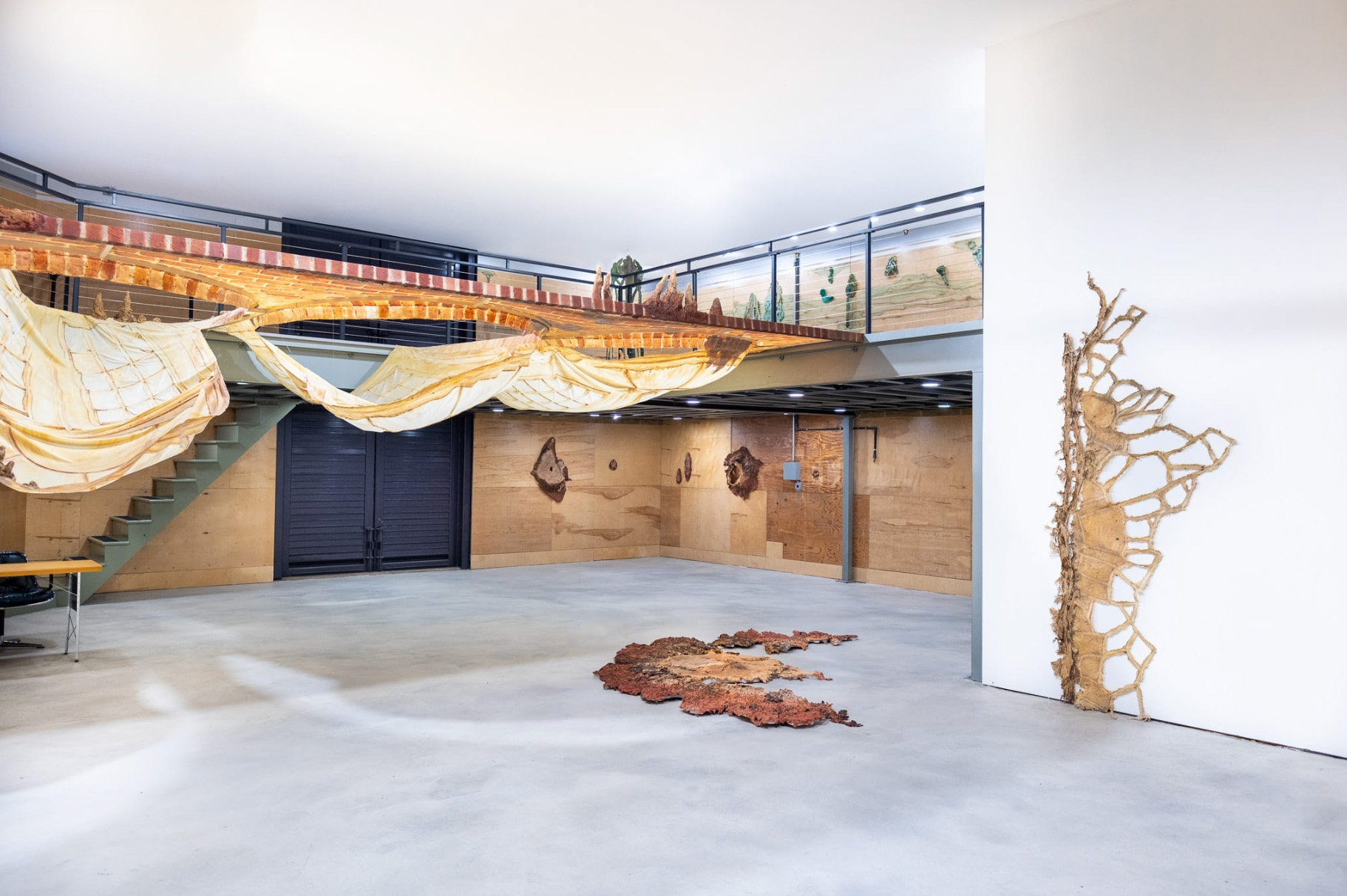
New Orleans artist Carlie Trosclair cast roots, cypress knees, and tree stumps along with bits of architecture, home decor, and fabric from days bygone for her exhibition allowed our edges to merge at Sibyl Gallery. The term cast has dual meanings here, as her works are assembled in a mise-en-scène throughout the gallery, like performers in a theater. Trosclair looks for philosophical and phenomenological similarities between her subjects, inviting us to perceive the vulnerability of both natural and man-made worlds. Using a latex of pale cream to create molds with pigment for narrative effect, Trosclair also allows for bits of bark, dirt, and brick to enter the casts, merging the real and imagined. Works range in scale from intimate to monumental; some are immediately discernible as real things while others are hybrids verging on science fiction. There are 29 artworks in total and all are abstractions of their original forms: houses, trees, furniture, swamps. “Home Relics VII” at 5” x 5.5”, appears as hardware from an old drawer oxidized green with a small conch shell attached, intimating that it has been submerged—an unnatural situation for furniture. The immersive “Canopy” (dimensions variable) is a beautifully eerie, life-size sculpture cast from Creole style windows and walls from Trosclair’s family home, with red brick defined by additional pigment. “Canopy” does not “stand” in an upright position, but instead hovers over exhibition visitors, tent-like and ethereal, swaying to the unnatural breeze of an air conditioning vent. Installed opposite the entrance, “Understory” serves as a key to the logic of the exhibition, hanging flat to the wall, with rooty tendrils languorously draping onto the floor. “Understory” conjures both the organic and man-made, simultaneously invoking tree root systems, insect wings, stained glass, and city maps with its faceted veining and riverbend arch. Consider the cicada nymph’s shell aligning against the silhouette of this piece and its song on these warm September days as its own life draws to a close. Also consider the gallery’s proximity to the riverbend and our eternal cycles of flooding, most recently from Hurricane Francine. In “Woodland Terrains,” tree stumps and rings hang from unfinished plywood walls, conjuring protective boarding for storms and unfinished repairs. The perfect irony of using latex—essentially rubber, a wood derivative—and pieces of wood to evoke trees and bark foreshadows surveys of land loss. Upstairs, hybrids of antique décor and organic details stand alongside works on green-tinted plywood walls. The green color story extends to the sculptures, conjuring moist environments of algae and mold; and Scheele’s Green, a dye used in the 18th and 19th centuries made from copper and arsenic that poisoned its users, signifies polluted water tables. In Trosclair’s casts of antique furniture, architectural and domestic details merge with actual textiles, reborn as adaptive and psychedelic post-disaster amalgams. In “Inheritance,” an antique gilt mirror “grows” jacquard algae, and a pendant lamp case attaches itself like a barnacle, intimating high-water levels. allowed our edges to merge can be framed in the multiple meanings of simulacra, as simulations that create their own reality and as copies of things that forecast the moment for which the original no longer exists. “Canopy” is also visible from the rafters here, and cypress knees cheekily pop up to remind us about resistance. Cypress knees are the remnants of old tree root systems of the city’s watery past, and present tripping hazards in yards and green spaces. They are habitually removed but most always return. (On view at Sibyl Gallery through October 6) —Veronica Cross
There is something of a vogue in New Orleans theatre for conversational, philosophically-minded playwriting, stemming, I believe, from a love of Jim Jarmusch films. But writing a play about ideas is hard to pull off. In cinema, a black-and-white shot of cigarette smoke rising through the dim light of a greasy spoon can make any topic seem sexy and mysterious. The theater, on the other hand, has fewer tricks to distract you from the quality of the dialogue, so you’d better make it good. In the hands of a master—like Edward Albee in Who’s Afraid of Virginia Woolf—the dialogue is the action. With proper execution, there can be as much tension, suspense, fear, and revelation in a night of conversation as there is in a fast-paced thriller.
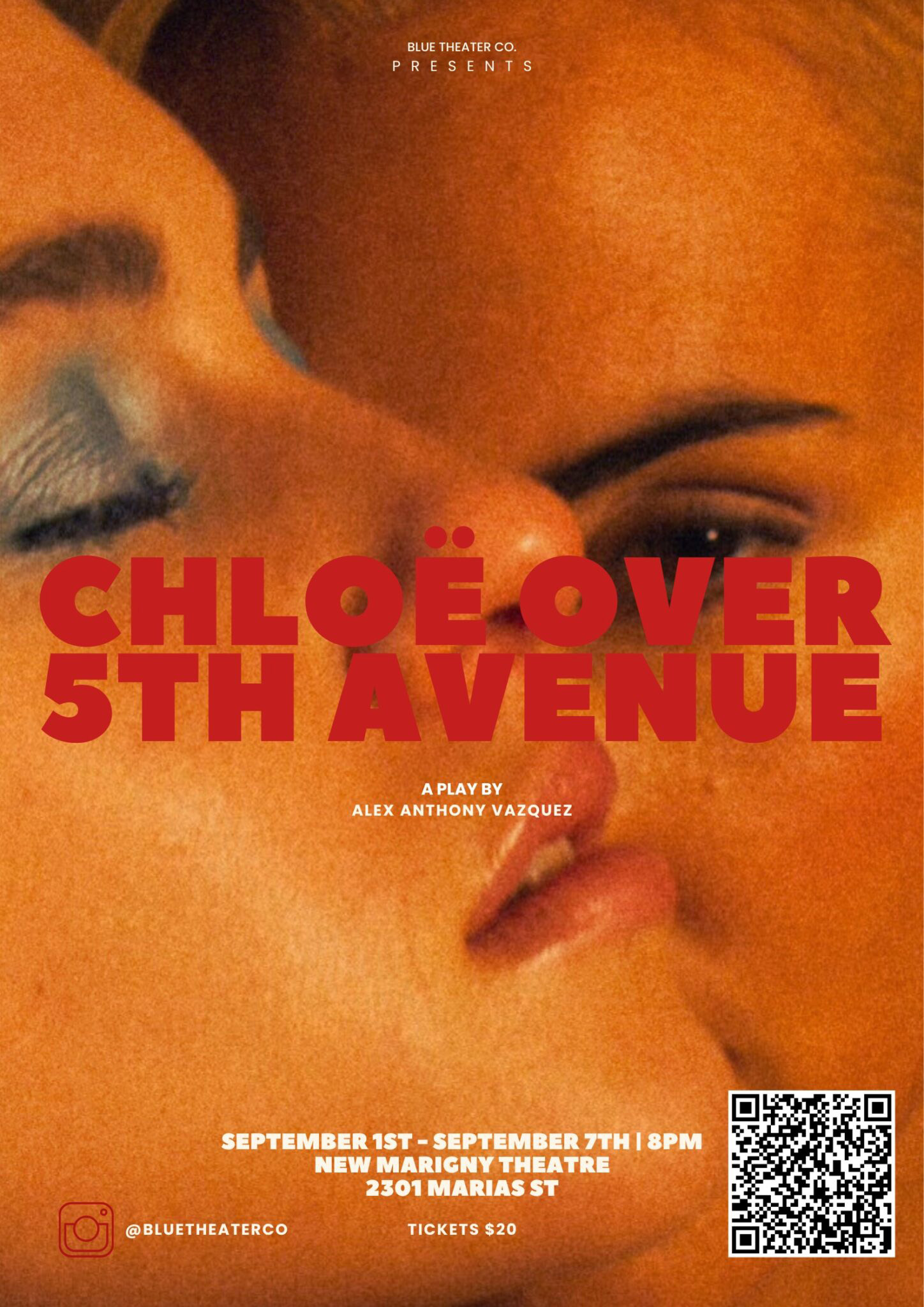
On the other end of the spectrum, you have local playwright Alex Anthony Vazquez’s recent production at the New Marigny Theatre, Chloë Over 5th Avenue, in which the dialogue achieves so little in its hour-and-a-half run time that I hesitate even to call it a play—it was more like watching an adolescent boy play with Barbie dolls alone in his bedroom. Sometimes he’d make the girl dolls smooch, or fight, or do some circular thinking out loud, but the internal architecture was so feeble, the ideas so outrageously unoriginal, that it rendered me physically incapable of staying til the end.
In the beginning of this thematic cul-de-sac of a play, I didn’t anticipate it going quite this badly. Not that there weren’t plenty of signs, starting with the lead actress (Grace Borello as the titular Chloë), who played a celebrity ingenue in the midst of a PR crisis in spite of possessing so little stage presence that her complaints about the plight of a fallen starlet were downright awkward. Then there was the total lack of chemistry between Borello and her secret lesbian lover (Sadie May), a relationship that served as the main source of what passed for a plot. But things started looking up when actress Abigail Duhon entered the scene, emanating so much charisma that she almost had me convinced that the play could still be saved. Vibrant and voluptuous, hers was the energy of someone who gets a party started just by showing up. Accepting that her character was a famous performer did not test the suspension of disbelief beyond all reason, as it did with Borello. And after Act I ended with her urging everyone to get their mopey asses in gear and head out to a birthday party, I really believed that after intermission something might finally happen.
But instead I would learn that Duhon’s role was not to carry the production somewhere other than the dull purgatory of Chloë’s apartment on the wings of her beauty and talent, but to facilitate a sinister form of torture in which the audience must helplessly bear witness to the death of the actress’ lifeforce onstage. Why else, as Act II wore on, would she be given nothing to do but sit there mutely, watching the least interesting lesbian bareknuckle emotional brawl ever conceived while her inner light visibly faded away? When the dialogue finally plummeted in its final minutes from worse to abysmal and my theatre date and I were unable to muffle our laughter, I can only characterize our sprint from the scene of the crime as an act of feminine self-preservation.
I may never fully understand why Alex Anthony Vazquez asked me to review this show, or why someone who seems to know so little about women would write an entire play about them. Then again, I might be thinking about this all wrong. Perhaps his aim was actually to demonstrate that male fantasy is a beartrap of spiritual cowardice incapable of bringing anything to an encounter with the divine feminine other than a desire to strangle it—in which case I’d call Chloë Over 5th Avenue an unqualified success. —Holly Devon
